Rights paper tigers unless given teeth by courts: SC judge
“Rights in themselves are paper tigers unless they are given teeth by the courts,” Supreme Court judge Dhananjaya Y Chandrachud asserted while underscoring that India’s social, political, and economic status would not have been the same but for the Supreme Court’s interventions.
“Rights in themselves are paper tigers unless they are given teeth by the courts,” Supreme Court judge Dhananjaya Y Chandrachud asserted while underscoring that India’s social, political, and economic status would not have been the same but for the Supreme Court’s interventions.
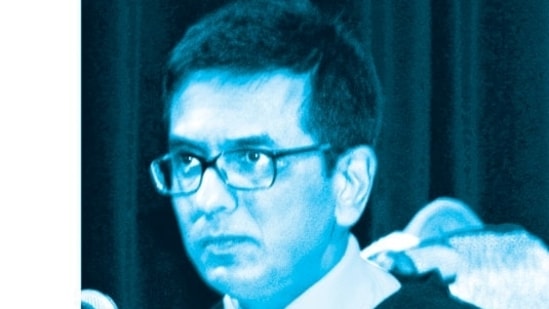
(HT Photos)
Delivering his address at King’s College in London on Monday, justice Chandrachud was emphatic that in the long history of India as an independent nation, “the Supreme Court has often been central to the realization of constitutional goals and values and the protection of the rights and liberties of citizens”.
The senior Supreme Court judge, who is in line to take over as the Chief Justice of India in November, was speaking on the topic “Protecting human rights and preserving civil liberties: The role of courts in a democracy” when he elucidated the role of Indian constitutional courts in ascertaining constitutional remedies and enforcement of fundamental rights.
The judge termed it “almost cliched” to say that Supreme Courts are not final because they are right but they are right simply because they are final. “Judges are not infallible. Decisions once thought to be final are reviewed by succeeding generations. However, would the country’s social, political, and economic status have been the same but for the Supreme Court’s interventions? The debate in individual cases aside, the answer to the question is in the negative,” said justice Chandrachud.
The judge went on to exemplify judicial interventions in a wide spectrum of matters that shaped various laws and history of the country, highlighting that one of the most important issues that the Supreme Court engaged in has been gender.
Justice Chandrachud pointed out that with the changing times, the Supreme Court moved beyond the manifest forms of discrimination and engaged with the binary division of gender into men and women, gendered notions of certain professions, discrimination on the basis of gender at workplaces or within the confines of one’s homes or in society.
Citing cases such as grant of permanent commission to women in armed forces and instances of protective discrimination where women were sought to be barred from certain professions, justice Chandrachud added that the Indian Supreme Court has realized that it is not merely enough that women are granted the opportunity to sit at the table, but also to ensure that their lived experiences are factored in to ensure that they can avail such opportunities.
One of the authors of the judgment that decriminalised consensual gay sex between consenting adults, justice Chandrachud underlined that the struggles of the LGBTQ community have found a voice in the courts and that the LGBTQ liberation movements have been able to achieve certain legal milestones in the recent years following the apex court’s interventions. The judge gave examples of the 2014 judgment by the Supreme Court which granted a legal status to the “third gender”, and the 2018 verdict in Navtej Johar’s case that read down Section 377 of the Indian Penal Code to decriminalise consensual same-sex intercourse.
“It is also encouraging to note that the Indian high courts, post the decision in Navtej Johar have started recognizing romantic relationships between the queer women and granting them protection. This has been possible because of the expansive conception of rights in the judgment,” said the judge, also citing from cases involving the death-row convicts and the disabled where the top court has adopted a proactive role.
“All of these instances and more show the path that the Indian Supreme Court has taken to protect human rights and civil liberties for different sections of the society in a democracy. The role of courts in a democracy is informed by the civil and political structure, the social fabric, and the customs and traditions of society,” he further said.
At the same time, justice Chandrachud highlighted that the use of the court as the first line of defence to solve complicated social issues is a reflection of the waning power of discourse and consensus building, triggered by the forces of racism, casteism and discrimination.
“The growing litigious trend in the country is indicative of the lack of patience in the political discourse,” lamented the judge, adding that the Supreme Court of India must protect the fundamental rights of persons and perform its constitutional duty but it cannot transcend its role by deciding issues requiring the involvement of elected representatives.
“That would not only be a deviation from its constitutional role but would not serve a democratic society, which at its core, must resolve issues through public deliberation, discourse and the engagement of citizens with their representatives and the Constitution...The fulfilment of the ideals of our Constitution and the protections guaranteed under it cannot only be achieved by exercising our role as citizens once every five years. There must be a continuous engagement with all the pillars of democracy,” stressed justice Chandrachud while concluding his address.

 E-Paper