
 E-Paper



RSS’s outreach plan in focus after German ambassador visit
Diplomats from EU, Tibet and Singapore have met the functionaries of RSS earlier.


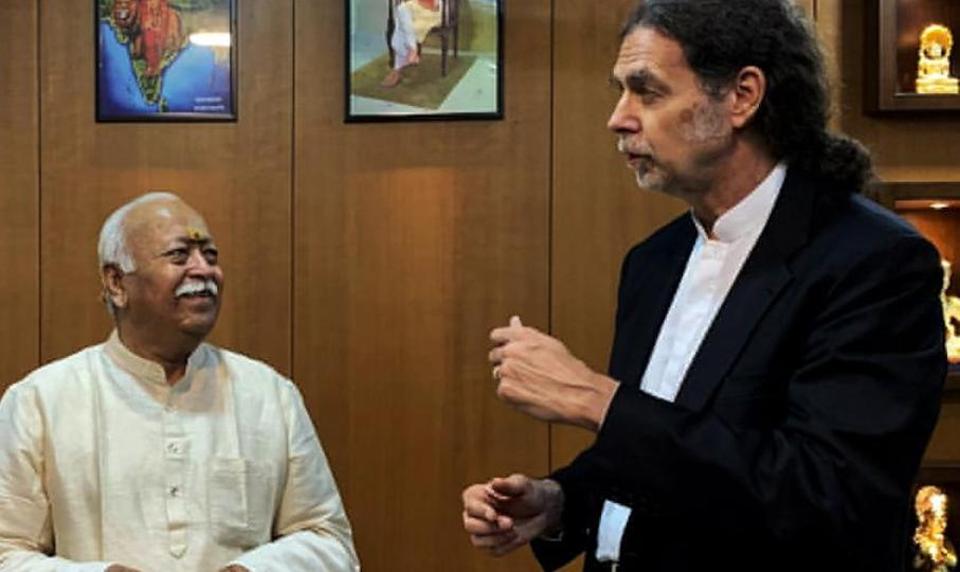
German Ambassador Walter J Lindner’s meeting with Rashtriya Swayamsevak Sangh (RSS) chief Mohan Bhagwat at the organisation’s headquarters in Nagpur this week has stoked a controversy on social media, but for the Sangh the visit is part of a now-established outreach protocol between them and the diplomatic corps.
According to functionaries of the Sangh, the practice of interactions between diplomats and the Sangh took off in a formal setting in 2009; when an ambassador of a European nation invited 27 other ambassadors of the European Union to a meeting with Bhagwat over lunch.
“The meeting was supposed to be for an hour; but it lasted for over three hours as all the diplomats posed question after question to Bhagwatji. This was a first-of-its-kind opportunity to get to first hand overview of the Sangh and its ideology,” said a senior functionary who was privy to the meeting.
The luncheon paved the way for expanding the interaction between the Sangh and the diplomats, which had an incipient start in 1994, ahead of the 1996 Lok Sabha elections where Bharatiya Janata Party Atal Bihari Vajpayee elected as Prime Minister.
“There was some curiosity about the Sangh [in 1994]; some diplomats expressed a desire to visit Nagpur or to engage with the Sangh leaders. Maybe, they had an inkling of the changing political scenario,” said a second functionary.
What began as small groups of mid-run diplomats visiting Nagpur in batches and individually interacting with Sangh functionaries and their families graduated to a more organised exchange at frequent intervals.
For instance, the then deputy High Commissioner and Minister Counselor of Singapore Johathan Tow, was present for the Vijaydashami speech in Nagpur in 2012. In August 2016, the president of the Central Tibetan Administration Dr Lobsang Sangay met Bhagwat. The two, according to media reports, discussed key issues relating to environment and political situation in Tibet, bilateral ties and the Sangh’s stance on ‘free Tibet’. In 2018, Kieran Drake, Minister-counselor at the British High Commission also called on Bhagwat, which was later described as a courtesy call.
During another engagement with the diplomats of over 40 countries over a breakfast meeting organised by the think tank India Foundation in 2017, Bhagwat is learnt to have told the attendees that the RSS does not control the government.
The seeds for such interactions were sown in 2007 when the Vishesh Sampark Cell (a special outreach unit) of the Sangh was given the mandate to engage with thinkers, industry leaders, writers, film and sports personalities, politicians, bureaucrats, and the academe to familiarise them with the Sangh ideology and build connections.
“As part of that programme, in 2009, Bhagwat ji also met a bunch of young parliamentarians from parties such as the Congress, Samajwadi Party, Bahujan Party, NCP and the TDP at a lunch meeting organised at the residence of a BJP MP,” said the first functionary.
Ram Madhav, the then in charge of the Vishesh Sampark Cell and the current national general secretary in the BJP, said such engagements and outreach programmes are a regular feature of the Sangh’s work.
“Outreach and engagement with different sections of society has become a regular feature of the Sangh’s work since 2007 when the VIshesh Sampark Cell was started, and the RSS chief continues to meet people of different ideologies,” he said.
After the BJP swept to power at the Centre, riding a majority mandate in 2014; entries in the engagement book began to swell. A social call from a delegation of the Communist Party of China was among one such visit.
On the controversy that followed Ambassador Lindner’s tweet: “Visit of Headquarters of RSS (Rashtriya Swayamsevak Sangh) in Nagpur and long meeting with its Sarsanghchalak (Chief) Dr Mohan Bhagwat. Founded 1925, it is world’s largest voluntary organization - though not uncontroversialy perceived throughout its history...,” the Sangh remains unfazed.
The German Embassy did not respond to queries about the Ambassador’s purpose for the visit, even as some social media users criticised the ambassador for meeting the RSS chief.
Reacting to the brouhaha over the visit, joint general secretary of the Sangh, Manmohan Vaidya dismissed the claims.
“There is a so-called ‘liberal, intellectual tribe’ that is highly illiberal, intolerant and not open to exchange of ideas. These people have tried to ostracise the Sangh by spreading lies about Sangh, but failed. The acceptance and welcome of Sangh by the people of Bharat kept on growing. It is incorrect that the Sang was influenced by Hitler or idolises him,” Vaidya told HT.
A diplomat, who spoke to HT on the condition of anonymity and has interacted with the Sangh brass, said interacting with people from a cross-section is part of their mandate. “They are a social organisation, but they clearly have a role in the political landscape,” the diplomat said.
Professor of political science at the Jawaharlal Nehru University, Ajay Gudavarthy said, “The RSS projects itself as a cultural organisation, not interested in politics, but they are deeply invested in the policy framework. It’s not just the diplomatic corps they are involved with, they run the show behind the scenes in government and academia. I call it the deep state.”


