
 E-Paper



SC affirms quashing of FIR against administrator in parliamentarian suicide case
The Supreme Court gave final relief to nine accused, including Praful Khoda Patel, administrator of Dadra and Nagar Haveli, Daman and Diu, and Lakshadweep

 Prefer HTon Google


The Supreme Court on Monday affirmed the Bombay high court’s decision to quash a first information report (FIR) in the abetment to suicide case related to parliamentarian Mohanbhai S Delkar, bringing final relief to nine accused, including Praful Khoda Patel, administrator of Dadra and Nagar Haveli, Daman and Diu, and Lakshadweep.
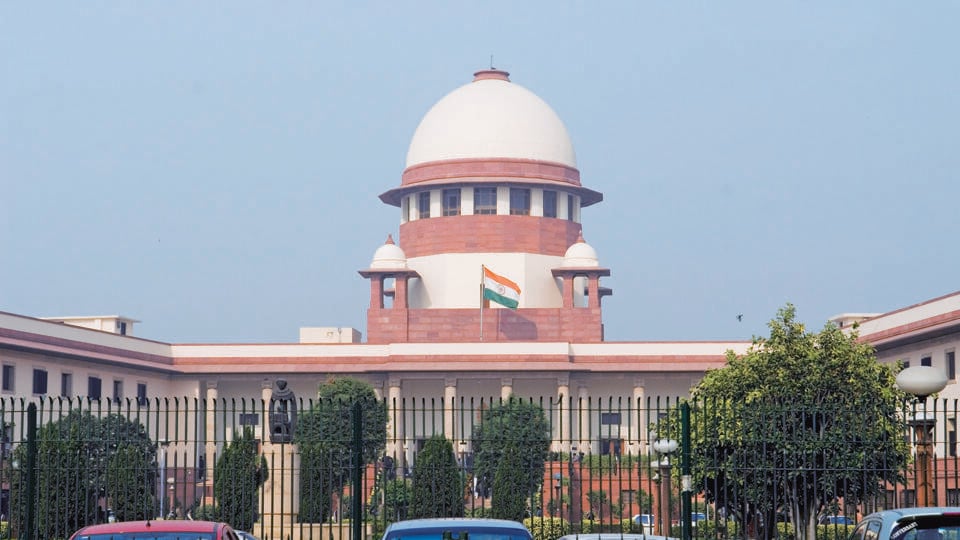
A bench comprising Chief Justice of India (CJI) Bhushan R Gavai and Justice K Vinod Chandran pronounced the judgment. Reading out the operative part of the judgment, Justice Chandran said the top court has confirmed the high court’s September 2022 order and dismissed the appeal filed by Delkar’s son, Abhinav.
The FIR, lodged at Mumbai’s Marine Drive police station on March 9, 2021, invoked sections 306 (abetment of suicide), 506 (criminal intimidation), 389 (putting a person in fear of accusation to commit extortion) and 120-B (criminal conspiracy) of the Indian Penal Code, along with the Scheduled Castes and Scheduled Tribes (Prevention of Atrocities) Act, 1989.
It alleged that Delkar, a prominent tribal leader from the Dhodia Patel community and a seven-term Member of Parliament from Dadra and Nagar Haveli, was subjected to sustained harassment by the local administration to wrest control of an educational institution he ran and to deter him from contesting the next election.
Delkar, 58, was found dead on February 22, 2021, in a hotel room on Marine Drive in Mumbai. A suicide note and minutes of a parliamentary privileges committee were recovered from the spot. His son, Abhinav Delkar, recorded a statement that was treated as the FIR. Nine persons, including Patel, were named as accused in the FIR.
Quashing the FIR in 2022, the high court held that the allegations, at best, reflected Mohanbhai S Delkar’s impressions of humiliation and ill-treatment and were not backed by material showing any specific, proximate acts of instigation or intentional aid, elements necessary to make out abetment under Section 306 IPC.
The high court noted material placed by the petitioners to show that Delkar was accorded due protocol at public functions, and found no prima facie instance of harassment rising to the level of a criminal offence.
The high court added that it was a fit case for quashing “to prevent abuse of law.” The high court, while quashing the case, accepted the arguments of the accused that Delkar was never disrespected at public functions and that proper protocols were observed in keeping with his stature. It ruled that the allegations of humiliation and harassment were “impressions carried out by the deceased” and that the FIR lacked any prima facie evidence of a “positive act” required to establish abetment under Section 306 of IPC.
The nine persons named in the FIR included Praful Patel and some officials and police officers in the Dadra and Nagar Haveli administration.
Mohan Delkar, a prominent tribal leader, first entered Parliament in 1989 and represented Dadra and Nagar Haveli six times consecutively until 2009. After a brief interlude, he returned as an Independent lawmaker in 2019, defeating Bharatiya Janata Party (BJP)’s Natu Patel by 9,001 votes. His wife represents the constituency in the Lok Sabha, having joined the BJP with their son Abhinav in 2024.



