E-Paper



SC agrees to consider urgent listing of plea against UGC equity regulations
CJI Kant agreed to consider assigning an early date of hearing and asked counsel to remove all defects in the petition so that the matter could be listed

 Prefer HTon Google


The Supreme Court on Wednesday agreed to consider urgent listing of a petition challenging the constitutional validity of the University Grants Commission (Promotion of Equity in Higher Education Institutions) Regulations, 2026, amid mounting controversy over the new framework aimed at addressing caste-based discrimination on educational campuses.
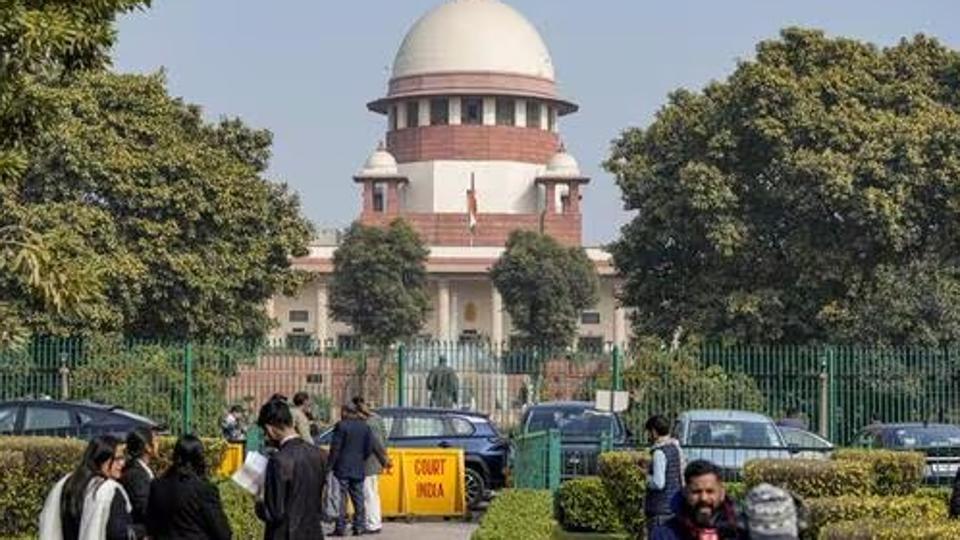
The development came after the petition was mentioned before Chief Justice of India (CJI) Surya Kant by advocate Parth Yadav on behalf of social activist and entrepreneur Rahul Dewan. Yadav urged the court to take up the matter urgently, submitting that the operation of the regulations would lead to discrimination and that the issue required immediate judicial scrutiny.
Responding to the request, CJI Kant agreed to consider assigning an early date of hearing and asked counsel to remove all defects in the petition so that the matter could be listed.
Dewan’s petition is among at least three challenges that have reached the Supreme Court against the 2026 regulations, which were notified by the UGC on January 13, replacing its 2012 framework. One of the earlier petitions has been filed by Mrityunjay Tiwari, a post-doctoral researcher at Banaras Hindu University, Uttar Pradesh. The second one was filed by advocate Vineet Jindal on Tuesday morning.
Also Read: SC pulls up BCI over Rajasthan bar polls, payment of judges’ honorarium
The court proceedings unfolded against the backdrop of a wider national debate over the UGC’s newly notified equity regulations, which mandate the establishment of Equal Opportunity Centres and equity committees in universities, colleges and deemed institutions to address complaints of discrimination and promote inclusion. The regulations are an outcome of an August 2019 Supreme Court petition seeking stronger anti-discrimination safeguards in higher education.
While marginalised student groups have welcomed the framework, several upper-caste organisations and students have opposed it, alleging that the regulations are vague and could be misused. On Tuesday, some upper-caste students protested outside the UGC headquarters in Delhi, demanding a rollback of the rules.
On Tuesday, Union education minister Dharmendra Pradhan sought to assuage concerns, assuring protesters that the regulations would not be misused. “I want to humbly assure everyone that no one is going to face any harassment. There will be no discrimination and no one will have the right to misuse the regulation in the name of discrimination,” Pradhan said, adding that the framework would operate strictly within the ambit of the Constitution.
The petitions assail Regulation 3(c) of the 2026 rules, which defines “caste-based discrimination” as discrimination “only on the basis of caste or tribe” against members of the Scheduled Castes, Scheduled Tribes and Other Backward Classes. The pleas argue that the definition proceeds on an untenable presumption that caste-based discrimination is unidirectional, excludes students from the general category from the scope of protection, and creates a presumption of guilt without adequate safeguards.
Jindal’s petition contends that the provision is arbitrary, discriminatory and violative of fundamental rights, and also ultra vires the University Grants Commission Act, 1956. It seeks a declaration striking down Regulation 3(c) as unconstitutional, or in the alternative, a direction to read down the provision and adopt a caste-neutral and inclusive definition of discrimination. An interim restraint on the enforcement of the provision has also been sought.
In his petition, Tiwari has contended that the definition proceeds on an “untenable presumption” that caste-based discrimination is unidirectional. He has argued that, “by design and operation”, the regulations accord “legal recognition of victimhood” only to certain reserved categories, while excluding general or upper caste students from the scope of protection and grievance redressal.
As reported by HT on Wednesday, government officials, however, have ruled out any rollback of the regulations, maintaining that the equity framework is designed to protect all stakeholders on educational campuses. Officials have emphasised that while the Constitution casts a greater responsibility on the State towards marginalised communities -- hence the explicit reference to SC, ST and OBC students, the grievance redressal mechanisms under the regulations remain open to all categories of students, faculty and staff.
The equity regulations mandate a 10-member equity committee in each institution, chaired by the head of the institution, with representation from reserved categories, women and persons with disabilities. The committee is required to act on complaints within strict timelines, supported by equity squads, a 24-hour helpline and equity ambassadors to promote awareness and inclusion across campuses.