
 E-Paper



SC considers key directives for trial courts and HCs in death penalty
The bench was hearing an appeal in a death sentence case from Madhya Pradesh.


Ruing the indifferent approach of subordinate courts in following its landmark ruling on the death sentence, the Supreme Court on Tuesday said it would make it mandatory for trial courts to order psychological evaluation of the condemned and seek a report on their conduct, before deciding whether death is the only fitting punishment.
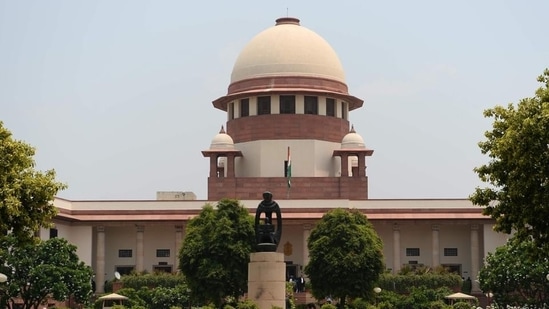
“Unfortunately, no other court is carrying out this exercise. At the fag end of the life cycle of a case, we are doing what should have been done by trial courts or high courts if the appeals are pending there. We will incorporate this in our order in some manner that this practice of psychological evaluation and seeking other reports should be followed at the level of the trial court,” said a bench headed by justice Uday U Lalit.
“We are now trying to salvage something that had to be done at two levels before (by trial courts or high courts). All those people who are languishing behind bars and have filed appeals deserve a system like this. We are trying to fashion something now and we want help from all the stakeholders,” added the bench, which also included justices S Ravindra Bhat and Bela M Trivedi.
The bench was hearing an appeal in a death sentence case from Madhya Pradesh. On February 14, in the same case, it directed the enforcement of the Supreme Court’s verdict in Bachan Singh Vs State of Punjab (1980). This verdict established the doctrine of “rarest of rare” crime in handing down capital punishment while mandating a comparative analysis of aggravating and mitigating circumstances.
The bench on that day sought reports from state government authorities on the latest state of the mental health and conduct of the prisoner that, it said, would effectively assist it in ascertaining suitable punishment for the accused.
The order passed on February 14 is one among a series of recent orders issued by the bench in different death penalty cases requiring an assessment regarding psychological health and conduct of the accused before the final hearings. These orders underscored the mandate of the Bachan Singh case that relevant materials concerning mitigating factors must be brought on record in death penalty cases.
On Tuesday, the bench received reports from the authorities in the Madhya Pradesh government, but the lawyer of the accused sought some time to finally argue the matter since the reports on psychological evaluation and conduct of the accused were not given to him.
The accused’s lawyer, assisted by researchers from Project 39A, also complained about alleged inadequacies in the existing system of preparation of reports by the probation officers and other officials from the jail administration. Project 39A, which works under the aegis of National Law University, Delhi, is a criminal justice research and legal aid programme that works on death penalty cases.
The lawyer argued that there is need for having a “mitigation investigator” who could present a comprehensive report on all the mitigating factors in relation to a death-row convict.
The bench, however, underscored that it has recently began the exercise of enforcing a four-decade-old judgment and, therefore, introducing another layer of process would not serve the ends of justice without first ascertaining that the old judgment is implemented in letter and spirit.
“We want to tighten something instead of adding another layer...We have passed five or six such orders where we implemented the principles of Bachan Singh (judgment). We can also say that for all those cases pending before trial courts and high courts, the modality of psychological assessment and probation officer’s report on conduct etc must be followed,” said the bench.
It added: “If you feel there has to be more clarity on the role of probation officers, give us something concrete. And it has to be in line with the legal regime. We don’t want to add another layer of process (mitigation investigators) without actually understanding its necessity and functions.”
The court then gave more time to the lawyer and Project 39A researchers to elucidate the shortcomings of the existing system and adjourned the matter for a future date. During the proceedings, the bench also commended the work being done by Project 39A.
“You (Project 39A) have been doing excellent work in this field. I came to know that some of the researchers did not even have an office. So, I have put in a word with NALSA authorities and they have agreed to earmark one room in the new NALSA office for Project 39A,” said justice Lalit, who is executive chairman of the National Legal Services Authority.
The Bachan Singh case laid down that a court must scrutinise both the crime as well as the criminal, and then decide whether death penalty is the only suitable punishment in the facts of the case. Emphasis is to be also laid on the aggravating and mitigating factors which are dependent upon the facts and circumstances of the case, it held.
In Machi Singh vs State of Punjab (1983), the Supreme Court elucidated the doctrine of “rarest of rare” and set down some guiding principles in the death sentences cases. The aggravating circumstances included the manner in which the crime was committed, motives for committing the crime, severity of the crime, and the victim of the crime. The mitigating circumstances comprised the possibility of reformation and rehabilitation of an accused, his mental health and his antecedents.
In 2014, the Supreme Court ruled that unexplained delay in execution was a ground for commutation of death penalty, and an inmate, his or her kin, or even a public-spirited citizen, could file a writ petition seeking such commutation. It held that prolonging the execution of a death sentence has a “dehumanising effect” on condemned prisoners who have to face the agony of waiting for years under the shadow of death during the pendency of their mercy plea.
The same year, a constitution bench held that a review petition by a death-row convict will be heard by a three-judge bench in open court. Such cases were earlier being considered by two-judge benches in the judges’ chamber without any oral arguments.


