
 E-Paper



SC defers Cauvery water plea to Aug 17 as judge recovers from viral fever
Justice Vikram Nath, who was to head the bench hearing Tamil Nadu’s plea seeking directions to Karnataka to release Cauvery water, fell ill

 Prefer HTon Google


The Supreme Court has deferred to August 17 the hearing on Tamil Nadu’s plea seeking directions to Karnataka to comply with the Cauvery Water Management Authority’s (CWMA) decision on the release of Cauvery water, after Justice Vikram Nath, who was to head the bench hearing the matter, fell ill with viral fever.
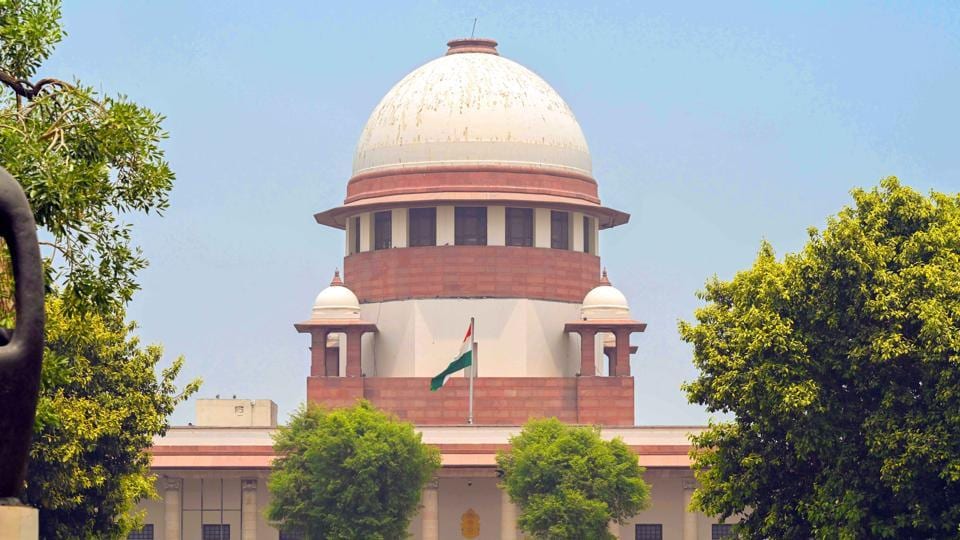
Chief Justice of India (CJI) Surya Kant on Wednesday said that the matter, which was earlier scheduled to be heard on Thursday, will now come up before a bench headed by Justice Nath, who is expected to resume judicial work next week.
Senior advocate P Wilson, appearing for the Dravida Munnetra Kazhagam (DMK) and some farmers, mentioned the party’s application before the CJI and sought that it be taken up along with Tamil Nadu’s plea. Wilson pointed out that the CWMA had since passed a fresh order directing Karnataka to release water, but the direction was not being complied with.
The CJI informed Wilson that Justice V Mohana had recused herself from hearing the matter and that the case would consequently be placed before a bench headed by Justice Nath. However, with Justice Nath down with viral and likely to return only next week, the matter will now be heard on August 17.
The development comes a day after the CWMA, which met in Delhi on Tuesday, endorsed the decision of the Cauvery Water Regulation Committee (CWRC) directing Karnataka to release 12,000 cusecs of water per day for 15 days from Wednesday to Tamil Nadu.
At 12,000 cusecs a day, Karnataka would have to release around 15.55 TMC ft of water over 15 days, based on the conversion that 11,574 cusecs flowing for 24 hours amounts to one TMC ft.
Tamil Nadu approached the Supreme Court saying Karnataka had wilfully failed to comply even with the earlier direction to release 3,500 cusecs per day. The state had sought directions to ensure that the stipulated flow reaches the inter-state border point at Biligundlu and that Karnataka makes good the accumulated shortfall in releases.
According to Tamil Nadu, the earlier 3,500-cusecs direction would have required Karnataka to release 4.536 TMC of water by August 12. The state, however, claimed that actual flows recorded at Biligundulu between July 29 and August 2 were substantially below the mandated quantum, ranging between 158 cusecs and 530 cusecs.
Tamil Nadu had also sought an additional release of 26.954 TMC, contending that this represented its pro-rata entitlement between June 1 and August 12 under the distress-sharing formula.
The DMK’s application, which was filed separately ahead of the state government’s plea, similarly seeks immediate directions to Karnataka to ensure the release of Cauvery water at Biligundulu. The party has stressed the importance of the current period for farmers in the Cauvery Delta, particularly for the Kuruvai paddy crop and preparations for the Samba crop.
The fresh 12,000-cusecs direction by the CWMA has, meanwhile, triggered another round of deliberations in Karnataka.
Karnataka chief minister D K Shivakumar said the state would decide its next course of action after assessing the availability of water, while stressing that the interests of Karnataka’s farmers would have to be protected alongside compliance with the CWMA and CWRC directions. He is expected to meet legal experts and senior bureaucrats on Wednesday to discuss the possible legal options.
Karnataka had urged the CWMA to defer any decision on further releases until the end of the south-west monsoon, arguing that a decision should be based on the actual hydrological position at that stage. Alternatively, it had sought reduction of the proposed release from 12,000 cusecs to 10,000 cusecs a day.
The state told the authority that the Cauvery basin was “reeling under severe hydrological distress”, pointing out that its four reservoirs had received cumulative inflows of only 77.746 TMC ft during the current water year — about 47% below the 30-year average. Karnataka also said inflows into the reservoirs were rapidly declining.
The dispute assumes significance for Tamil Nadu’s Cauvery Delta, where water flows into the Mettur reservoir are crucial for the standing Kuruvai crop as well as preparations for Samba cultivation.
Karnataka and Tamil Nadu have repeatedly contested the hydrological data and the quantum of water to be released during periods of deficient rainfall. The CWRC on July 28 directed Karnataka to release 3,500 cusecs per day for 15 days from July 29. The CWMA endorsed that recommendation on July 30 after considering the hydrometeorological conditions in the basin.



