E-Paper



No respite for Delhiites as pollution levels surge; AQI at 373, 21 stations in ‘severe’ category
Delhi's AQI stood at 373 at 7:05 am, in the very poor category on Wednesday, compared with Tuesday’s 24-hour average of 350.

 Prefer HTon Google


Delhi’s pollution levels continued to surge on Wednesday morning, with 21 of the 59 monitoring stations recording air quality in the ‘severe’ category.
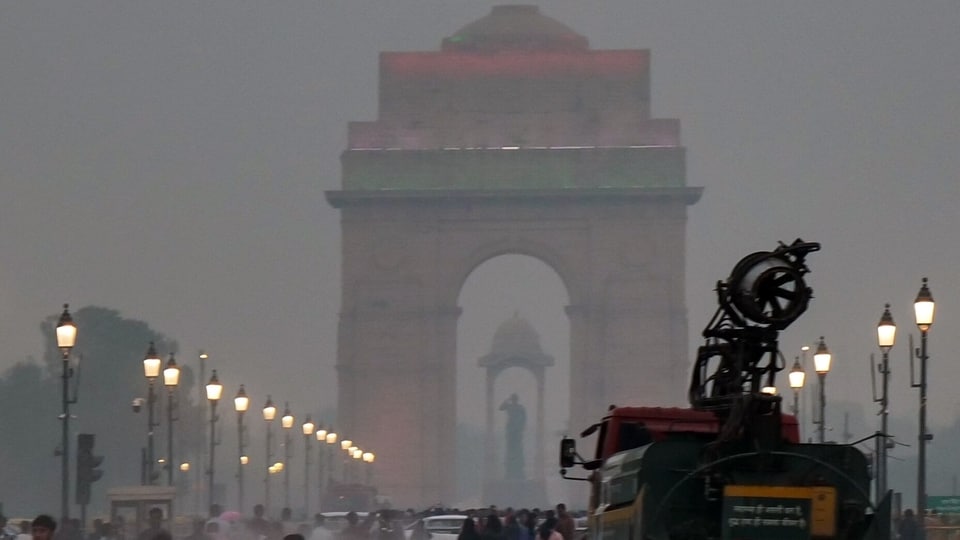
The Air Quality Index (AQI) stood at 373 at 7:05 am, in the ‘very poor’ category, compared with Tuesday’s 24-hour average of 350. Tuesday’s reading was the worst in 287 days.
PM2.5 was the primary pollutant
At 54 of the 59 monitoring stations, PM2.5 was the primary pollutant. Punjabi Bagh recorded the highest AQI at 452, followed by Jahangirpuri (450) and IIT Delhi (446). Five stations were in the ‘poor’ category and the remaining 23 in the very poor category.
Deep Dive

The Central Pollution Control Board (CPCB) classifies an AQI of 0-50 as ‘good’, 51-100 as ‘satisfactory’, 101-200 as ‘moderate’, 201-300 as ‘poor’, 301-400 as ‘very poor’ and 401-500 as ‘severe’.
ALSO READ: Hindustan Times launches pollution dashboard that puts air quality data in context
AQI to remain ‘very poor’ from November 4 to 6
According to the Air Quality Early Warning System (AQEWS), air quality is expected to remain in the very poor category from November 4 to 6. It is likely to fluctuate between the very poor and severe categories over the following six days. The bursting of firecrackers on Diwali could lead to a further deterioration in air quality.
NASA satellite data detected 1,561 farm fires in Punjab and Haryana between October 1 and November 3 - 1,406 in Punjab and 155 in Haryana.
ALSO READ: GRAP-II pollution curbs imposed in Delhi-NCR as air quality dips further
Of these, 167 were recorded on November 2. During the corresponding period last year, satellites detected 2,068 fires. However, the figures need to be viewed in context, as stubble burning has shifted to later hours over the years. In 2025, 98 per cent of the fire heat recorded by Meteosat was detected after 3 pm, compared with 94 per cent in 2024.
The two counts could therefore differ for this reason alone. Both figures are undercounts, as most of the burning now takes place after the satellite passes over the region at around 1:30 pm.