
 E-Paper



SC grants bail to Rajiv Gandhi assassination case convict after 32 years
The Court was considering a petition filed by Perarivalan in which he has challenged the long pendency of his mercy petition filed with the Governor in December 2015 under Article 161


The Supreme Court on Wednesday ordered bail for AG Perarivalan, convicted in the assassination of former Prime Minister Rajiv Gandhi , and who has spent 32 years in jail. Arrested in June 1991, at the age of 19, his death sentence was commuted to life by the Supreme Court in February 2014.
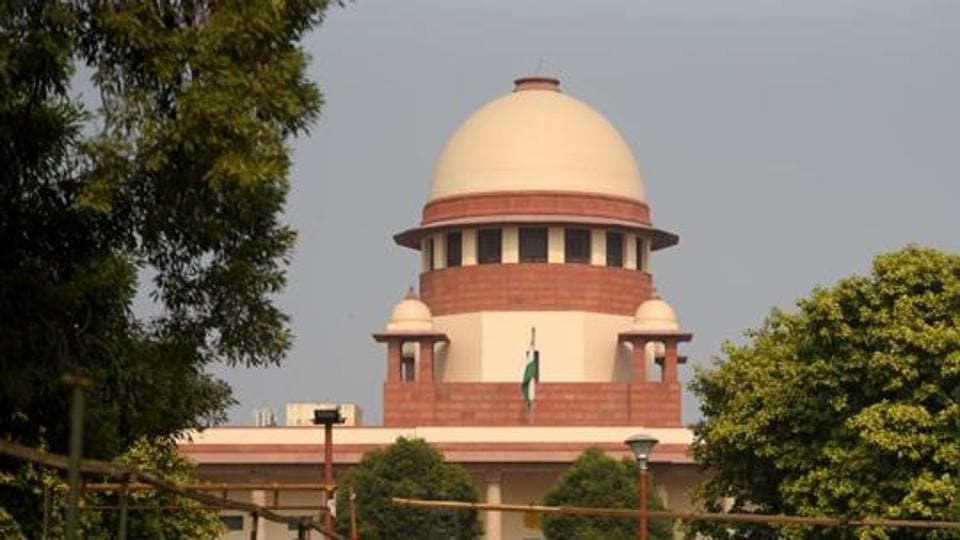
A bench of justices L Nageswara Rao and BR Gavai said, “Taking into account the fact that the petitioner spent over 30 years in prison, we are of the view that he (Perarivalan) should be released on bail pending consideration of his appeal.”
The Court was considering a petition filed by Perarivalan in which he has challenged the long pendency of his mercy petition filed with the Governor in December 2015 under Article 161. Successive Tamil Nadu governments have been in favour of his release.
The state government welcomed the top court’s order.
“The SC had considered the inordinate delay on the part of the Governor and has clearly not heeded to the stand that the President is the right authority to decide. The SC has exercised its power under the Constitution. I think granting bail is a vindication of the state government’s contention all along that the state has the power to take a call on matters with regard to remission of sentences and also the clemency powers of the Governor under Article 161,” said DMK spokesperson and advocate S Manuraj.
“And the Governor has zero discretionary powers. He has to act on the advice of the state council. The entire charade of the Governor trying to position like an independent authority is a facade,” he added.
“It’s been a very long legal battle and today marks an important part of that journey,” said a person closely associated with Perarivalan, not willing to be identified.
“He has been on parole for more than 10 months and we had submitted details of his good conduct in prison for over 30 years which has been a valid point in him being given bail. We will have more clarity once we receive the court’s order,” said Perarivalan’s advocate K Sivakumar. “In recent months, the Supreme Court has been granting bail for several life convicts. Today, we received it. We hope this is a forerunner to his release.”
With his mercy plea before the Governor pending since 2015, Perarivalan approached the top court in 2016 for an early decision. In September 2018, the Tamil Nadu cabinet (the state was then ruled by the AIADMK, a BJP-ally) decided to release all seven convicts in the assassination plot. After the court’s nudge, the Governor decided in January last year to send the matter to the President of India. Since then, the matter has been adjourned on two occasions and came up for hearing in December. The Court directed Centre on December 7 to decide on the mercy petition as it had been pending for a long time.
Additional Solicitor General (ASG) KM Nataraj appeared for Centre and informed the Court that the President is yet to decide on the mercy plea filed by Perarivalan. “It is a serious issue where he is responsible for a former Prime Minister’s death. He was a death row convict who has already been granted commutation to life over delay in deciding his mercy petition. For his entire life he has to remain in jail.”
The bench told Nataraj, “He has already undergone 32 years of incarceration. How long will you (Centre) take to decide on his plea? This is a decision taken by the Tamil Nadu Cabinet. Why has the Governor sent the matter to the Central government? He represents the state government.”
Nataraj claimed that since the case involves conviction under a central law (offence of murder is punishable under Section 302 of Indian penal code) and the matter was investigated by the Central Bureau of Investigation (CBI), only the Centre and the President can grant pardon, not the state government.
He vehemently opposed bail for Perarivalan , who, he said, has already benefitted from the delay in deciding his mercy plea in February 2014 when the top court while deciding a bunch of appeal filed by death row convicts held that undue delay in deciding of mercy petitions will result in commutation of death sentence. “He has already availed of that benefit once. Can he avail of this benefit a second time?” the law officer asked.
The Court told the Centre that Perarivalan received the benefit of the SC order that was applicable to all death row convicts and that the current matter relates to remission.
The Tamil Nadu government objected to the stand adopted by Union government.
The Court made it clear that till the pendency of the appeal being heard by it, Perarivalan should be released on bail. “Let him be released. The conditions of parole are very stringent. All the time there is vigil over him,” the court said.
Senior advocate Gopal Shankarnaraynan appeared for Perarivalan and said that the petitioner has been in jail for three decades. He pointed out a series of decisions relating to murder (Section 302 of IPC) which have been either decided or are pending for consideration of pardon by Governor under Article 161.
The bench said, “In view of the stand taken by Union government that state government does not have the power to entertain mercy petition under Article 161, especially after sentence of death imposed on applicant was commuted, the matter has to be heard finally.” The Court posted the matter next month for hearing on Perarivalan’s plea.
Perarivalan was among seven persons convicted by a Special TADA court for being part of the conspiracy to assassinate former PM Rajiv Gandhi on May 21, 1991. He supplied the battery used in the bomb, but has claimed that he did not know what it was going to be used for.
The case against Perarivalan took a curious turn in October 2017 when former a CBI officer who was the investigating officer in the Rajiv Gandhi assassination case filed an affidavit in the Supreme Court claiming that during interrogation, Perarivalan had said that he was not aware of the purpose for which the batteries were purchased. This fact was not included in the confessional statement.
The Supreme Court directed Perarivalan to report to the local police station in Tamil Nadu in the first week of every month and directed the trial court to impose necessary conditions for bail. Perarivalan is currently out on parole. He sought bail as under parole, severe restrictions were imposed on his movement as he was not permitted to leave his house.


