
 E-Paper



SC may take up tomorrow LGBT celebs plea against Sec 377
The Supreme Court is on Wednesday expected to hear a petition by a group of LGBT celebrities challenging Section 377 of the Indian Penal Code, a colonial era law that criminalises homosexuality.


The Supreme Court is on Wednesday expected to hear a petition by a group of LGBT celebrities challenging Section 377 of the Indian Penal Code, a colonial era law that criminalises homosexuality.
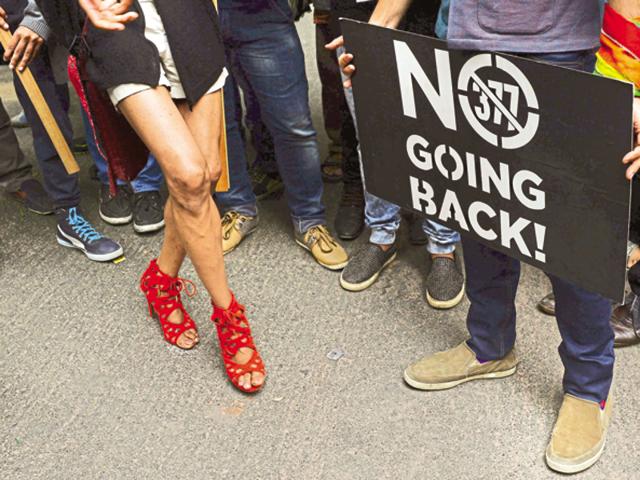
The government had discussed the provision with its top legal officer and would decide on the line it would take in the court later in the day, law and justice minister DV Sadananda Gowda said on Tuesday, reacting to the latest plea seeking a review of the court’s stand on gay sex.
Section 377 violated their rights to sexuality, sexual autonomy, choice of sexual partner as guaranteed by the Constitution, chef Ritu Dalmia, hotelier Aman Nath, dancer NS Johar, journalist Sunil Mehra and business executive Ayesha Kapur have said.
“Despite our achievements and contributions to India in various fields, we are being denied the right to sexuality, the most basic and inherent of fundamental rights,” says the petition.
The Supreme Court, which reopens Wednesday after a summer break, had in February agreed to re-examine its December 2013 verdict that re-criminalised gay sex.
It also sent to a larger five-judge constitution bench all the curative petitions seeking a review of the verdict described by activists as regressive, leaving gays vulnerable to violence and police action.
A curative petition is the last legal recourse available after a litigant exhausts all remedies such as appeals and review petition.
Eight such petitions are pending with the bench seeking review of the judgment that upheld the constitutional validity of Section 377, which prescribes a maximum punishment of life imprisonment for “unnatural sex”.
“Section 377 criminalises the very existence of LGBT people by criminalising their sexuality, an attribute which is as inherent and intrinsic to a person as their race or gender,” says the petition.
“Sexuality lies at the core of a human being’s persona. Sexual expression, in whatever form, between consenting adults in the privacy of a home ought to receive protection of fundamental rights.”
The case that attracted international headlines also has implications for heterosexuals, as consensual acts of adults such as oral and anal sex in private are considered unnatural and punishable under Section 377.
The Supreme Court had in December 2013 reversed a Delhi high court verdict that de-criminalised consensual homosexual acts. The high court in July 2013 declared unconstitutional a part of Section 377 that criminalises unnatural sex, saying “the section denies a gay person a right to full personhood…”
Though it overturned the high court order, the Supreme Court left it to Parliament to take the final call on the controversial law. The majority view in the political class is against relaxing Section 377. Several religious groups, too, are of the same opinion.
Minister Gowda refused to be drawn in and said the government would make its argument in the court, refusing to elaborate, saying the matter was sub judice.
The All India Muslim personal law board and a Christian group are opposing changes in Section 377, saying they had “cogent” arguments against de-criminalising homosexuality. They were among the petitioners who successfully opposed the high court verdict in the Supreme Court.
Read| SC hearing on gay sex: All you need to know about Section 377
Read| My body, my decision: Chennai’s LGBTQ activists rally for equal rights again


