
 E-Paper





Follow the latest breaking news, major developments and agenda-setting stories from India and around the world with the newsdesk at Hindustan Times. Operating round the clock, the desk brings together experienced editors, reporters and correspondents to deliver fast, accurate and contextual reporting across subjects that influence public policy, governance, business, society and international affairs. The HT News Desk covers politics, elections, government policies, the economy, business and markets, science and technology, the environment, law and order, infrastructure, education, climate issues and geopolitics, while closely tracking developments across states, institutions and global capitals. The team also leads coverage of major breaking news events, policy announcements, court proceedings, natural disasters, public emergencies and significant international developments. Reports published by the newsdesk are based on information gathered from reporters on the ground, official statements, government agencies, court records, regulatory filings, recognised institutions and other authoritative sources. Stories undergo editorial scrutiny and verification processes to ensure accuracy, fairness and relevance, and are updated as events evolve and additional information becomes available. Whether covering a key political decision in New Delhi, an economic policy shift affecting millions, a landmark court ruling or a major global event, the HT News Desk aims to provide readers with reliable, fact-based journalism that delivers not only the latest developments but also the context and analysis needed to understand their wider implications.
SC quashes plea on minority status for Hindus in 8 states
Attorney General KK Venugopal told the court that Hindus were a minority in eight states, but added that the Centre was not supporting the petition.


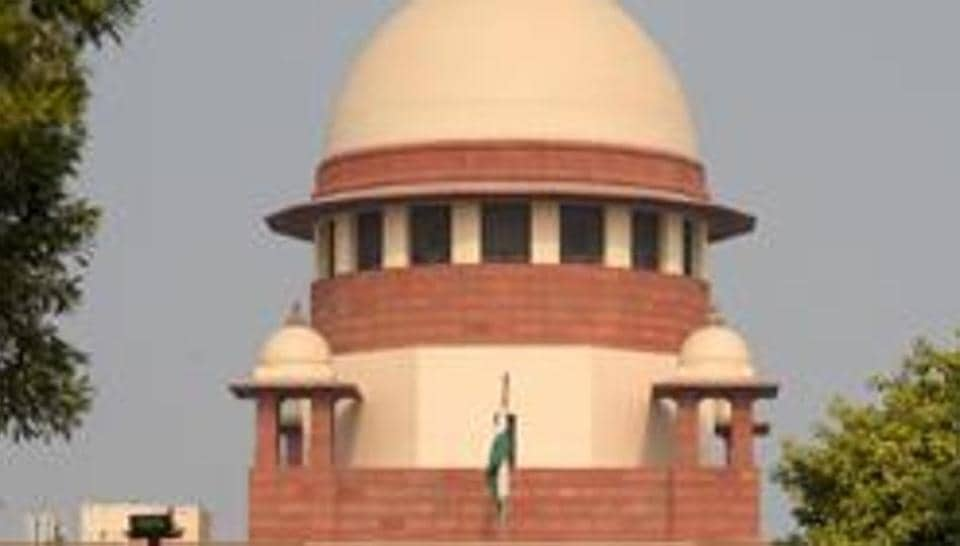
The Supreme Court on Tuesday dismissed a public interest litigation (PIL) by a Bharatiya Janata Party leader that wanted minorities to be defined at the state-level, and not at the national level, which, if accepted would have required Hindu’s to be declared a minority community in eight states.
Arguing his plea before a three-judge bench led by Chief Justice of India S A Bobde, the petitioner Ashwini Kumar Upadhayay, who is also a lawyer, said there is a need to lay down guidelines for the identification of minorities to ensure that only those religious and linguistic groups, which are socially economically and politically non-dominant and numerically inferior, enjoy rights and protections guaranteed to them under the Constitution.
The bench disagreed with the arguments and said “Religion must be viewed pan-India... religion does not recognise political borders. Muslims follow Hindu law... in places like Lakshadweep.”
Attorney General KK Venugopal told the court that Hindus were a minority in eight states, but added that the Centre was not supporting the petition.
Upadhyay’s PIL sought to challenge the validity of the Centre’s 26-year-old notification declaring five communities, Muslims, Christians, Sikhs, Buddhists and Parsis, as minorities.
The petitioner wanted the court to declare as unconstitutional section 2 (c) of the National Commission for Minority (NCM) Act, 1992, under which the notification was issued on October 23, 1993.
Upadhyay sought direction for laying down guidelines to define the term minority, based on the population of a community in a state instead of the national average.
He contended in the plea that the 1993 notification violated the fundamental rights to health, education, shelter and livelihood.
In his petition, he added that Hindus, who are a majority community as per national data, are a minority in several north-eastern states and in Jammu and Kashmir (now a Union Territory).
Yet, the Hindu community is deprived of benefits which are available to minority communities in these states and UTs, the plea said, adding that NCM should reconsider the definition of minorities in this context.
According to the Census 2011, mentioned by the petitioner in his plea, Hindus are minority in eight states: Lakshadweep (2.5%), Mizoram (2.75 %), Nagaland (8.75%), Meghalaya (11.53%), Jammu and Kashmir (28.44 %), Arunachal Pradesh (29%), Manipur (31.39%) and Punjab (38.40%).


