
 E-Paper



SC refuses to interfere in HC order on speaker
Voice of dissent can’t be suppressed in democracy, observes SC.

 Prefer HTon Google


The Supreme Court on Thursday — in a setback to chief minister Ashok Gehlot and a possible reprieve to his former deputy Sachin Pilot — refused to stay the proceedings of the Rajasthan high court, which is scheduled to pronounce a verdict on disqualification notices sent by the speaker of the state assembly to 19 rebel Congress MLAs, including Pilot.
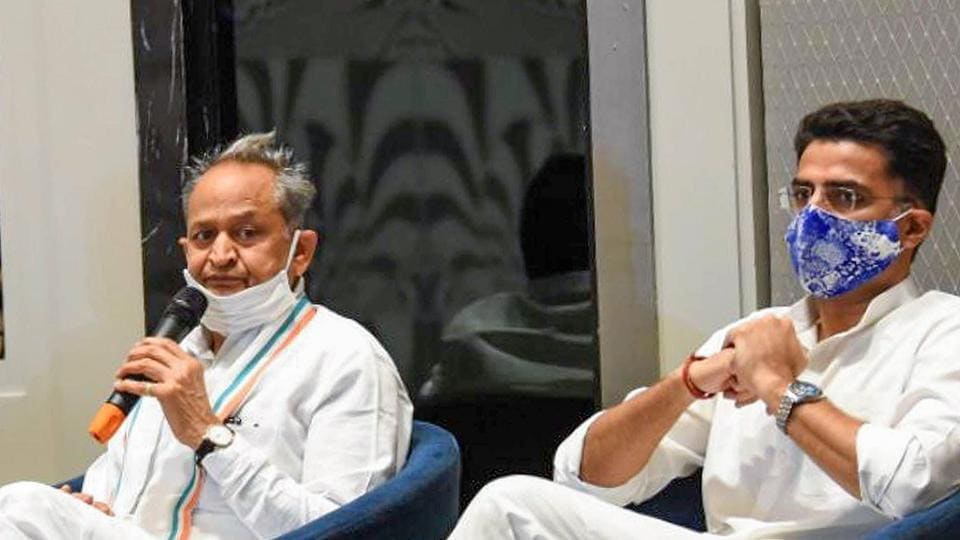
The top court, which was looking at the limited but crucial question of whether the high court can interfere in proceedings initiated by the speaker even before a decision on disqualification has been taken, said that the issue would require greater judicial examination. It agreed to hear the plea filed by Rajasthan speaker CP Joshi from Monday onwards, and ruled that high court’s Friday decision would be subject to the outcome of the top court’s final verdict.
“As the high court has already heard the matter after prolonged arguments and reserved the order, we are not staying the passing of the order [by high court]. However, whatever order is passed shall be ultimately subject to the outcome of this petition,” said a three-judge bench led by justice Arun Mishra, and also including justices BR Gavai and Krishna Murari.
Though the court did not go into the question of the correctness of the speaker’s decision to issue notice and if the actions of the Pilot camp amounted to giving up the membership of the Congress party, justice Mishra observed during the hearing that “voice of dissent cannot be suppressed… then democracy will shut”.
“After all they have been elected by the people. Can they not express their dissent? Can voice of dissent be shut down like this in a democracy?” he told senior counsel Kapil Sibal, who was representing the speaker.
Proceedings in the high court will resume at 10.30am on Friday. It is expected to pronounce its verdict later in the day.
Thursday’s order could be a major boost to the Pilot camp — if the high court on Friday bars the speaker from disqualifying the 19 MLAs, they will remain protected from such proceedings until the top court has reached its verdict. It may, meanwhile, hamper the Gehlot government from calling an assembly session — fearing a no-confidence motion from the opposition Bharatiya Janata Party (BJP) — because the numbers in the House are still tenuous for the chief minister.
Speaking to reporters on Thursday evening, however, Gehlot said an assembly session would be called “soon”.
As things stand, Gehlot appears to have the support of 101 members —the majority mark in the 200-member state assembly (though this does not include speaker CP Joshi). Pilot has 18 other Congress MLAs and three independents in his camp, taking his tally to 22. The BJP and its ally Rashtriya Loktrantrik Party have 75 seats. One Congress MLA, Bhanwarlal Meghwal, is indisposed, though he is said to be close to Pilot. If Pilot’s tally is added to that of the opposition alliance, it takes their number up to 97. This means a three-member swing from the Gehlot camp to the Pilot camp or to the BJP could lead to the government falling in the event of a no-confidence motion.
Conversely, if the high court allows the speaker to go ahead with the proceedings and disqualify the MLAs — Gehlot will then be more confident in calling an assembly session and proving his majority through a trust vote — the rebels led by Pilot will have legal recourse to challenge the order through a petition in the Supreme Court. The speaker has so far been asked by the high court not to take any decision until after its verdict on Friday.
Sibal sought for a stay on the proceedings and the July 21 order of the high court reserved the judgment till Friday. When the court appeared disinclined to grant the prayer, Sibal alternatively sought for the matter before the high court to be transferred to the Supreme Court. This, too, was rejected by the court.
But the larger legal question argued in the court emanating from the Rajasthan developments was whether the high court overstepped its jurisdiction by “directing” the speaker to not proceed on the disqualification proceedings.
Sibal submitted that the “court cannot direct speaker to extend time (to decide the disqualification proceedings). Court cannot interfere till the speaker gives a decision”. “It is settled by the judgment of this court in Kihoto Hollohan of 1992,” he said.
In Kihoto Hollohan’s case, a five-judge Constitution bench held that judicial review should not cover any stage prior to the making of a decision by the speaker/chairman. No interference would be permissible at an interlocutory stage of the proceedings, the court had said.
Justice Mishra asked whether the speaker can muzzle dissent within party by using his powers of disqualification.
“We are trying to find out whether the procedure adopted (by speaker) is correct or not. Can voice of dissent be shut down like this in a democracy?” he asked.
Sibal, however, replied that courts cannot go into the merits of the speaker’s actions before the speaker gives a decision.
Senior counsels Harish Salve and Mukul Rohatgi, representing the Pilot camp, questioned the speaker’s decision to approach the Supreme Court after participating in the hearings before the high court for three days.
Experts said the Tenth Schedule and the anti-defection law needed examination.
“The role of the speaker has to be reconsidered. As it stands today, if the Kihoto Hollohan judgment is applied literally, the speaker’s actions, even if they are completely without authority or jurisdiction, cannot be touched by courts till the speaker actually gives a decision.This could lead to the speaker overstepping his jurisdiction and issuing notices time and again,” said Alok Prasanna Kumar, senior resident fellow at Vidhi Centre for Legal Policy.
Senior counsel Sanjay Hegde said: “The crucial thing the Supreme Court has done by keeping matter pending, is in a sense to immobilise the speaker till Monday. Even if Rajasthan high court dismisses the petition, its final judgment is not to be implemented till SC hears petition on Monday.”


