E-Paper



SC slams control of political parties on temple trust boards
Hearing a matter pertaining to the managing committee of the Shirdi’s Shri Saibaba Sansthan Trust, the top court said the time has come for political outfits to rise above party lines

 Prefer HTon Google


The management of temples must be delinked from politics and party lines, the Supreme Court observed on Monday, as it disapproved of the practice of any ruling party packing managing committees of religious trusts with its legislators and party workers.
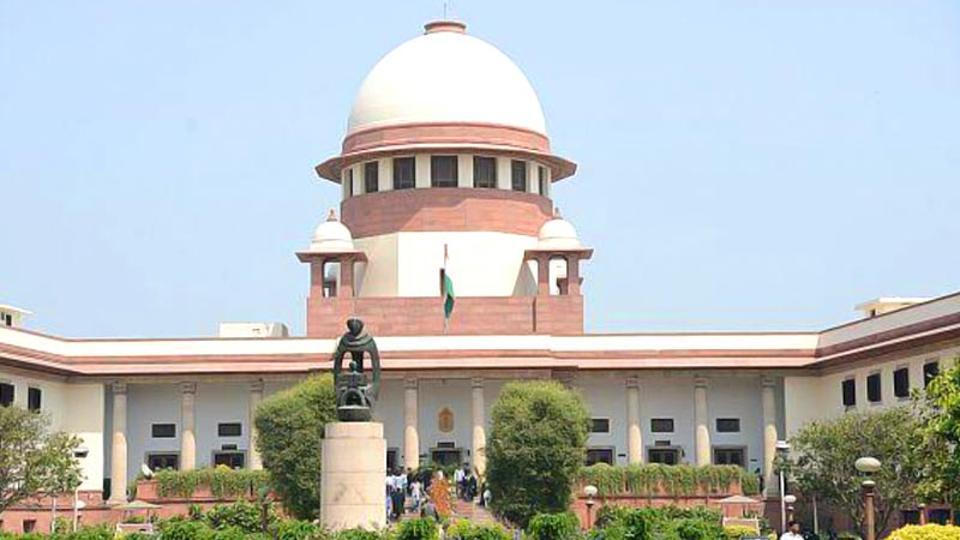
Hearing a matter pertaining to the managing committee of the Shirdi’s Shri Saibaba Sansthan Trust, the top court said the time has come for political outfits to rise above party lines and work for strengthening the administration of places of worship in the interest of devotees.
“Why do politicians become so active about certain temples and want to take over the management? Whosoever comes in, they put their men for various reasons. The time has come to rise above the party lines. Party lines won’t work anymore,” the bench of justices Ajay Rastogi and CT Ravi Kumar said.
The bench noticed that Shri Saibaba Sansthan Trust’s managing committee, which was scrapped by the Bombay high court through an order on September 13, comprised members from NCP, Congress and Shiv Sena.
“We have seen the list of the respondents...Every fellow downward is from some party. People should rise above party lines. People from various segments should come together for the betterment of these temples and their devotees. This has to be delinked from political parties,” remarked the court.
Pointing out that the political regime in Maharashtra has now changed, the bench emphasised that its endeavour is to streamline the system so that public trusts that manage places of worship do not become a sanctuary for politicians and party workers.
“Ultimately, every government would want to make appointments that will suit them. Therefore, we are not on the eligibility of the members who can be appointed. We want the system based on party lines to stop. Let us find a better solution for betterment and strengthening of the management for the welfare of the devotees. People from all sectors should come together for the betterment,” it added.
Appearing for the Maharashtra government, solicitor general (SG) Tushar Mehta agreed with the bench and said that managing committees for religious places cannot become fiefdom of political parties.
Senior advocate Shekhar Naphade, appearing for the petitioner who had complained against the appointments made to the Shirdi trust by the Uddhav Thackeray-government in 2021, submitted that he would be assisting the court with a chart on similar legislations for other temple trusts in the state.
“We will only say - streamline the system above party lines. Today, you are in power; tomorrow somebody else will be in power but the shrine will continue. We want the appointment system rationalised and the selection mechanism should be transparent,” replied the bench, as it urged the SG to come back on the next day with some concrete suggestions on the issue.
Meanwhile, the court also sought responses on an appeal filed by NCP MLA Ashutosh Ashokrao Kale, whose appointment as chairman of the Shirdi trust was nixed by the Aurangabad bench of the high court on September 13.
Through its September judgment, the high court held that the state government cannot be allowed to appoint trustees by accommodating or rehabilitating their own party workers or politicians when other impartial and meritorious persons who are qualified according to the conditions prescribed under the pertinent law are available.
“If the state government would have appointed independent trustees and not the politicians who have close connections with the ruling party, the said Sansthan Trust, which is a public trust and is a custodian of public money and property, would have saved huge amounts of public money spent on unnecessary litigation,” the high court judgment said.
The high court directed that until the state government forms a new committee, the affairs of the trust will be managed by an ad hoc committee comprising the principal district judge of Ahmednagar, the collector of Ahmednagar and the chief executive officer of the Shirdi Trust.