
 E-Paper



SC slams NHAI over toll collection and poor roads
The Supreme Court criticized NHAI for toll collection amid poor road conditions and traffic issues, emphasizing public trust and infrastructure responsibilities.

 Prefer HTon Google


New Delhi: The Supreme Court on Thursday pulled up the National Highways Authority of India (NHAI) for collecting toll from commuters despite unfinished roadworks and chronic traffic snarls, asking why citizens should be made to pay for poor infrastructure.
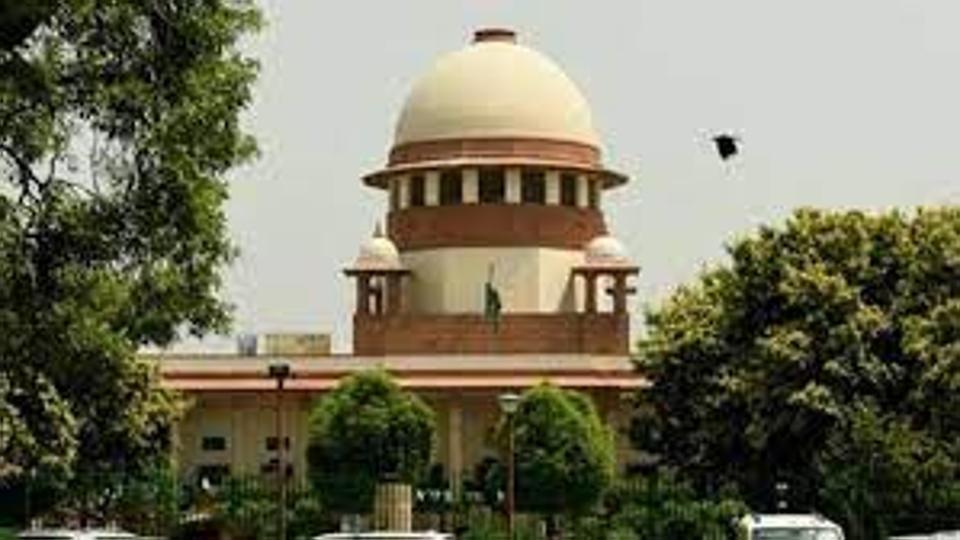
“Roads are in such bad condition…You are collecting toll but where are the roads? How do you start collecting tolls even without completing the roads?” a bench of Chief Justice of India (CJI) Bhushan R Gavai and Justice K Vinod Chandran remarked, while hearing NHAI’s appeal against an August 6 Kerala high court order suspending toll collection at the Paliyekkara toll plaza for four weeks.
The high court had castigated NHAI for “total apathy” in addressing public grievances over persistent congestion along the Mannuthy-Edappally stretch of National Highway 544, and held that the authority could not demand user fees while breaching the “tie of public trust” that governs its relationship with road users.
At the outset in the Supreme Court, solicitor general Tushar Mehta, appearing for NHAI, pointed out that the highway concessionaire had also filed an appeal, which was due to be heard next week. He suggested that both matters be taken up together. But the bench immediately turned to the state of the roads, noting that they were in “such a bad condition everywhere” that the very basis for collecting toll was questionable.
Mehta sought to distance NHAI from direct toll collection, saying that the operation and management were the concessionaire’s responsibility. Counsel for the concessionaire added that five “black spots” identified by the authorities were outside the scope of the concessionaire’s work, and that the high court itself had recorded compliance with all contractual norms.
The bench was unconvinced. “You should have planned for intersections and other measures before starting to collect tolls…You start collecting tolls even before the roads are ready,” it remarked.
Mehta responded that work was underway to address the black spots, with underpasses and overbridges being constructed. The bench, however, pointed out that there were bottlenecks on the stretch identified in the high court’s order, and even ambulances could not pass. “In any case, the high court has stopped toll collection for four weeks. Resolve this. You are wasting time filing appeals,” the court said.
The CJI also noted his own recent experience travelling on the highway, saying there were bottlenecks along the route. Mehta attributed some of the congestion to service road blockages caused by ongoing construction to fix the black spots, and requested the matter be listed the following week so he could present maps and photographs.
The bench was critical of NHAI’s delay in responding to the high court’s concerns. “The court has been after you since February, but you did not respond. That is how this order came to be passed,” it said, referring to reports in Malayalam newspapers about a man who left at 6am to attend his father-in-law’s funeral but could not travel the next 30 kilometres until the afternoon, leading to a confrontation with those managing traffic.
“You must see it to believe it. Why should citizens be put to unnecessary hardship? It is for the NHAI and the concessionaire to resolve their dispute,” the bench added.
The matter will now be heard on August 18.
In its August 6 decision, the Kerala high court ordered the suspension of toll collection at Paliyekkara for four weeks, directing the Union government to address public grievances in consultation with NHAI, the state chief secretary, and the concessionaire. It criticised NHAI for ignoring repeated reminders since February 2025, despite the public being obliged to pay for using national highways.
The court underscored that NHAI’s duty to ensure smooth traffic without obstructions was integral to its right to collect tolls. “The moment public trust is breached, the right to collect toll fees cannot be forced on the public,” it said.
The Centre had contended that the issue was limited to a 4.8km stretch, with the rest of the 65km highway unaffected, and assured the high court it would resolve the problem at the earliest. However, the high court found a clear breach of public trust and ruled that toll collection could not resume until remedial action was taken.



