E-Paper



SC/ST activists oppose reservation for economically weaker sections
Activists and intellectuals of the Scheduled Caste (SC) and Scheduled Tribe (ST) communities criticised the government for proposing quotas for the economically weaker sections, alleging the move ran afoul of the Constitution.

 Prefer HTon Google


Activists and intellectuals of the Scheduled Caste (SC) and Scheduled Tribe (ST) communities criticised the government for proposing quotas for the economically weaker sections, alleging the move ran afoul of the Constitution.
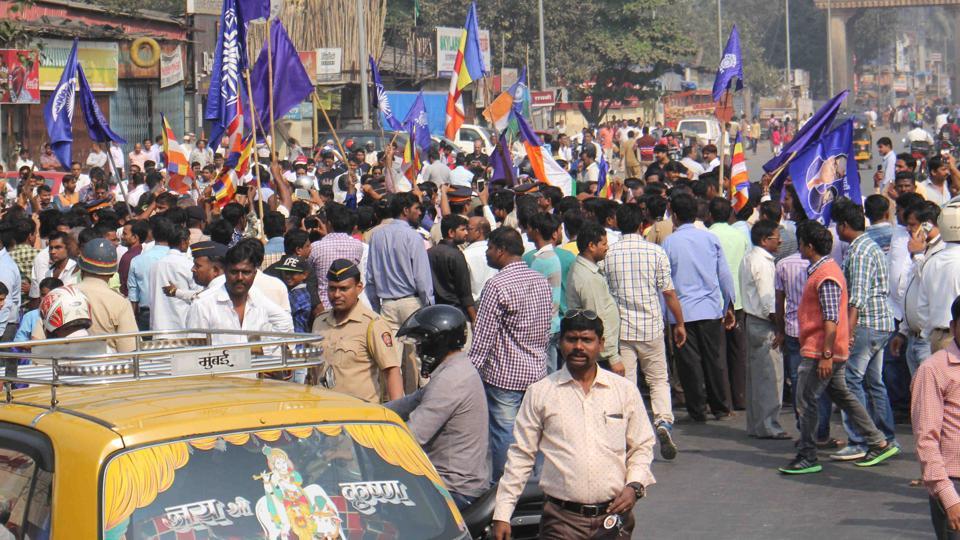
The activists said the basis of reservation was historical inequality and underrepresentation, not poverty. “Reservation is not a poverty alleviation programme. It is a question of representation of people who have been denied that in institutions for millennia. This move is obnoxious and a political stunt,” said Vivek Kumar, a professor at Jawaharlal Nehru University.
Watch: Opposition slams 10% quota for economically weaker sections
Ashok Bharti, chairman of the National Confederation of Dalit Organisations, contended that forward castes are not underrepresented at any level of government. “Giving people who are represented more than their share of population is not in line with the spirit of the Constitution. This is clear violation of the Constitution and an appeasement of upper castes,” he said.
The ruling BJP has battled Dalit anger over a raft of issues — the 2016 suicide of PhD student Rohith Vemula, the flogging of Dalit men in Gujarat’s Una , the violence at Bhima Koregaon in 2018, and the dilution of the SC/ST Act by the Supreme Court for which the Centre amended the law to roll back the changes.
Activists said Monday’s move, which they called a dilution of social justice , could result in more ire from the community. “The government wants to please forward castes. It also shows their bias towards the marginalised communities as they are more concerned about poor forward castes,” said Manjula Pradeep, an activist from Gujarat.
Ramesh Nathan, general secretary of the National Dalit Movement for Justice, said adding communities to the quota pie hurt social justice. He added that a longstanding demand by some sections of the Muslim and Christian communities to get SC status was not heeded, despite repeated petitions. “The government wants to pacify upper castes that is why they have proposed this.”
Activists also contended that poor people existed in SC, ST and OBC categories, and if, economic backwardness is the parameter, additional quotas should be carved out for them as well. “The government’s move is unjust and it has just proved it is pro-upper caste in its thought,” said Grace Banu, a Tamil Nadu-based transgender and Dalit rights activist.