
 E-Paper



Scindia steps in to ease congestion at Delhi T3
Civil aviation minister Jyotiraditya Scindia on Monday inspected arrangements at the Indira Gandhi International Airport in New Delhi and directed a slew of steps to be taken to help ease congestion that in recent days has led to anger and complaints from flyers departing from or arriving in the Capital.

 Prefer HTon Google


Civil aviation minister Jyotiraditya Scindia on Monday inspected arrangements at the Indira Gandhi International Airport in New Delhi and directed a slew of steps to be taken to help ease congestion that in recent days has led to anger and complaints from flyers departing from or arriving in the Capital.
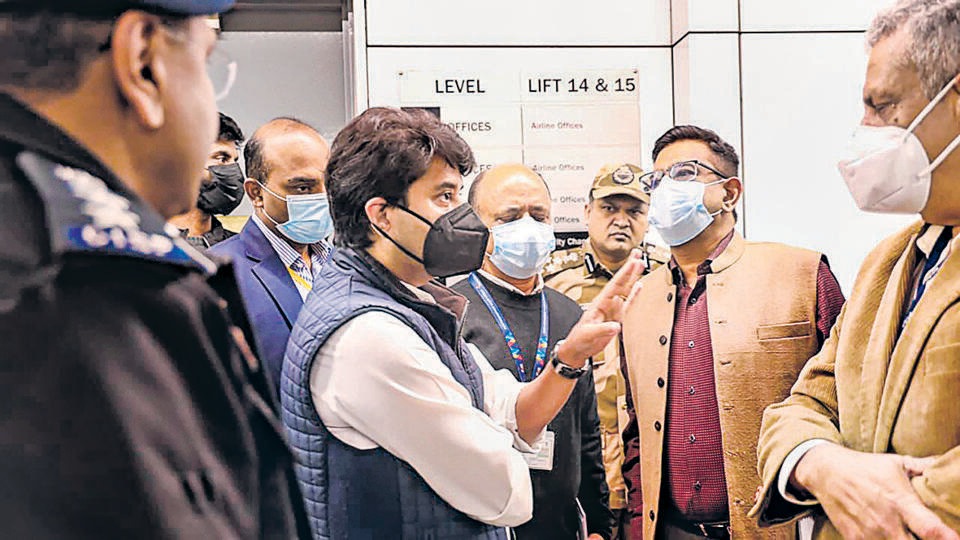
Among these steps were to reduce flights during the morning peak hours between 5am and 9am, increasing the number of entry gates from 14 to 16, and adding new display boards to help even out the load. “Flights during peak hours will be reduced between 5am to 9 am. We may also explore moving some flights to T1 and T2 or non-peak hours at T3,” a ministry statement said.
Scindia, speaking to news agency ANI, said the display boards will help people “reach the gates where there is minimum waiting time”.
“Today we’ve increased the number of entry gates from 14 to 16. There was a meeting with officials inside the airport where we’ve decided that a signboard should be placed at every entry gate displaying the waiting time before entry,” Scindia said, the news agency reported.
The minister added that following the lull due to Covid-19 restrictions, the aviation industry is now recording rising footfalls. “The aviation industry was suffering massively due to Covid restrictions. Because of the recovery from this period, there is a lot of congestion at the airports.”
The ministry, in its statement, also said a Command Centre will monitor crowding at the gates real-time.
“Airlines will be notified of the crowd numbers, so that check-in points can be made congestion-free and real-time updates on wait time will be posted on social media,” said the statement.
Among the improvements are the adding of the additional Automatic Tray Retrieval System (ATRS) machines. “Pre Covid-19, we had 13 ATRS machines installed on the ground (11 for passengers and two for crew and specially abled), this number has been increased to 16 (10 ATRS and six conventional x-ray machines) in the last few days,” the airport official said, adding that the number will soon be increased further to 17 and subsequently to 20.
In the immigration area, officials said that an analysis of the manpower requirements at the counters will be undertaken, and if need be, additional manpower will be deployed.
Scindia, following his meetings on the matter last week, first said the government was working with airlines to explore the option of airlines being asked to reduce peak hour departures.
“Manpower has been deployed at the disembarkation point to facilitate passengers who have not filled the papers onboard for speedy completion before they reach the immigration counter,” the official cited above said.
Several videos from flyers have been posted on social media in recent weeks, raising concerns about the congestion. Scindia had also chaired a meeting with stakeholders last week, including the operators of metropolitan city airports, the Central Industrial Security Force (CISF) and immigration officials.
The meeting was triggered by passengers flooding social media about descriptions of chaos at the airport, with many saying they waited hours in crowded lines and some, having kept aside the typical two hours for pre-boarding formalities, having missed their flights due to the chaos.
Multiple tweets by people addressed to the IGI Airport’s official account suggested much of the inconvenience was at the main entry into the terminal — where people waited up to 35 minutes — and at the security check, where some complained of having to wait up to 2.5-3 hours.
Senior airport officials, while asking not to be named, identified multiple reasons for the chaos in the airport while speaking to HT last week. First, one of these people said, was the post-pandemic resurgence in air travel. “Second, there is also a shortage of staff due to festivals and marriages season,” this person said. A third reason was heightened security, the official had added.
Some of these issues have since been worked on, with affected airports being asked to redeploy staff for peak hour rush.


