
 E-Paper



‘Sentiment to scrap Art 370 always there, common man is celebrating’: Jitendra Singh
Jitendra Singh believes August 5, 2019, will be known as the day of redemption and rejuvenation.

 Prefer HTon Google


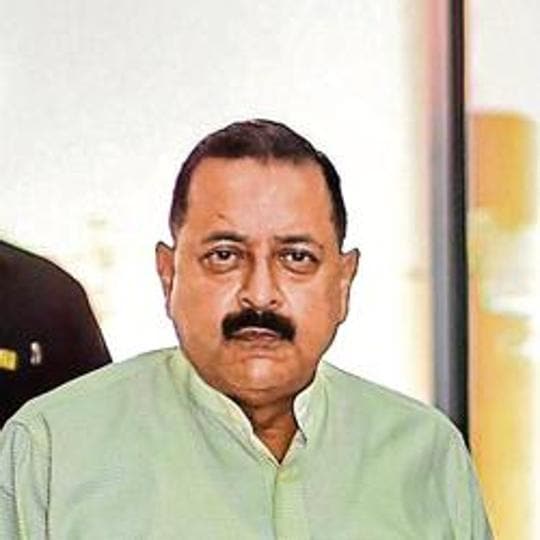
Union Minister of State in charge of Prime Minister’s Office and North East affairs, Jitendra Singh, spoke to Hindustan Times about the government’s decision to effectively scrap Article 370 and some of the Opposition’s criticism. Edited excerpts:
When was this plan made and how did you put it into motion?
It was awaited for several decades. We had to wait for 70 years and three generations of deprivation. But it took someone like Narendra Modi to bring in this legislation. This day of August 5, 2019, will be known as the day of redemption and rejuvenation.
Your critics say the way you brought it in is undemocratic.
As far as the Congress is concerned, I am surprised by the way they opposed it. We carried forward the work of Congress patriarchs like [India’s first Prime Minister] Jawaharlal Nehru. He would pacify critics of Article 370 by saying this was temporary- he would say `ghiste ghiste ghis jayegi’ (It will slowly fade away). Secondly, if you go through the Parliament debate in 1964 when Lal Bahadur Shastri was the PM, minister Gulzarilal Nanda has been quoted as saying that the sense of the House was to do away with Article 370. So, this sentiment to do away with it was always present. It was only in the later years that the Congress and the National Conference held on to Article 370 for vested interests. They became beneficiaries of this. As far as the common man is concerned, I can say this with great responsibility that this move is being celebrated even by everyone on streets of Kashmir. We have to realise that India today is part of a global world, we can’t deprive them of global avenues.
But why didn’t you take people into confidence - you shut down internet, cut phones off?
No it is not like that. We don’t shut down our doors. It was the Congress that operated like this. [Former PM] Indira Gandhi was the one who called a session on a holiday and got the Emergency passed by the President Fakhruddin Ali Ahmed in a midnight order. We didn’t do that. When the bill is brought into Parliament, it is open for all to bring about opinion, positive or negative. When they talk about taking stakeholders into confidence, who are the stakeholders? They mean only Hurriyat leaders and local politicians. Are we all not stakeholders? All of the people of the country? Kashmir belongs to all people, doesn’t it? Constitutionally speaking, the Opposition has no propriety to oppose this as Congress government brought in resolution in 1994 that J&K is an integral part of India. They conveniently forget all of these things when they oppose our move.
You say you used Article 370- clause 3- to remove the article. However, it requires the consent of the legislative assembly. How can the governor during President’s Rule be representative of the assembly?
Legal representation was done and it was found in order. Right now, Parliament is performing the role of the state assembly.
Isn’t that point legally debatable?
Some people are trying to make a debate out of it. However, we have subjected it to legal scrutiny. Even if some body chooses to go to the court, they will not get any relief. I can’t go into details of how that was done as it was the prerogative of the home minister.
What is the plan in the Valley? How long will the leaders (former chief ministers Omar Abdullah , Mehbooba Mufti) be held?
That is only because some people were trying to rake up problems. l am sure, in a few days or weeks, things will be okay.
As an MP from the state, do you think this move will alienate people?
Article 370 resulted in alienation. It led to a psychological feeling that the people of Kashmir are different. If Article 370 was the sole instrument for keeping away alienation, then you should have an Article 370 in every state. It is only a self righteous logic for their self interest. Both the separatist lobby and the mainstream politicians are exposed before their own people. Children of poor people are becoming stone pelters, while their own children are studying in the best colleges in India and abroad. People have seen through this bluff. Their ideology wasn’t backed by conviction but by convenience.


