
 E-Paper


Follow the latest breaking news, major developments and agenda-setting stories from India and around the world with the newsdesk at Hindustan Times. Operating round the clock, the desk brings together experienced editors, reporters and correspondents to deliver fast, accurate and contextual reporting across subjects that influence public policy, governance, business, society and international affairs. The HT News Desk covers politics, elections, government policies, the economy, business and markets, science and technology, the environment, law and order, infrastructure, education, climate issues and geopolitics, while closely tracking developments across states, institutions and global capitals. The team also leads coverage of major breaking news events, policy announcements, court proceedings, natural disasters, public emergencies and significant international developments. Reports published by the newsdesk are based on information gathered from reporters on the ground, official statements, government agencies, court records, regulatory filings, recognised institutions and other authoritative sources. Stories undergo editorial scrutiny and verification processes to ensure accuracy, fairness and relevance, and are updated as events evolve and additional information becomes available. Whether covering a key political decision in New Delhi, an economic policy shift affecting millions, a landmark court ruling or a major global event, the HT News Desk aims to provide readers with reliable, fact-based journalism that delivers not only the latest developments but also the context and analysis needed to understand their wider implications.
Shops open all day, public transport back on Valley roads
Most of the markets in Srinagar are open from morning to evening, a sharp contrast to the state of affairs even last week, when shopkeepers would open for business for only a couple of hours in the morning.


Roughly three months after its special status was scrapped, normalcy is finally returning to Kashmir with shops open throughout the day, public transport on the streets and trains chugging across the Valley.
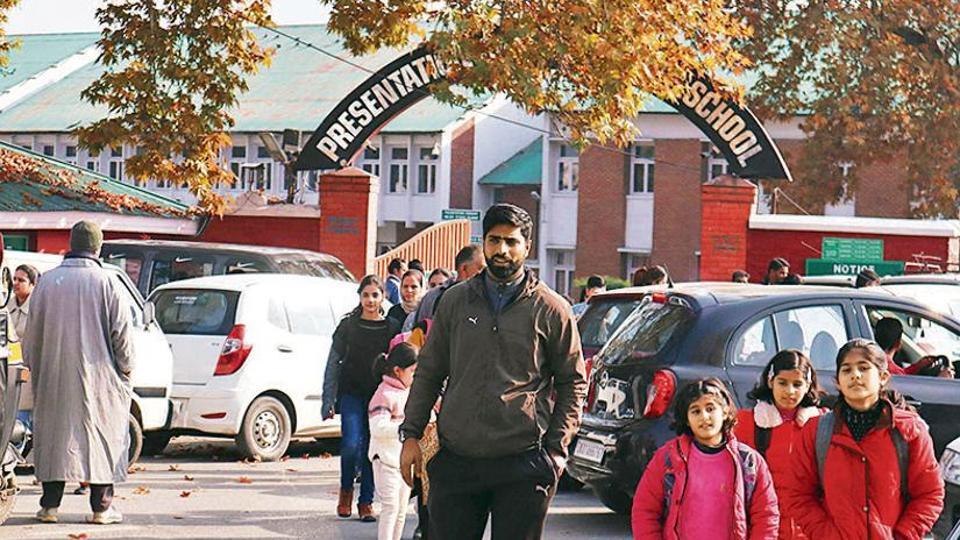
Most of the markets in Srinagar are open from morning to evening, a sharp contrast to the state of affairs even last week, when shopkeepers would open for business for only a couple of hours in the morning.
In the towns of Baramulla, Uri, Kupwara, Sopore and Bandipore, shopkeepers say they are gradually moving away from their decision to observe a boycott. “The recent snowfall caused everyone to suffer more losses. So people affiliated with business communities have no option but to resume their business,’’ said a trader who also heads one of the oldest trade bodies in Kashmir. He cautioned that the protests against the central government’s move will continue.
Public transport is also back on roads in Srinagar and on the highways, and the familiar sight of mini buses, autos and two-wheelers clogging Srinagar’s streets is back. “We resumed the business as there was not any call from any side to continue the shutdown. Most of the private transporters suffered huge losses in last three months,’’ said an office bearer of the local minibus association on condition of anonymity.
Internet services continue to be suspended and only post-paid phone services are functional. But some select broadband services are likely to be allowed soon, say officials.
Restrictions on movement and assembly of people were clamped across Kashmir on August 5, when the central government moved to effectively abrogate Section 370 and 35A, which accorded special status to the region, and bifurcated the erstwhile border state into two Union Territories. The two UTs -- J&K with a legislative assembly and Ladakh without one -- formally came into being on October 31.
Since August 5, restrictions have progressively relaxed but many traders and local businesses voluntarily observed a shutdown to protest against the government’s decision to scrap the region’s special status. Government officials say the so-called civil curfew was also stoked by the fear of militant attacks.
But now, local residents say Srinagar and other towns of the restive mountain region are limping back to normalcy. The Railways resumed its services partially on November 12 and trains are running between Baramulla and Srinagar twice a day. From Sunday, full operations were restored between Banihal and Baramulla. Railway services had been suspended on August 5 because of security concerns.
“With improvement in the situation, rail services have been restored, said Deepak Kumar, public relations officer of Northern Railways.
After taking a big hit in October because of militant attacks, the horticulture industry -- especially the procurement of apples -- is slowly recovering. Asia’s second largest fruit market in north Kashmir’s Sopore, which shut down after terrorists gunned down a prominent fruit grower in August, has opened again.
GM Dar, director of J&K horticulture produce and marketing, said growers dispatched 1.23 million metric tonnes of fruit till date, compared to 1.32 million tonnes last year.
The recent snowfall has also lifted the hopes of people employed in the tourism industry, who hope for a good skiing season. “The snow accumulation is good and due to freezing temperatures it’s not going to melt now which is good for winter tourism,” said Nisar Ahmad Wani , director of J&K Tourism.
Officials admit that attendance in schools continues to remain low, but the high turnout in the recently concluded Class 10 and 12 board examinations is a good sign, they add.
“On an average, 99.5% students have appeared in the board examinations of class X and XII,’’ said Veena Pandita, chairperson, state board of school education.


