
 E-Paper



Sleeping over orders on stray dogs: SC refuses virtual appearance for chief secretaries
Rejecting a request to allow virtual appearances, the court said: No, let them come physically. It is very unfortunate that court is giving time here, government frames rules, and no action is taken

 Prefer HTon Google


New Delhi: The Supreme Court (SC) on Friday refused to permit chief secretaries of states and Union territories (UTs) to appear before it through video conferencing instead of being present physically to explain their non-compliance with the Animal Birth Control (ABC) Rules, 2023, and their failure to curb the stray dog menace.
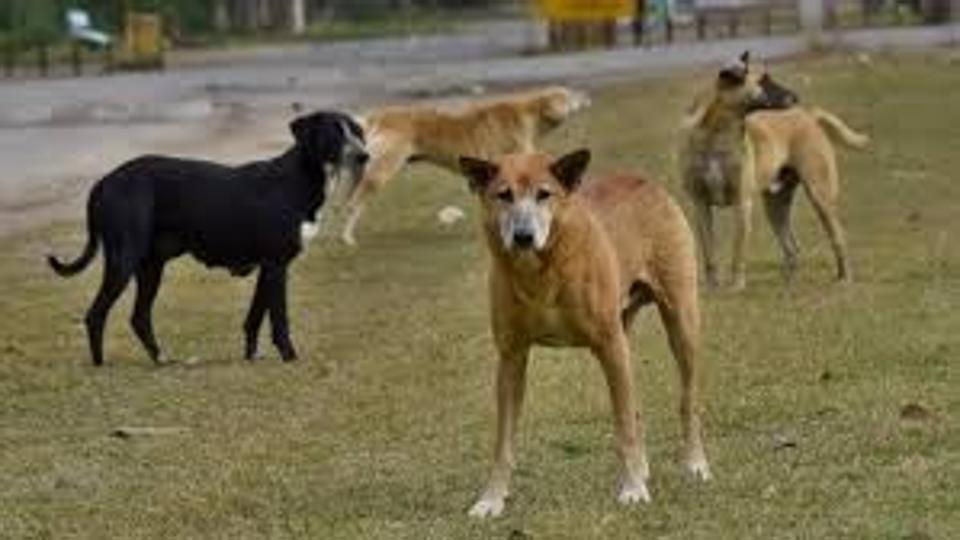
The court said the authorities appeared to be “sleeping over” its orders and must now “come and explain” why they had not filed compliance affidavits despite repeated directions.
Rejecting a request made by solicitor general Tushar Mehta to allow virtual appearances, a bench of justices Vikram Nath and Sandeep Mehta said, “No, let them come physically. It is very unfortunate that the court is giving time here, the government frames rules, and no action is taken. They are sleeping over the orders of the court. There is no respect for the court’s orders. Let the state chief secretaries come physically and explain.”
The bench stressed that it would not dilute the requirement of personal presence. “They have to physically come and explain why compliance affidavits were not filed,” it said.
The refusal came a day after the same bench had turned down a similar plea made by the standing counsel for Bihar, who had sought exemption from personal appearance for the state’s chief secretary citing the upcoming assembly polls. Dismissing the request, the court had observed on Thursday that the chief secretary’s duties have no bearing on the conduct of elections. “The Election Commission will handle everything in the state. Don’t worry. Let the chief secretary come,” the bench had said.
On October 27, the bench had expressed displeasure at the failure of most states and UTs to file compliance reports from their animal husbandry departments and local authorities on ABC implementation, despite being given three months in August. It summoned the chief secretaries of all states and UTs to personally appear on November 3, while exempting only Telangana and West Bengal as they had complied. It also clarified that the chief secretary of Delhi must attend in person despite a report filed by the Municipal Corporation of Delhi (MCD).
Also Read: Noida to build 2 new animal shelters, 1,500 dog feeding points across city
“Three months were given to them in August, but nothing has come on record. Continuous incidents are happening, and your country is shown in bad light at international platforms,” justice Nath had remarked during that hearing, warning of personal accountability and possible costs for non-compliance.
The bench also questioned whether state authorities were ignoring the court’s directions despite widespread media coverage. “Our order was reported widely by all newspapers and other media outlets. Do the state officers not read newspapers or use social media?” the court had asked.
The Supreme Court has been monitoring the issue suo motu to harmonise public safety concerns following a spate of dog-bite incidents with the statutory mandate of humane stray dog management under the ABC Rules. The rules require municipal bodies to operate sterilisation and anti-rabies vaccination programmes based on the catch-neuter-vaccinate-release model, rather than mass capture or confinement.
In its last substantive order on August 22, the three-judge bench led by justice Nath modified an earlier directive issued by a two-judge bench on August 11, which required the mass capture of stray dogs across Delhi and adjoining districts without release. Calling that prohibition “too harsh,” the Justice Nath-led bench clarified that dogs must be sterilised, vaccinated, and released back into the same locality, except for those suffering from rabies or displaying aggressive behaviour.
Also Read: Supreme Court raps states over delayed affidavits in stray dogs case: ‘India showed in bad light...’
The clarification effectively restored adherence to the ABC Rules, 2023, framed under the Prevention of Cruelty to Animals Act, which mandate humane management of stray dogs through sterilisation and immunisation rather than mass confinement. The court also ordered the establishment of dedicated feeding spaces in every ward and barred feeding in public streets and residential areas, warning that violations would invite legal action.
At that time, the bench impleaded all states and UTs and directed them to submit detailed reports from their animal husbandry departments and local bodies on ABC compliance so that a uniform national framework could be evolved. It also asked the municipal authorities in Delhi, Noida, Ghaziabad, Gurugram, and Faridabad to proceed with mass capture and creation of shelters, while ensuring that treated dogs were released back into their localities as per the rules.
The August order further required animal welfare organisations and individual petitioners to deposit ₹2 lakh and ₹25,000, respectively, with the Supreme Court registry, to be utilised by municipal bodies for building facilities for stray dogs.
The court’s intervention followed widespread concern over a spate of dog-bite incidents, including the death of a six-year-old girl, which had prompted the earlier order by a bench of justices J.B. Pardiwala and R. Mahadevan. That sweeping order, however, drew criticism from animal welfare groups that warned of cruelty and statutory violations.
Subsequently, Chief Justice of India (CJI) Bhushan R. Gavai, in a rare administrative step, withdrew the matter from the Pardiwala bench and reassigned it to the justice Nath-led three-judge bench to harmonise public safety concerns with the statutory mandate of animal protection.



