E-Paper



Sonowal fire-fights anti-CAA protests by AASU, the students’ body he once led
Many in Assam fear, CAA, which will help in giving citizenship to religious minorities from Bangladesh, Pakistan and Afghanistan, is a threat to Assamse people, their language and culture.


Assam Chief Minister Sarbananda Sonowal is busy trying to douse the fire of protests across most parts of the state against Citizenship (Amendment) Act (CAA).
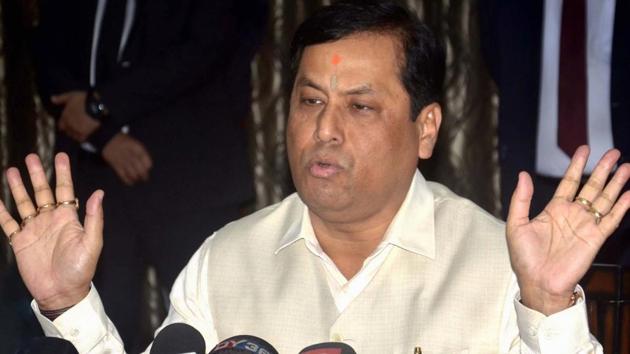
Once hailed as ‘Jatiya Nayak’ (Hero of the Community) for his campaign against illegal immigrants, the former student leader is now the main target of protests and is accused by many as someone who has betrayed the Assamese people.
Many in Assam fear, CAA, which will help in giving citizenship to religious minorities from Bangladesh, Pakistan and Afghanistan, is a threat to Assamse people, their language and culture.
A former president of All Assam Students Union (AASU), which spearheaded the 1979-1985 agitation against illegal foreigners, Sonowal had challenged the Illegal Migrants (Determination by Tribunal) Act in 2005 that was struck down by the Supreme Court. The law was perceived to favour illegal immigrants in the state.
The prominent student body is again at the forefront of the anti-CAA protests in Assam and many present office bearers feel Sonowal should have taken a strong stance against the legislation.
“Sonowal, who had fought to get rid of illegal immigrants from Assam, has now taken a U-turn after becoming chief minister. While CMs of other northeast states voiced concerns and ensured their states are kept outside CAA’s purview, Sonowal chose to remain silent,” said AASU general secretary Lurinjyoti Gogoi.
Faced with unprecedented attack against him and his government, Sonowal has announced a slew of measures to placate the protesters and is meeting representatives of various indigenous communities to try convince them that the amended citizenship law won’t hurt Assam’s interests.
On December 21, Sonowal’s cabinet announced that it will ask Centre to amend Article 345 of Constitution to make Assamese the state language of Assam and enact a legislation to make teaching Assamese mandatory in schools.
Another legislation to protect land rights of indigenous Assamese, a Rs 500-crore package for Moran, Motok, Ahom and Chutia communities, creation of 3 new autonomous councils and increase in minimum daily wages of tea garden labourers were among the 18 decisions taken by the cabinet.
“The announcements by the government are welcome and people of Assam deserve these benefits. We will accept them, but it won’t affect the ongoing agitation against CAA,” said AASU chief adviser Samujjal Bhattacharya, a former colleague of Sonowal during his student leader days.
The CM also announced that his government would submit a recommendation to Centre in January to grant scheduled tribe (ST) status to 6 communities (Moran, Motok, Chutia, Tai-Ahom, Koch-Rajbongshi and Tea Tribes).
Over the past few days, Sonowal has also interacted with representatives of Moran, Chutia, Koch-Rajbongshi, Tai-Ahom, Motok, Sonowal-Kachari, Gorkha. Mech-Kachari, Adivasi and Santhal communities.
Besides giving them patient hearings, he assured that their demands will be met and grievances addressed.
But the protests have continued. On Wednesday, artists, poets, authors, sculptors and cultural icons of Assam converged at Latasil Field in Guwahati to oppose CAA by reciting poems and singing songs.
“Those in power who have not understood people’s cries and refused to hear their shouts will not understand our protests. They have closed their eyes and shut their eyes,” said eminent writer and journalist Anuradha Sharma Pujari.
On the other hand, BJP carried out a silent rally at Barpeta Road town in a bid to assure people that CAA is not against the Assamese people. The party’s state unit president Ranjit Kumar Dass and senior minister Himanta Biswa Sarma were part of the programme.