
 E-Paper



Spike in air pollution levels in southern, eastern India
The CPCB’s real-time monitor showed the AQI crossing the 300-mark in some parts of Chennai. The average AQI of Chennai was 272, almost double the level on November 2. Odisha’s Talcher recorded the highest AQI in the country--413.


There was a spike in air pollution levels in eastern and southern India on Thursday with the Air Quality Index (AQI) in some parts of Chennai touching 300 over the past 24 hours. Officials said that this was primarily because winds were carrying pollutants from the northern plains towards the Bay of Bengal and local poor dispersal of pollutants.
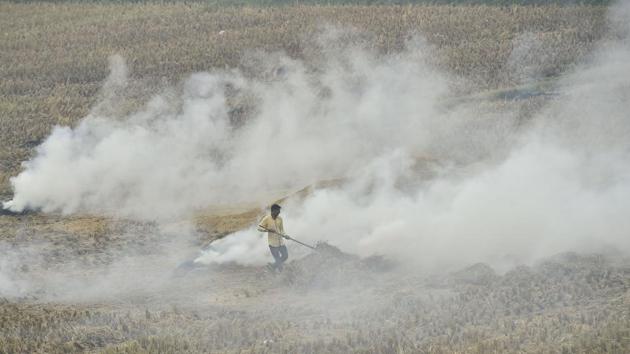
A Central Pollution Control Board official, who did not want to be named, said that north-westerly winds have blown the smoke created because of stubble burning in Punjab and Haryana from the northern plains because of a developing cyclonic depression over the Bay of Bengal.
Pollution spikes are common in the first half of November in northern India as farm fires peak in Punjab and Haryana during this time and the resulting smoke settles over the region. Farmers often burn stubble left behind after harvest as a quick and cheap way of clearing their fields for the next round of sowing.
The air quality in Delhi was reduced to its worst level since 2016 on Sunday as the AQI sharply rose to a severe level of 494, which can worsen existing respiratory illnesses and affect even healthy people.
The CPCB’s real-time monitor showed the AQI crossing the 300-mark in some parts of Chennai. The average AQI of Chennai was 272, almost double the level on November 2. Odisha’s Talcher recorded the highest AQI in the country--413. The air quality is considered good when the AQI is below 50 and satisfactory when it is under 100.
The AQI in Andhra Pradesh’s Visakhapatnam and Vijayawada rose to 224 and 204—from 252 and 197 last Saturday. The AQI in Kolkata was 215 while it was 317 a day earlier. The pollution levels dipped in Bangalore with the AQI being 156 compared to 165 on Wednesday because of the local weather conditions.
An India Meteorological Department (IMD) official said that the cyclonic storm, which is expected to make landfall on Friday, is preventing pollutants from dispersing over the Bay of Bengal as it is moving towards the eastern coast. “In fact, strong inward winds from… [the Bay of Bengal] have pushed the winds carrying the smoke towards south from eastern India…,” an IMD scientist said.
The CPCB official quoted above said that the pollution levels in southern and eastern cities have also increased because of the local factors like emissions from vehicles but the spike was because of the winds carrying the particulate matter.
The CPCB official cited above said the impact of the depression in the Bay of Bengal will also end with heavy rains, which is also expected to bring some respite.
Officials said that unlike in the northern Indian plains, the air pollution monitoring in eastern and southern India, considered to be comparatively cleaner, is less common. For instance, Kolkata has only seven monitoring stations, Chennai four and Visakhapatnam one. Delhi has 38 pollution monitoring stations.
Environmentalist Nityanand Jayaraman said that Chennai’s air pollution has worsened due to growing vehicles, three harbours, thermal power plants and oil refineries. “The wind blowing from...[north India] is also causing pollution here...,” he said.
Raj Bhagat Palanichamy, a remote sensing analyst with the World Resources Institute blamed the farm fires’ smoke for the rise in pollution levels in eastern and southern India.


