
 E-Paper



Stage set for CP Radhakrishnan vs Sudershan Reddy: How are Vice President polls conducted
The Vice President of India is elected by an electoral college, which consists of members of both Houses of Parliament.

 Prefer HTon Google


The members of Parliament are all set to elect the next Vice President of India on Tuesday, September 9, months after Jagdeep Dhankhar resigned from the post citing health reasons mid-way his term which was scheduled to end in 2027.
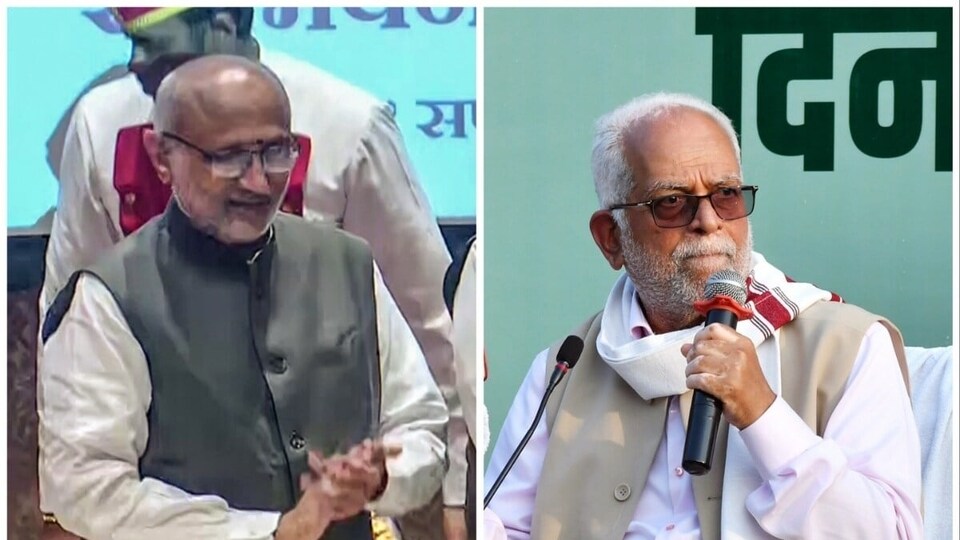
The choices in front of the Parliament are — Bharatiya Janata Party-led NDA’s CP Radhakrishnan, who has served as Governor of several states, and Indian National Congress-led INDIA bloc’s Sudershan Reddy, a former Supreme Court judge.
How is the Vice President of India elected?
The Vice President of India is elected by an electoral college, which consists of members of both Houses of Parliament, in accordance with the system of proportional representation by means of the single transferable vote.
The voting in the Vice-President poll is done by secret ballot. The Electoral College to elect a person to the office of the Vice-President consists of all members of both Houses of Parliament.
Also, the Vice President of India is not a member of either House of Parliament or of a House of a Legislature of any state. If a member of either Lok Sabha or Rajya Sabha, or of a House of a Legislature of any state is elected to the post of Vice President, that person is deemed to have vacated their seat in that House on the date they enter the office as Vice President.
The election for the post of the Vice President is conducted by the Election Commission of India.
How are votes counted?
The number of first-choice votes received by each candidate is determined.
The calculated numbers are added together; the total is divided by two, and one is added to the quotient, disregarding any remainder. The resulting number is the quota required for a candidate to run in the election.
If the total number of votes credited to any candidate at the end of the first or any subsequent count is equal to or greater than the quota, that candidate is declared elected.
What qualifies a candidate for contesting for the Vice President's post?
A candidate can only contest for the vice president's post if he is a citizen of India, has completed 35 years of age and is qualified for election as a member of the Rajya Sabha.
A person is also not eligible if he holds any office of profit under the government of India or a state government or any subordinate local authority.


