
 E-Paper



Stalin tables Bill to set up panel for SC/ST members
The Bill clarifies that the National Commission for the SCs and STs will prevail over the yet to be set up state commission.


Tamil Nadu government will set up a commission for Scheduled Caste (SC) and Scheduled Tribe (ST) communities, which will have functionary powers of a civil court, the chief minister MK Stalin announced in the state assembly this week.
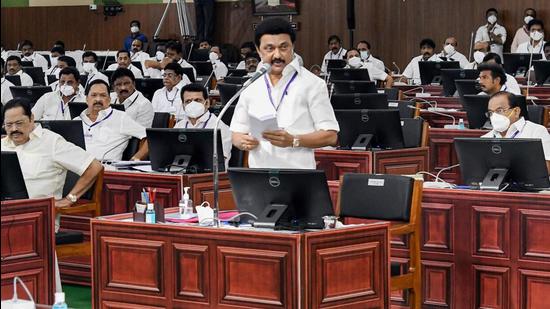
A Bill to this effect was introduced in the assembly on Thursday to be called The Tamil Nadu State Commission for the Scheduled Castes and Scheduled Tribes Act, 2021. The commission will be empowered to inquire suo moto or on a petition by the victims. With the powers of a civil court trying a suit (under the Code of Civil Procedure, 1908), the commission can summon any person, examine witnesses, call for the production of any document, receive evidence on affidavits, and requisition any public record from any court or office. “To safeguard the welfare of the SCs and STs, and to protect and develop their economic and social wellbeing, the state government has decided to constitute the commission,” said Stalin, after the Bill was tabled. This decision was taken following suggestions from the vigilance and monitoring committee on August 19, a recently reconstituted body with Stalin as the chairman.
The Bill clarifies that the National Commission for the SCs and STs will prevail over the yet to be set up state commission. If the national body is seized of any matter, the state body will not have jurisdiction on the same and in case of conflicting recommendations, the national body’s decisions will prevail.
The state commission will have a chairperson, vice-chairperson and five members, out of which three will be from SCs, two from STs and a woman member.
The commission will look into any violations of rights provided under the Protection of Civil Rights Act, 1955 and the Scheduled Castes and Scheduled Tribes (Prevention of Atrocities) Act 1989. Among its functions, the commission can recommend action against public servants who are negligent in preventing such violations. The commission is expected to investigate and monitor safeguards present in various legislations, in the interest of SC/STs and promote awareness of the same. “Undertake a review of the implementation of the policies pursued by the Union and state government with respect to SCs and STs,” the Bill read. The state government will consult the commission on policy matters related to the community, and the commission will also carry out research work to avoid discrimination.
Stalin also drew on the past achievements of the DMK regime, which increased the reservation for the community and introducing a 3% special reservation for SC Arunthathiyars to state it was their tradition to protect the interests and ensure equality. In a separate announcement earlier this week, Stalin also supported the caste-based census and said that he would soon write to Prime Minister Narendra Modi on the matter.
On Wednesday, Stalin said that ₹10 lakh reward as an incentive to panchayats following the practice of common crematoriums or graveyards. And to expedite cases related to the SC/ST Prevention of Atrocities Act, Stalin announced setting up four new special courts in Salem, Krishnagiri, Madurai and Tirunelveli, since these places have more pending cases. He also said that schools run by the Adi Dravidar Welfare Department will be brought to the mainstream under the guidance of the School Education Department.


