
 E-Paper



Stalin writes to PM Modi on ‘Hindi imposition’
The DMK chief also said attempts to “impose Hindi are divisive in character” and said it would be unacceptable not only to Tamil Nadu “but also to any state that respects and values their mother tongue”.


Tamil Nadu chief minister M K Stalin on Sunday wrote to Prime Minister Narendra Modi against “continuous efforts to promote Hindi in the name of one nation”, as he strongly opposed a purported suggestion of a Parliamentary panel to prioritise the language in public offices and central educational institutions.
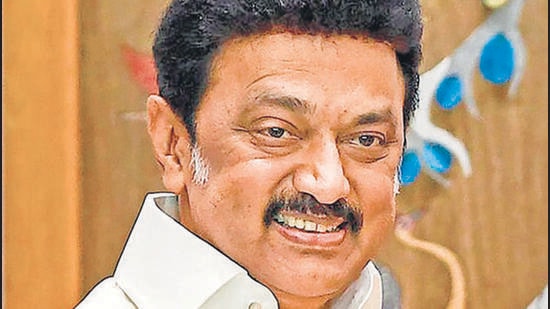
The Dravida Munnetra Kazhagam (DMK) chief also said attempts to “impose Hindi are divisive in character” and said it would be unacceptable not only to Tamil Nadu “but also to any state that respects and values their mother tongue”.
A purported report of a Parliamentary committee, headed by Union home minister Amit Shah, has recommended that India’s scheduled languages, including Hindi, get priority in public offices, higher education institutions such as IITs and IIMs, and in local courts (but not high courts).
Also Read | ‘Don’t force another language war by imposing Hindi’: Stalin warns Centre
However, according to two lawmakers in the panel, the report that has created a political controversy over fears of Hindi imposition does not actually impose the language on non-Hindi speaking regions and is in keeping with the tenets laid down by the New Education Policy.
In his letter to Modi, Stalin said: “It has been reported that the committee, chaired by Union home minister Amit Shah, submitted its report to the President of India, wherein inter-alia, has recommended that Hindi should be the compulsory medium of instruction in educational institutions of the Union government such as IITs, IIMs, AIIMS and central universities and Hindi should replace English.”
He said the panel has also suggested that “youth would be eligible for certain jobs only if they had studied Hindi, and removal of English (is proposed) as one of the compulsory papers in recruitment exams”.
“Such proposals went against the federal principles of the Constitution and would only harm the nation’s multi-lingual fabric,” Stalin said.
Any effort to “impose” Hindi in various ways as recommended in that report should not be taken forward and the “glorious flame of unity of India may be held high forever,” he added.
This is Stalin’s second letter on the matter to the Prime Minister within a week. He had earlier written to Modi on October 10, urging the Centre not to force ‘another language war’.
The chief minister recalled the state’s consistent opposition to Hindi “imposition”, the massive agitations in 1965 in the state and former prime minister Jawaharlal Nehru’s assurance that English would continue to be one of the official languages as long as the non-Hindi speaking people wanted.
On the 1965 anti-Hindi agitation in Chennai which saw the DMK come to power for the first time in the state, Stalin said: “Several brave young men sacrificed their lives in 1965 in the anti-Hindi agitation that erupted in Tamil Nadu against the imposition and to defend the mother tongue Tamil.”
“Tamil Nadu has been consistently and strongly raising its voice for the rights and protection of not just Tamils but all state languages,” he added.
Nehru gave an assurance that “English will continue to be one of the official languages as long as the non-Hindi speaking people want,” he further said.
“Subsequently, the resolutions passed in 1968 and 1976 on official language, and according to the rules laid down thereunder, ensured the use of both English and Hindi in Union government services. This position must continue to remain as the cornerstone of all discussions on official language,” he said.
Stalin called the Centre’s purported attempts to “impose Hindi” “impractical and divisive in character” and said it “puts non-Hindi speaking people in a very disadvantageous position in many respects”. “This will not be acceptable not only to Tamil Nadu but also to any state that respects and values their mother tongue,” he said.
On Saturday, the ruling DMK’s youth wing secretary and Stalin’s son, Udayanidhi Stalin, warned the Centre that his party would stage a protest against it in Delhi if Hindi was thrust upon Tamil Nadu.
The chief minister urged the Union government to provide all 22 languages, including Tamil, listed in the Eight Schedule the “official” tag. “All the regional languages, including Tamil, should be treated equally and that is the way to ensure the principle of unity in diversity,” he said.
“I would like to point out that the number of people speaking languages other than Hindi is numerically more than Hindi-speaking people in the Indian Union. I am sure you would appreciate that every language has its own specialty with its uniqueness and linguistic culture,” he said.
“It is with the objective of protecting our rich and unique languages from the imposition of Hindi that English has been made as the link language and continues to be one of the official languages of the Union government,” he added.
While there was no immediate political reaction to Stalin’s letter on Sunday, state Bharatiya Janata Party chief K Annamalai on Thursday denied any attempt to make Hindi mandatory during exams, saying “in such a hypothetical situation they would oppose it”.
Kerala chief minister Pinarayi Vijay too had written to Modi, on October 12, on the matter.
“The essence of India is defined by the concept of ‘unity in diversity’ which acknowledges cultural & linguistic diversity. Promoting any one language above others would destroy integrity,” Vijayan said.


