
 E-Paper



Stan Swamy: Champion of tribal rights who spent his last months in prison
The 84-year-old Swamy died in a Mumbai hospital on Monday. He was arrested by the National Investigation Agency (NIA) in an early morning raid at his non-governmental organisation (NGO) Bagaicha, on the outskirts of Ranchi, on October 9 last year.

 Prefer HTon Google


Stan Swamy was born in Tamil Nadu’s Tiruchirapalli town in 1937 and travelled the world as a Jesuit priest before settling down and building a centre outside Ranchi to work for tribal rights.
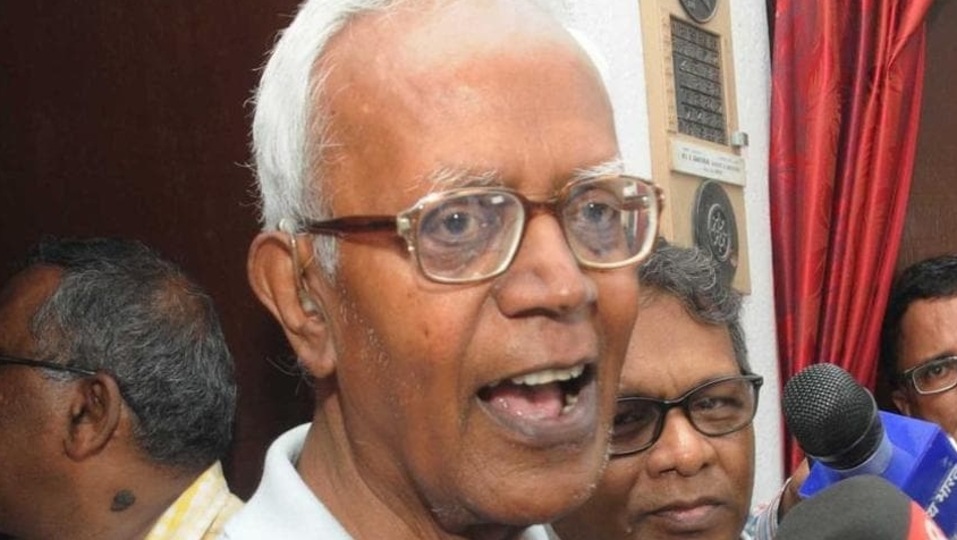
Swamy, 84, first travelled to Jharkhand in 1956 as a trainee cleric but got more involved in working with the local tribespeople in 1991. He helped tribal people fight illegal capture of their lands, filing claims and records and worked for the release of young tribal people from prison.
“Stan worked to light the world and do away with injustice,” Jerome Stanislaus D’souza, the president of Jesuits in India, said in a statement.
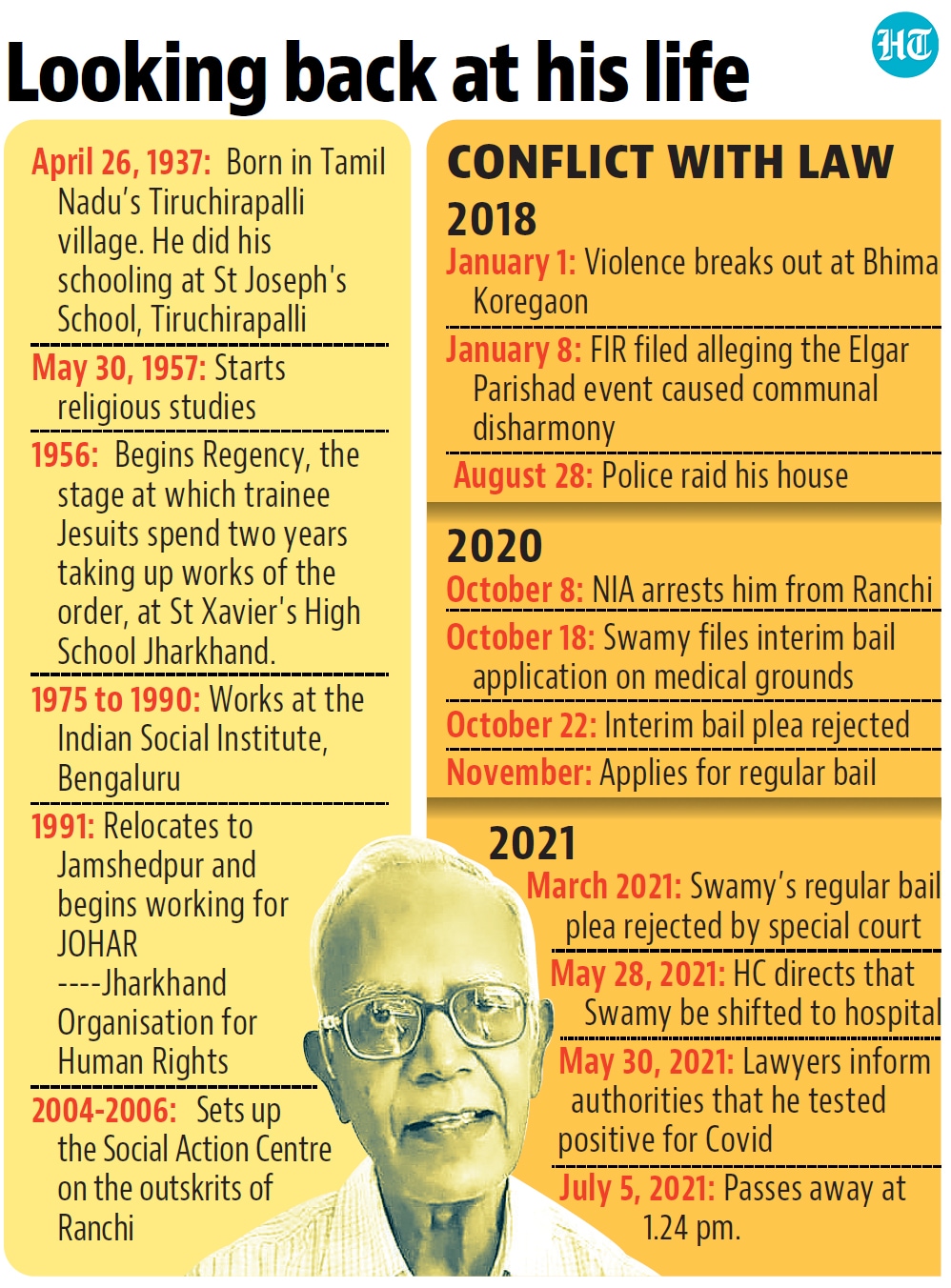
The 84-year-old Swamy died in a Mumbai hospital on Monday. He was arrested by the National Investigation Agency (NIA) in an early morning raid at his non-governmental organisation (NGO) Bagaicha, on the outskirts of Ranchi, on October 9 last year.
He was charged with being a member of the banned Communist Party of India (Maoist) and being involved in a conspiracy to instigate caste violence in the Bhima Koregaon village near Pune in 2018. Swamy denied the charges.
“Father Stan was a silent campaigner for poor tribals,” recalled his old associate and human right activist Xavier Dias. His close friend and colleague PM Tony said, “I know he was a very strong man from within and would have lived for another 15 years had he not been arrested.”
Bagaicha was established by Swamy in 2006 to conduct research to improve tribal lives and ensure welfare of the youth.
“His idea of life was so inspirational. He has worked tirelessly for tribals and youths in Jharkhand for several decades. I have come across very few people like him,” said Siraj Dutta, an activist who worked with Swamy.
“Bagaicha transformed into an institution of research for the causes of tribals and youth. His study on undertrials in jails of Jharkhand was one of the major highlights,” added Siraj. The study, a 2016 publication, showed that the percentage of tribals in jail was far higher than their share of the population.
Former chief information commissioner of India, Wajahat Habibullah, condoled Swamy.
“He was a man, who was simple and without ambition. Perhaps, it is liberation as he has to suffer travails of indignity and humiliation. All of this he stood up to.”
Noted economist Jean Dreze, who worked in close association with Swamy, said it was a sad day. “He was a symbol of injustice being done to undertrials in the country. Sadly, he himself become an under trial,” Dreze said. “Stan was a wonderful human being and an exemplary citizen. His death is the culmination of a series of acts of abominable cruelty,” he added.
Political leaders paid tribute to the activist. “Shocked to learn about the demise of father Stan Swamy. He dedicated his life working for tribal rights. I had strongly opposed his arrest & incarceration,” Jharkhand chief minister Hemant Soren tweeted.
“I am very saddened to hear that Fr #StanSwamy has passed away. A defender of indigenous peoples’ rights,” said European Union special representative for human rights, Eamon Gilmore.
“Heartbreaking: Death of Indian prisoner Father Stan Swamy after he got COVID,” said Nadine Maenza, chair of US Commission on International Religious Freedom.
“The news from India today is devastating. Human rights defender & Jesuit priest Fr Stan Swamy has died in custody,” said Mary Lawlor, United Nations special rapporteur for human rights defenders.
(With inputs from New Delhi)


