E-Paper



State will protect interests of indigenous Assamese: CM Sonowal
The Citizenship Amendment Bill, which was passed by Parliament on December 11, 2019, is aimed at fast-tracking the grant of Indian citizenship to members of religious minorities from the Muslim-majority countries of Afghanistan, Bangladesh and Pakistan.


Assam chief minister Sarbananda Sonowal said on Wednesday that the Citizenship (Amendment) Act (CAA) will not adversely affect the indigenous population of the state, stressing that his government had already framed rules to protect the interests of the Assamese population.
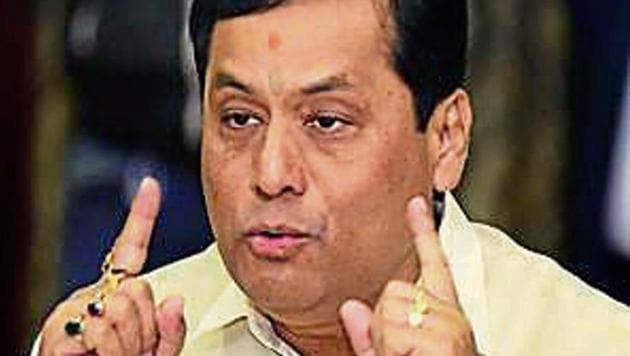
“On the first day of 2020, I would like to tell all indigenous people of Assam, with respect and full responsibility, that Assamese will remain completely secure. Constitutional safeguard for Assamese people, as mentioned in the Assam Accord, will be provided by the BJP-led coalition,” he said addressing the media in Guwahati.
“As for CAA, I request all not to be alarmed or worried. Keeping Assam’s interests in mind, our government has already drafted some rules on how CAA should be implemented in the state and sent those recommendations to the Centre,” he added.
The Citizenship Amendment Bill, which was passed by Parliament on December 11, 2019, is aimed at fast-tracking the grant of Indian citizenship to members of religious minorities from the Muslim-majority countries of Afghanistan, Bangladesh and Pakistan.
While protests in other parts of the country are taking place over non-inclusion of Muslims, north-eastern protesters are seeking repeal of the CAA as indigenous communities don’t want any foreigner, irrespective of their religion, to enter the region.
Sonowal stated that only those (foreigners) who have been living in India for decades will be able to apply for citizenship on the basis of CAA. The applications will be scrutinised carefully and only then citizenship will be given.
“Bangladeshis or people from other countries won’t be able to enter India now taking advantage of CAA. If you see the rules on how the legislation will be implemented in Assam, everything will become clear and all your questions and worries disappear.”
The CM said that there’s no truth in the claims made by some anti-CAA protesters that anywhere between 20 million to half a million people from Bangladesh will enter India, taking advantage of the CAA. “I don’t want to mention the figure of how many people will benefit from CAA as there is a lot of controversy on the numbers. But I can assure all that the figure will not hurt Assamese people demographically. No new foreigner will come in and we will not allow it,” said Sonowal.
The CM reiterated the Centre is committed to implement the recommendations of the high-level committee to provide constitutional safeguards to Assamese people as per Clause 6 of the Assam Accord within this year itself. He also listed some of the development projects including allocation of ~23,000 to boost production capacity of Numaligarh refinery initiated by the Centre to implement Clause 7 of the Assam Accord.
Blaming the previous government, he assured that a new land policy to protect the rights of indigenous people and informed about steps taken to promote and preserve language and culture.
“Suddenly, BJP is being portrayed as enemies who are conspiring to put Assamese in danger. There is no logic in that. Till I am chief minister I can never act against the interests of indigenous Assamese,” said the CM.
Meanwhile, anti-CAA protests continued in Assam on Wednesday. Sonowal was greeted with black flags in Nalbari, which resulted in a scuffle between police and protesters.
In the evening, as per an appeal of All Assam Students Union (AASU), people lit earthen lamps in memory of the five people killed in police firing last month during protests. “We offered our respects to the five souls who are not among us by lighting lamps. Our democratic and peaceful protest against CAA will continue till we reach our goal,” AASU chief adviser Samujjal Bhattacharya told journalists.