E-Paper



Student suicides reflect institutional failure: SC panel
Student suicide represents only the visible tip of a much larger iceberg of student distress. Beneath the surface lies a wide spectrum of distress.

 Prefer HTon Google


“I am writing to you today as not just one of the 80 affected scheduled caste postgraduate medical students but as an individual whose life is in imminent danger due to the very systemic failures your task force has been formed to address.”
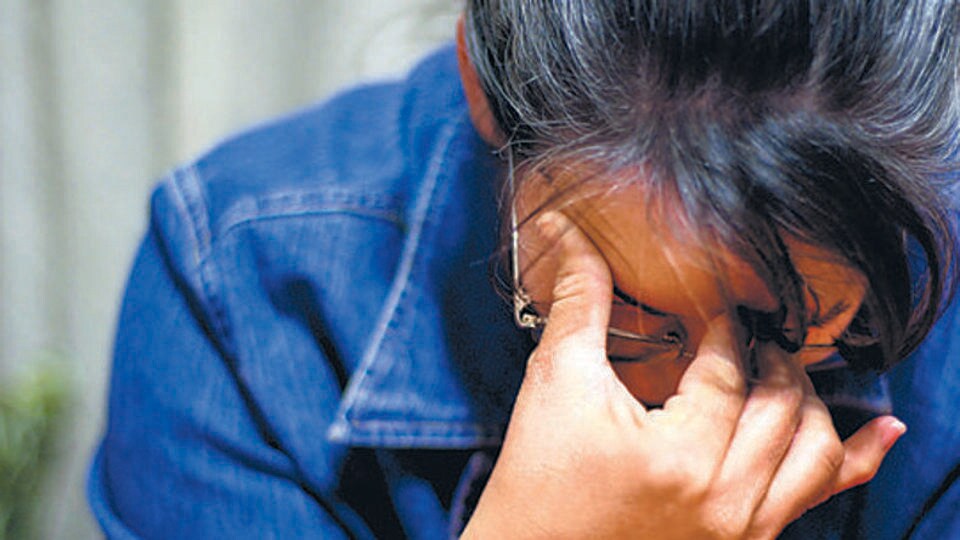
Thus began the 2025 testimony of a Dalit student from Gujarat to the Supreme Court-appointed National Task Force (NTF) looking into allegations of institutional discrimination, especially against marginalised communities, in campuses. The student, who remained anonymous, alleged a bureaucratic change in the definition of his scholarship scheme had halted payments over the previous two years, causing hardships.
“For over a year, my career has been forcibly suspended...my situation is a live case study of how systemic apathy can make a student feel like ending their life is the only way out,” said the email, seen by HT.
Unfortunately, this was not an isolated case. In its interim report submitted to the Supreme Court in November 2025 and made public on Monday, the 18-member body flagged widespread discrimination, weak grievance redressal mechanisms, academic pressure and severe gaps in mental health support across higher educational institutions.
“Student suicide represents only the visible tip of a much larger iceberg of student distress. Beneath the surface lies a wide spectrum of distress: suicidal attempts, ideations, passive death wishes, self-harm attempts, severe mental health struggles, and experiences of discrimination or exclusion,” said the report.

Social and structural factors at play
The panel found student suicides were rising despite a decline in the youth population, describing the trend as a matter of “grave concern” requiring urgent institutional reforms.
The panel warned that interventions focused solely on mental illness would have a limited impact without addressing the underlying “social, structural, and institutional factors”.
“Student suicides reflect not only individual distress but also point to failure at the institutional and systemic levels…However, if interventions are framed solely through the lens of mental health and illness, their impact will remain limited. A broader understanding is required, recognising the role of social, structural, and institutional factors,” the report said.
The task force was set up after the Supreme Court took cognisance of the deaths of two IIT-Delhi BTech students — 21-year-old Anil Kumar, a scheduled tribe student who died in July 2023, and 20-year-old Ayush Ashna, a scheduled caste student who died in January 2024. Their families alleged caste-based discrimination, prompting the apex court to order registration of FIRs and constitute the task force in March 2025.
The 192-page report identified what it called “small but significant patterns of suicide clusters” across higher education campuses, saying student deaths were “only one manifestation of distress” and reflect broader institutional and social factors rather than isolated tragedies.
Drawing on media reports from January to August 2025, the NTF identified 210 student suicides. Stream-wise information was available for 198 cases, with engineering students accounting for 63 deaths, followed by medical students (47) and nursing students (16). The panel noted that while engineering and medical students dominated media-reported cases, suicides among medical students appeared disproportionately high when enrolment figures were taken into account.
Caste bias a stressor
A substantial section of the report focuses on caste-based discrimination, which it describes as a key lens through which the social dimensions of student suicides in contemporary India have been understood.
The panel explicitly said that general category students never brought up caste and said caste bias was not present in their institution. But Dalit and Adivasi students flagged systemic and pervasive discrimination – including by professors.
“Students discussed how they faced discrimination in oral evaluations, despite scoring well in written exams and professors humiliated them for being “undeserving” due to their admission through reservations. If they qualify in the general section, they are indirectly pressured to enrol in the reserved seat, as the administration asks them to sign an undertaking to relinquish reservation benefits if they choose the general seat,” the report said.
If they are politically active about caste-discrimination, they are targeted and discriminated against by professors. Students reported that harassment by professors and supervisors have led to suicide attempts, but these were entirely suppressed by the university and the concerned faculty members were never held accountable. The institution did not have a history of student suicides but one student felt that this subtle insidious discrimination leads to dropouts – not a loss of life per se, but certainly of the academic futures of marginalised students,” the report added.
The panel said the issue acquired public prominence through cases such as that of research scholar Rohith Vemula, who died by suicide at the University of Hyderabad in January 2016, and postgraduate medical student Payal Tadvi, who died in Mumbai in May 2019 after allegations of caste-based harassment and ragging. “While a small number of cases have led to public campaigns such as Rohith Vemula and Payal Tadvi, most are nameless,” the report said.
Citing recent studies, NTF said elite institutions often offer only a “mirage for mobility” to students from Scheduled Castes, Scheduled Tribes and OBC communities. It noted that “upper-caste peers frequently question their merit, while faculty members dismiss academic struggles as ‘lack of innate ability’”. The report added that the “social mismatch” between faculty drawn largely from socially advantaged groups and an increasingly diverse student body creates exclusionary environments and experiences of discrimination and “othering”.
“The secondary literature on caste-based discrimination and its linkages to student suicides reveals how discriminatory practices have gone so far as to make a student end their life,” it said.
Language was flagged as another axis of discrimination. Limited English proficiency became the basis of segregation and discrimination in HEIs that had an English medium-only pedagogy and an English-dominated social environment. For socially marginalised students, this substantially lowered their self-esteem and their sense of belonging,” the report said.
Mental health support gaps
Headed by former Supreme Court judge, justice S Ravindra Bhat, the panel said consultations with stakeholders and a pan-India online survey showed that student distress was often linked to a combination of academic, social, financial and institutional factors. Apart from receiving responses from 2,119 HEIs between August 8 and September 19 last year, the NTF conducted 30 meetings across 19 institutional sites in Delhi-NCR, Tamil Nadu, Karnataka, Assam and West Bengal.
Based on the responses, the panel found serious gaps in mental health support systems. Overall, 65% of institutions reported having no access to mental health service providers, while 1,537 institutions (73%) lacked any full-time mental health professional. Only 169 institutes (8%) reported one full-time provider and 154 (7%) reported having two to five. Less than 20% had formal ties with nearby mental health services and fewer than 4% had a suicide-risk assessment and management protocol. Over 82% of institutions reported 50 or fewer new counselling registrations in a year, while 45% had not conducted faculty sensitisation workshops on student mental health in the preceding 18 months.
The report cautioned that these findings were preliminary, based on a 3.5% response rate among 60,383 HEIs. It also recorded students’ concerns over discrimination based on caste, gender, disability, language and regional identity, inadequate support for first-generation learners, financial stress, rigid attendance rules, academic overload, poor hostel facilities and ineffective grievance mechanisms.
The NTF warned against the “tokenistic implementation” of mental health measures and said, “The challenge of student mental health cannot be addressed solely through counselling services,” stressing the need for a “whole-institution approach” integrating governance, teaching practices, student support and campus culture.
Among its recommendations, the panel called for a centralised mechanism to collect and analyse student suicide data, mandatory faculty training to identify students at risk, stronger anti-discrimination measures, professional counselling services, clear crisis-response protocols and stronger grievance-redressal systems.
A member of the panel told HT that work on the final report is ongoing and that surveys closed in December 2025 after receiving responses from 16,750 HEIs. More than 1.28 million students, 160,000 faculty members, 226,000 parents, over 6,800 mental health professionals and 225,000 members of the public participated. The NTF also conducted field visits to 29 institutions across nine states, the member said.
But it will be a long road ahead. As the panel found, grievance redressal mechanisms were broken or absent in most institutions, even for basic phenomena such as ragging, which is already outlawed. Students told the panel that bureaucratic responses stonewalled their complaints and ultimately offered no resolution. “We go again and again,” one student said. “Unless we protest, nothing happens.”