
 E-Paper



SC directs Centre, NCR states to allocate budget for RRTS
The first instalment of ₹265 crore from Delhi came in March 2019 when the Supreme Court allowed the Delhi government to make this payment from the ECC fund collected from trucks and good vehicles entering Delhi


The Supreme Court on Friday allowed the Delhi government’s request to utilise Rs. 500 crore from its environment compensation charge (ECC) fund for payment towards the Delhi-Meerut Regional Rapid Transit System (RRTS) and directed Centre and states of Haryana, Rajasthan and the National Capital to make suitable budgetary allocation for the other pending RRTS corridor projects, connecting Delhi with Alwar and Panipat.
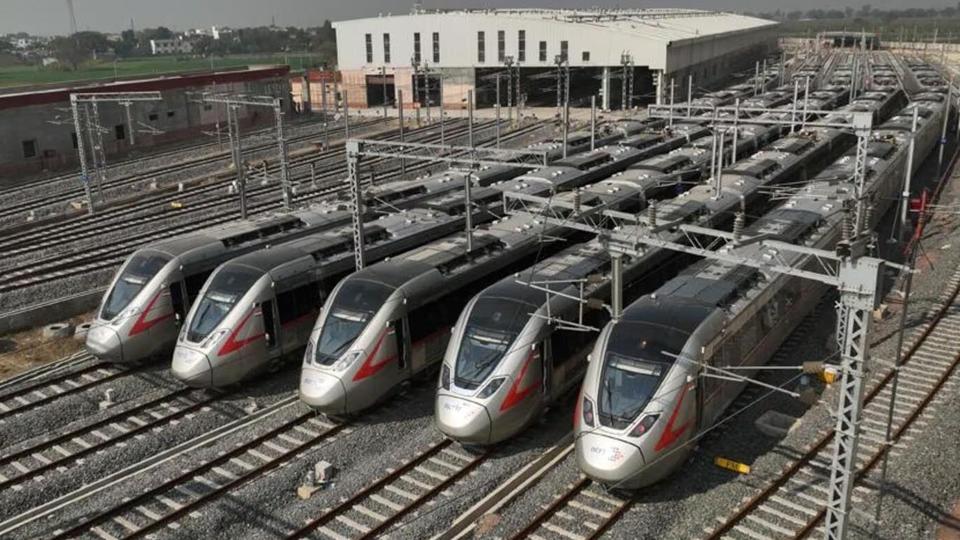
The Aam Aadmi Party (AAP) government approved the Delhi-Meerut RRTS project, an 82.15 km long rail corridor, from Sarai Kale Khan to Modipuram in Meerut and agreed to invest Rs. 1,180 crore for the 13-km stretch of the corridor falling within Delhi.
The first instalment of ₹265 crore from Delhi came in March 2019 when the Supreme Court allowed the Delhi government to make this payment from the ECC fund collected from trucks and good vehicles entering Delhi. Since then, despite several reminders from the National Capital Region Transport Corporation Limited (NCRTCL), Delhi has failed to make further deposits citing a “cash crunch”.
Also Read: Greens seek forest dept, IIT-B’s intervention as Metro ‘undercounts’ trees in Aarey
In a fresh application moved before the top court in January, the AAP government requested to permit them to take a further draw from the ECC fund of Rs. 500 crore to pay its outstanding share for the Delhi-Meerut RRTS.
A bench of justices Sanjay Kishan Kaul and Ahsanuddin Amanullah allowed the state’s request after it found that under the ECC fund, Delhi had collected over Rs. 1,126 crore. Senior advocate Aparajita Singh assisting the Court as amicus curiae supported the application arguing that the RRTS is a crucial project to save Delhi’s environment and reduce pollution and such a measure should not be held up for want of finances.
At the same time, she informed the Court that the remaining two corridor projects under the first phase of RRTS are yet to be approved. An application moved by NCRTCL stated that while the Delhi-Alwar RRTS project passing through Rewari is awaiting sanction by the Centre, the Delhi-Panipat RRTS is awaiting the Delhi government’s nod.
The Court while directing the Centre and Delhi government to come up with instructions in this regard in four weeks, said, “We may note that the budgetary allocations have to be made both by Centre and concerned states as regards the two projects.” The Haryana government represented by advocate Alok Sangwan informed the Court that the state had given all its clearances and was waiting for the project to take off.
Also Read: Mumbai airport recorded 44 million passenger traffic in previous fiscal
The monitoring of the RRTS projects was taken up by the Supreme Court in a batch of cases under the MC Mehta matter pending since 1985, which deals with several measures taken from time to time to reduce pollution in Delhi.
The RRTS was conceived as one such step to reduce the vehicular load between Delhi and NCR. The Delhi-Meerut rail corridor has been envisaged to carry 2,000 passengers through a 60-minute journey across 24 stations. The three destinations of Meerut, Alwar and Panipat would have a common starting and ending point at Delhi’s Sarai Kale Khan bus depot. The entire Delhi-Meerut corridor will be commissioned in 2025.


