E-Paper



Supreme Court dismisses challenge to Allahabad high court’s Sambhal mosque order
On November 29, 2024, the Supreme Court intervened to restrain trial court from proceeding in the matter and directed the mosque management committee to approach the high court

 Prefer HTon Google


The Supreme Court on Tuesday rejected a plea challenging the permission granted by the Allahabad high court to the Archaeological Survey of India (ASI) to whitewash the Jama Masjid in Uttar Pradesh’s Sambhal from the outside and install decorative lighting, provided no tampering was done to the structure.
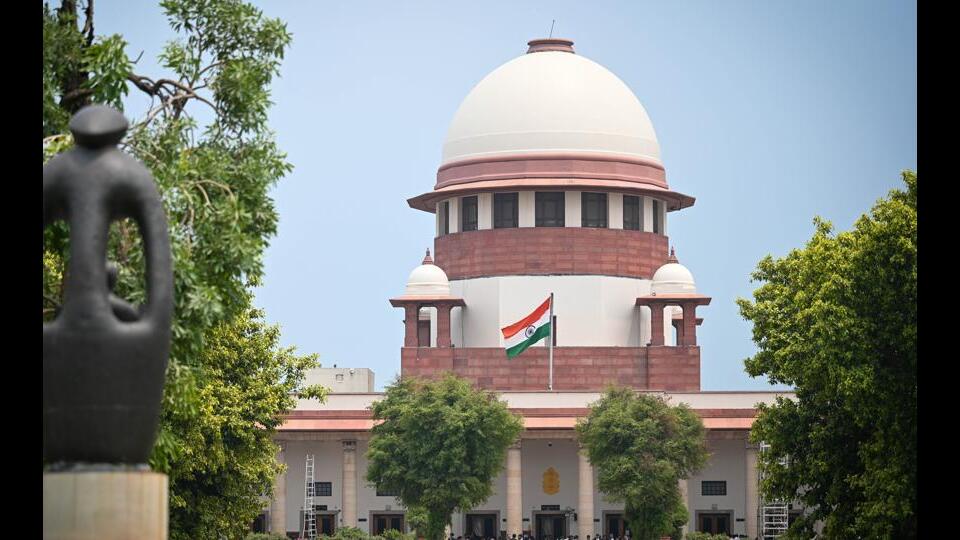
A bench, comprising Chief Justice of India Sanjiv Khanna and Justice Sanjay Kumar, refused to interfere with the high court’s decision, emphasising that no prejudice had been caused. “...we are not going to entertain this,” said the bench, dismissing petitioner Satish Kumar Aggarwal’s plea. The court underscored that such matters did not warrant its intervention, particularly after the high court examined all the facts.
Aggarwal’s petition challenged the March 12 order, arguing that allowing whitewashing could amount to altering the characteristics of the “disputed” structure. On Tuesday, his lawyer said the high court should not have issued any directives in light of the Supreme Court’s December 2024 order, restraining courts across India from passing effective orders in cases concerning the religious character of structures. The Supreme Court was unconvinced and summarily dismissed the plea.
The dispute in the matter stems from a claim that the Mughal-era mosque was built after demolishing the historic Harihar Temple. Violence erupted during a trial court-ordered survey of the Shahi Jama Masjid on November 24, 2024, and left four people dead.
On November 29, 2024, the Supreme Court intervened to restrain the trial court from proceeding in the matter and directed the mosque management committee to approach the high court. The apex court instructed the Uttar Pradesh government to ensure peace and explore resolution through community mediation under Section 43 of the Mediation Act. It placed the survey report under wraps, prohibiting authorities from acting upon or publicising it until the high court adjudicated the matter.
On March 12, Justice Rohit Ranjan Agarwal of the high court formed a panel comprising ASI officials, a scientific expert, and a local administration representative to oversee the whitewashing and ensure no structural damage. The court issued the directive on a request by the mosque management committee, which agreed to reimburse ASI for the cost of the whitewashing.
Justice Agarwal expressed concern over ASI counsel’s argument that the mosque management committee was conducting painting activities for years, allegedly damaging the exterior. He questioned why the ASI had not intervened earlier if it believed such actions were harmful.
In February, the Uttar Pradesh Police’s Special Investigation Team (SIT) submitted a charge sheet exceeding 4,000 pages in six out of the 12 cases related to the violence, which erupted during ASI’s survey. It said 80 individuals have been arrested, while 79 remain at large, bringing the total number of accused to 159. The document said weapons recovered from the site of the violence and other locations had origins in countries such as the UK, USA, Germany, and Czechoslovakia.
The Uttar Pradesh government constituted a three-member panel, led by former Allahabad high court judge Devendra Kumar Arora, to investigate the violence.
The dispute over the Shahi Jama Masjid dates back to November 19, 2024, when a suit was filed alleging that the mosque was built over a pre-existing Hindu temple. The plaintiffs sought permission for Hindu worship at the site, leading to a local trial court ordering a survey, which was conducted with photography and videography. The mosque management committee said that the survey was conducted ex parte, without prior notice, and alleged undue haste in the proceedings.
The controversy surrounding the Shahi Jama Masjid is part of a broader trend of disputes over religious sites. The Supreme Court’s December 12, 2024, directive restrained courts across the country from entertaining fresh suits or ordering surveys to determine whether temple structures lay beneath existing mosques.
These legal battles are being examined in the context of the Places of Worship (Special Provisions) Act, 1991, which freezes the religious character of places of worship as they stood on August 15, 1947, except for the Ayodhya-Babri dispute, which was pending in courts at that time.
Hindu litigants argue that such laws infringe upon their fundamental rights to reclaim places of worship allegedly altered during historical invasions. Muslim groups and some political parties, including Congress, insist that the 1991 Act is crucial for maintaining communal harmony and upholding India’s secular framework.