
 E-Paper



Supreme Court expresses concern over fake Covid-19 compensation claims
In Maharashtra, the number of compensation claims has exceeded 241,000, although the official death toll due to coronavirus stands at 143,706 in the western state.

 Prefer HTon Google


Worried over the use of fake medical certificates to claim Covid-19 compensation, the Supreme Court on Monday said it will not allow its directive for swift payments to be misused. The court might order a probe by an independent agency if there was evidence that officials were involved in paying compensation to ineligible applicants.
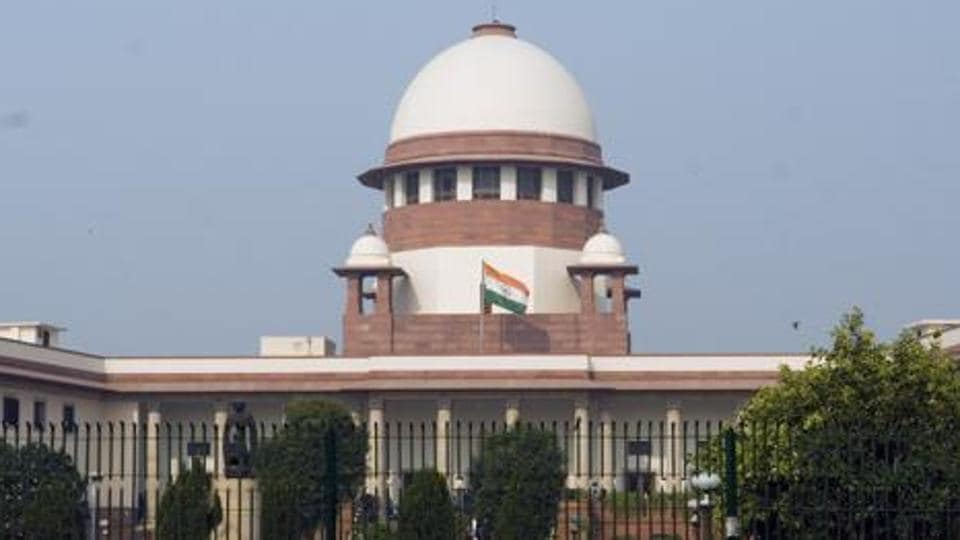
“What concerns us most are the fake certificates given by doctors,” said a bench of justices MR Shah and BV Nagarathna. “It is a serious thing. Our order should not be misused by anybody as it amounts to depriving the claim of a genuine person.”
The issue of fake documents was highlighted by solicitor general Tushar Mehta. “We have serious reservation that beside RT-PCR, a certificate of Covid treatment by a doctor will entitle for payment of ex-gratia,” the government’s lawyer said. “In some states, we have information that some doctors are giving out prescriptions for Covid treatment.”
“On fake claims, we want suggestions on how it can be curbed,” the judges said.
Posting the matter for further hearing on March 14, the bench added, “In states such as Maharashtra and Kerala, where there is an alarming situation of Covid cases, it may be that some cases may be fake.”
In Maharashtra, the number of compensation claims has exceeded 241,000, although the official death toll due to coronavirus stands at 143,706 in the western state.
“There are states where initial death recorded were around 40,000 and claims have now gone up to two lakh,” the apex court observed.
In its latest affidavit, the Maharashtra government told the court that out of 241,000 claims, nearly 68,000 were rejected and over 14,000 claims are under scrutiny. Among the reasons specified for rejection, most claims (23,210) did not tally with the death toll maintained by Indian Council of Medical Research, while in other cases, the state found multiple claims against a single death, unproved relationship to the deceased, death certificate not in the prescribed format, and death having occurred outside state, or beyond 30 days after being diagnosed of Covid-19.
In some places, the authorities might have connived in paying out undeserving compensation. “In some cases, it may be that the state is helping, as the government itself may be interested in giving compensation to fake applicants,” the bench said. “We may have to hand over the matter to an independent agency if some concrete material is found on this.”
The court should specify a cutoff for receiving claims, Mehta suggested. “There has to be an outer limit to apply for deaths which have already occurred,” he said. “And if there are further deaths, claimants should apply in four weeks.”
The court also felt that applying for compensation cannot be an endless exercise. “Those who are genuine applicants would have applied within six months of the death having occurred. We have even ordered the legal service authority to engage para legal volunteers to reach out to these victims,” the judges said. “For how much time should this continue? It cannot be an endless thing.”
Hearing two public interest litigations filed by advocate Gaurav Kumar Bansal and another lawyer, the top court had held on June 30 last yearthat persons who died due to Covid-19 shall be entitled to compensation since the pandemic was a notified disaster under the National Disaster Management Act, 2005.ansal said.
Legal service authorities in every state are reaching out to the families of those who died of coronavirus, Bansal told the court on Monday.
There were other problems that states brought to the court’s notice while implementing its order of October 4.
Assam was faced with a situation where there were more than one orphan in a family who lost their parents. While the state had paid compensation for the death of parents to one orphan, it wished to know if the other siblings too shall be entitled for the same amount.
”Prima facie, we are of the opinion that each one of the orphans will be entitled to ex-gratia,” the court clarified.
The bench asked advocate Diksha Rai Goswami, appearing for the Assam government, to move an application in this regard on which orders could be passed.


