
 E-Paper



SC allows Chhattisgarh to recruit under 58% quota law as interim measure
The bench was confronted with an urgent request by the state that due to the stay operating against the law, recruitments had come to a standstill and faced with extreme shortage of manpower


The Supreme Court has granted a temporary concession to Chhattisgarh government to implement the law providing 58% reservation in the state to Scheduled Castes (SC), Scheduled Tribes (ST) and Other Backward Classes (OBC) in public employment after the Chhattisgarh high court struck down the law in September last year.
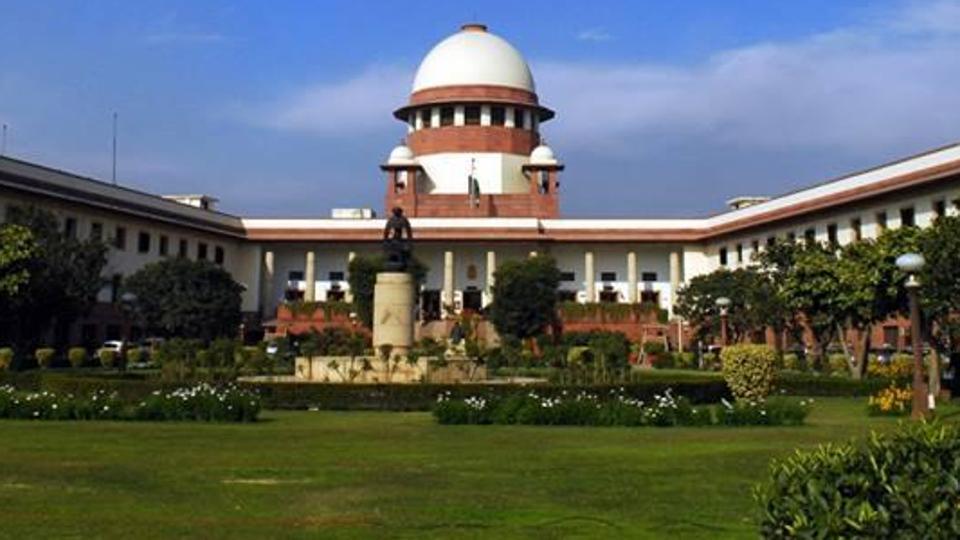
The appointments made will be subject to the challenge to the law pending before the top court.
A three-judge bench headed by justice BR Gavai was confronted with an urgent request by the state that due to the stay operating against the law, recruitments in the state had come to a standstill and they faced extreme shortage of manpower.
Also Read:Chhattisgarh CM writes to PM Modi, seeks inclusion of amended quota provisions
Realizing the extraordinary situation, the bench also comprising justices Vikram Nath and Sanjay Karol in its order on Monday said, “We find that a situation cannot be permitted where the state does not have requisite manpower to run the administration.”
The Court permitted the state to go ahead with the selection process and make appointments and promotions under the 2011 law titled Chhattisgarh Lok Seva (Anusuchit Jatiyon, Janjatiyon aur Anya Pichada Vargon ke liye (Sanshodhan Andhiniyam) 2011.
It further clarified that any action by the state will be subject to final result in the appeal filed by the state challenging the Chhattisgarh high court’s decision of September 19.
The bench said, “All appointment and promotion orders shall specifically mention that such appointments and promotions are subject to the final outcome of the present proceedings.”
The Court posted the appeal of the state along with accompanying petitions in July.
The high court had passed an order on a petition filed by Guru Ghasidas Sahitya Evam Sanskriti Academy which faulted the state law on the ground that it breached the 50% ceiling limit on reservation held by a 1994 Constitution bench decision of the top court in Indira Sawhney case.
Further, the petition argued that the 2011 law reduced the total share available to SCs
The state law permitting 58% reservation provided reservation of 12% to SCs, 32% to STs and 14% to OBCs.
The HC struck down the state law as unconstitutional going by the 50% rule laid down by the top court.
Senior advocate Abhishek Manu Singhvi along with advocate Sumeer Sodhi appearing for the state informed the Court that advertisements for vacancies have been issued and the selection process was in the process when the HC pronounced its order.
He submitted that if the state was not allowed to go ahead with the recruitment and promotions, it will face an acute shortage of manpower.
Prior to the 2011 law, since the state was part of the undivided Madhya Pradesh state, the reservation policy applicable in Madhya Pradesh prevailed in Chhattisgarh.
Under this law, SCs got 16%, STs 20% and OBCs 14% for recruitment to Class 3 and 4 posts in state employment.
In the 2001 census, the ST population was found to be 31.8% and that of SCs was 11.6%.
Based on this figure, the central government revised the reservation policy in the state.
Under this, the reservation in posts was distributed as SCs (12%), STs (32%) and OBCs (6%).
The state formed a secretarial committee to come out with revised reservation figures.
The report was examined by a committee of ministers which led to the 2011 law being passed by the state legislature on December 17, 2011.
The state government relied on the Indira Sahwney judgment to show that “extraordinary” circumstances can warrant the state to increase reservation beyond 50%.
The HC order was challenged on the grounds that additional material sought to be produced by the state was not permitted to be filed.
Further, the state relied on the study undertaken by a secretarial committee which provided a scientific basis for increasing reservation.


