
 E-Paper



Supreme Court junks FEMA confiscation of firm linked to DMK MP S Jagathrakshakan
The bench ruled that the confiscation order was legally unsustainable because the adjudicating authority proceeded on a fundamentally flawed premise

 Prefer HTon Google


The Supreme Court has set aside the confiscation of properties belonging to Accord Distilleries & Breweries Pvt Ltd and its directors including DMK’s five-time member of Parliament S Jagathrakshakan, and his son, and Chennai-based businessman J Sundeep Anand and his daughter, holding that the very foundation of the proceedings under the Foreign Exchange Management Act (FEMA) had been vitiated, rendering the action “arbitrary and contrary to law”.
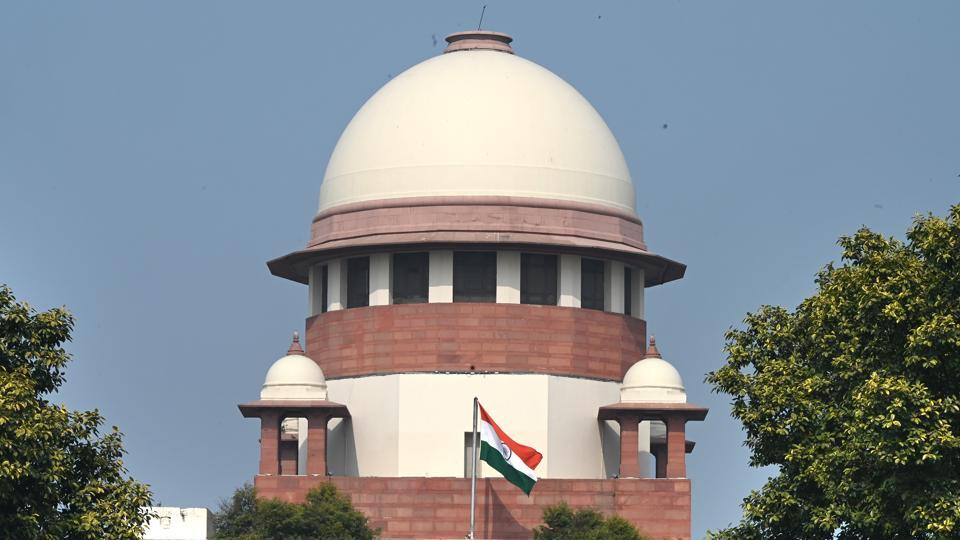
A bench of justices Vikram Nath and Sandeep Mehta found that the confiscation order was legally unsustainable because the adjudicating authority proceeded on a fundamentally flawed premise, ignoring prior findings that went to the root of the case.
It referred to a key procedural lapse that the competent authority under the FEMA had earlier refused to confirm the seizure of the company’s assets, effectively holding that there was insufficient basis for such action.
This finding, the Supreme Court noted, directly impacted the very foundation of the show cause notice (SCN) and subsequent adjudication proceedings. Despite this, the adjudicating authority went on to pass a final order imposing penalties and ordering confiscation, an approach the top court found deeply flawed.
In its judgment released on Thursday, the bench held that once the competent authority declined to confirm the seizure on substantive grounds, the “foundational facts” necessary to sustain the proceedings stood eroded. In such a situation, continuing with adjudication and culminating in confiscation amounted to proceeding without a valid legal basis.
Senior advocates Sidharth Luthra and HP Raval appeared for the DMK MP and his family.
The court was particularly critical of the adjudicating authority’s handling of the earlier order. It noted that the authority effectively “undid” the findings of the competent authority even as an appeal against that order was still pending before the appellate tribunal.
Such an approach, the bench held, was impermissible. By disregarding the subsisting order and proceeding independently, the adjudicating authority not only bypassed the statutory scheme but also encroached upon the domain of the appellate authority.
“This tantamounts to abdicating the powers of the appellate authority,” said the court, underlining that the statutory hierarchy under FEMA cannot be short-circuited.
The judgment also flagged another infirmity -- the reliance placed by the adjudicating authority on observations made by the Madras High Court, which had incorrectly assumed that the seizure stood confirmed. In reality, the competent authority had refused such confirmation.
By proceeding on this erroneous premise, the adjudicating authority allowed its decision-making process to be influenced by findings that did not reflect the true factual and legal position. The Supreme Court noted that such reliance had the effect of prejudicing the appellants and foreclosing issues that were still subject to adjudication.
Further, the court emphasised that the outcome of the pending appeal against the competent authority’s order ought to have been awaited before proceeding with final adjudication. Ignoring this step disrupted the statutory sequence contemplated under FEMA and rendered the process legally untenable.
In view of these cumulative infirmities, the bench declared the confiscation order and the underlying adjudication proceedings to be unsustainable. It set aside the 2024 orders of the Madras High Court as well as the adjudicating authority’s final decision, restoring the matter to the stage of the show cause notice.
The court directed that the appellate authority must first decide the pending appeal against the competent authority’s order within two months. Only thereafter can the adjudication proceedings resume, and that too without being influenced by earlier observations.



