
 E-Paper



Supreme Court seeks ‘out-of-box’ solutions for SC/ST students
The SC issued notice on the PIL to Centre, UGC and NAAC, but the UGC and the Union government have not filed responses thus far

 Prefer HTon Google


Calling the deaths of students from marginalised communities in institutions of higher learning a “sensitive matter” that required “out of the box thinking”, the Supreme Court on Thursday gave the University Grants Commission(UGC) four weeks to come up with plan to create a discrimination free environment for students from the scheduled castes and tribes. A two-member bench of justices AS Bopanna and MM Sundresh was adjudicating a public interest litigation filed by the mothers of Rohith Vemula and Payal Tadvi, both Dalit students who died by suicide in the face of alleged discrimination at the Hyderabad Central University and TN Topiwala Medical College in Mumbai respectively.
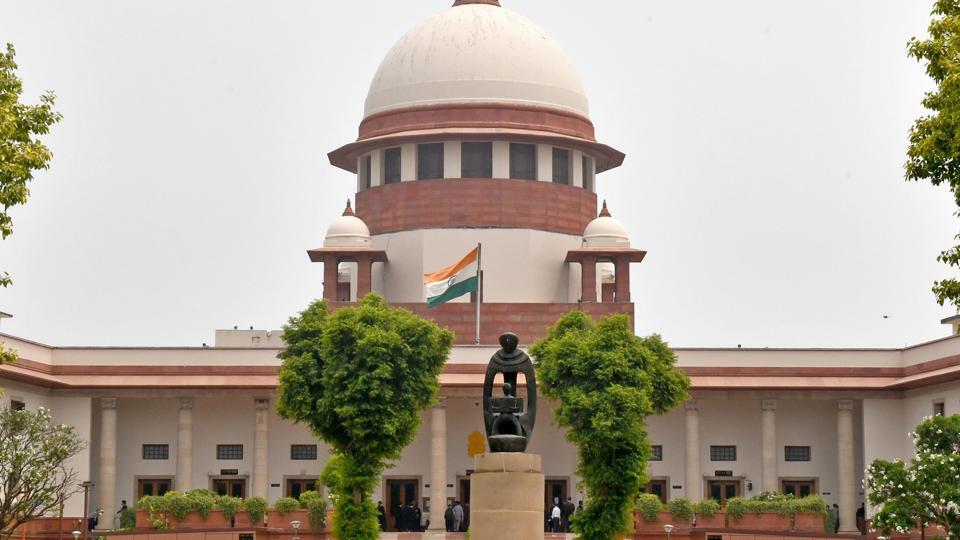
The Supreme Court issued notice on the PIL in September 2019 to Centre, UGC and National Assessment and Accreditation Council (NAAC), but the University Grants Commission and the Union government have not filed responses thus far. On Thursday, justices Bopanna and Sundresh gave the UGC one more chance to file a reply underlining the seriousness of the issue at hand. Nobody appeared for the Union government. “You (UGC) have to look at the concerns of the petitioners who have lost their children. It is a sensitive matter and you have to take action,” the bench said. The case will next be heard in four weeks.
Advocate Manoj Ranjan Sinha, representing UGC said that the commission had introduced the Promotion of Equity Regulations in 2012 to contain discrimination, and said that heads of universities had been asked to strictly implement its provisions.
The 2012 UGC regulations came as a direction issued by UGC asking all higher educational institutions not to discriminate against any student belonging to SC/ST in matters of admission. The institutions were also required to prohibit, prevent and also punish persons and authorities in the institutions who harass or victimise any student on basis of caste, creed, religion, language, ethnicity, gender or disability.
Appearing with advocate Nupur Kumar and Abeda Salim Tadvi, senior advocate Indira Jaising said that the primary responsibility to ensure universities are safe for marginalised students lies with the UGC. She argued the 2012 equity regulations were not binding on institutions in the absence of any sanction for punishment for their non-implementation. “In this year alone, there have been three more suicides reported of SC/ST students – one at the National Law University, Odisha, another at IIT-Bombay and a third at a medical college in Amritsar,” she said.
Justices Bopanna and Sundresh said that the UGC “must take some measures” to prevent such cases. “Out of the box thinking is required. You can take suggestions from the petitioners and incorporate them in your reply. This is not an adversarial litigation as ultimately it is in the interest of students.”
In February, Chief Justice DY Chandrachud had also flagged the issue of suicides by marginalised students at the convocation of a law academy in Hyderabad. “The issue of discrimination is directly linked with the lack of empathy in institutions…My heart goes out to the family members of these students. But I also have been wondering where our institutions are going wrong,” he said then.


