
 E-Paper



Supreme Court refuses to stay retirement of 15 National Company Law Tribunal members
With the Union government granting an extension to only eight out of 23 retiring members of the National Company Law Tribunal, the Supreme Court refused to stay the superannuation of the remaining 15 members

 Prefer HTon Google


New Delhi: With the Union government granting an extension to only eight out of 23 retiring members of the National Company Law Tribunal (NCLT), the Supreme Court on Monday refused to stay the superannuation of the remaining 15 members.
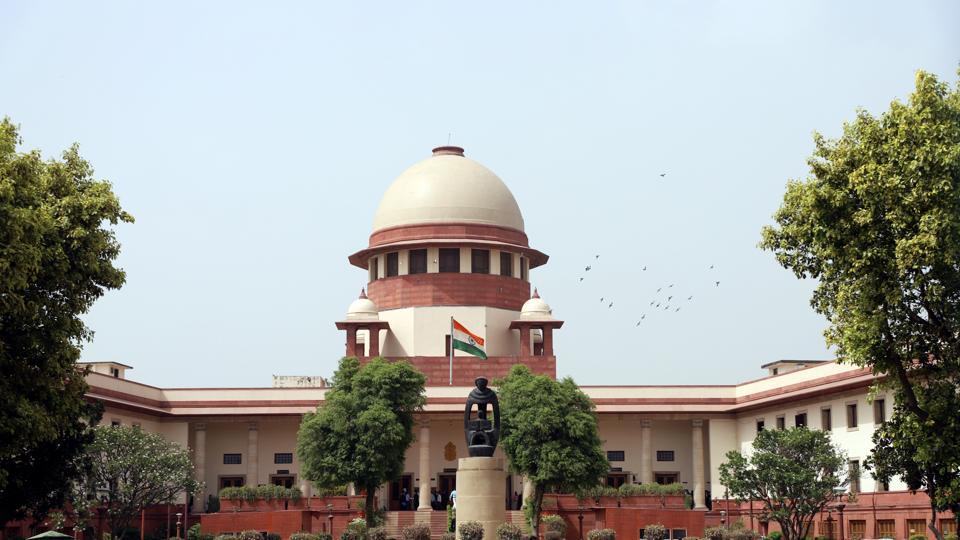
The court will consider next month whether a petition by the NCLT bar association seeking an extension to the retiring members is maintainable.
None of the 15 members retiring by July 3 had approached the court, challenging a September 2019 notification by which they got appointed for three years, the apex court noted.
The NCLT bar association on March 9filed a petition in the top court, claiming the appointments were wrong in law as Section 413 of the Companies Act provides for an appointment of five years, or 65 years, whichever is earlier.
“All those who were appointed in 2019 knew that their tenure of appointment was for 3 years. Without demur, they accepted it,” a bench of justices CT Ravikumar and Sudhanshu Dhulia said. “Till date, those appointees have not challenged the order of appointment. Who are you (NCLT bar association) to challenge it?”
Posting the matter to July 20, the bench said it will first decide whether the petitioner bar association had the right to challenge the September 2019 notification.
“Taking into consideration that none of the appointees under the 2019 notification have so far challenged the same and accepted it with open eyes, the matter relating to their right to continue beyond three years can be considered in the writ petition itself, provided the issue of locus standi of the petitioner is first established,” the judges said on the continuation of service for the retiring members.
The association had also filed an application to stay the retirement of the 15 members and revise their tenure to five years, or 65 years, whichever is earlier. Denying the request, the bench said, “In your petition there is nothing indicating the age of the retiring members. How can we pass a blanket order if nothing is known regarding their age? One of the appointees is a retired judge. Can we pass an order if he has already crossed 65 years?”
The petitioners represented by senior advocates UK Chaudhary and Sanjiv Sen informed the court that the petition was filed in the interest of keeping the tribunal functional, as the loss of 15 members will bring down the working strength of members across the 11 benches to 30, thus affecting the working of the NCLT, which is handling sensitive cases under the Insolvency and Bankruptcy Code, 2016 (IBC).
They suggested that the central government was “cherry picking” members as only eight out of the 23 members were granted extension of service.
Solicitor general Tushar Mehta, appearing for Centre, objected to the petitioner’s claim.
“There was no cherry picking done,” Mehta said. “The selection was done after seeing their character, antecedents, work performance and suitability, that was reviewed even by the selection committee headed by Chief Justice of India.”
An affidavit filed by corporate affairs ministry on Friday said that on June 6, a committee led by the Chief Justice of India allowed the Centre to pass necessary orders granting extension to members who qualified based on the above four criteria. Accordingly, an order was issued on June 14, extending the services of eight members, including two judicial and six technical members.
A bar association cannot espouse the cause of individuals who are retiring, and has no right to pursue the matter, Mehta argued. The bench agreed with this argument and said: “Government has considered the case of all persons and thought it fit to consider only eight. If others have been rejected, they ought to challenge the decision. If they are before us, we would have put that question to them.”
The court was informed that some of the affected NCLT members had moved representations to the Centre, but received no responses. A judicial member of one of the NCLT benches appeared through videoconferencing and sought permission to be made a party to the pending proceeding.
“No permission is needed to file such an application,” the bench said. “But if it is filed, appropriate orders will be passed.”
“The early expiration of tenure will create a lacuna that will adversely affect the disposal of matters pending before the tribunals,” the NCLT bar association in its petition filed through advocate Supriya Juneja had said. “The numerous cases pending cases before the NCLT accompanied with the delay in the appointment of members are a major roadblock in efficient delivery of justice.”


