
 E-Paper



Supreme Court seeks Centre’s view on cap on iron ore mining in Odisha
The Supreme Court was monitoring the implementation of its August 2017 order directing Odisha to take recover the full price of the unlawfully extracted ore from miners

 Prefer HTon Google


NEW DELHI: The Supreme Court on Monday sought the Centre’s stand on imposing a cap on iron ore mining in Odisha and directed the state government to consider attaching assets of miners who illegally extracted ore and failed to deposit compensation for the damage caused to the environment.
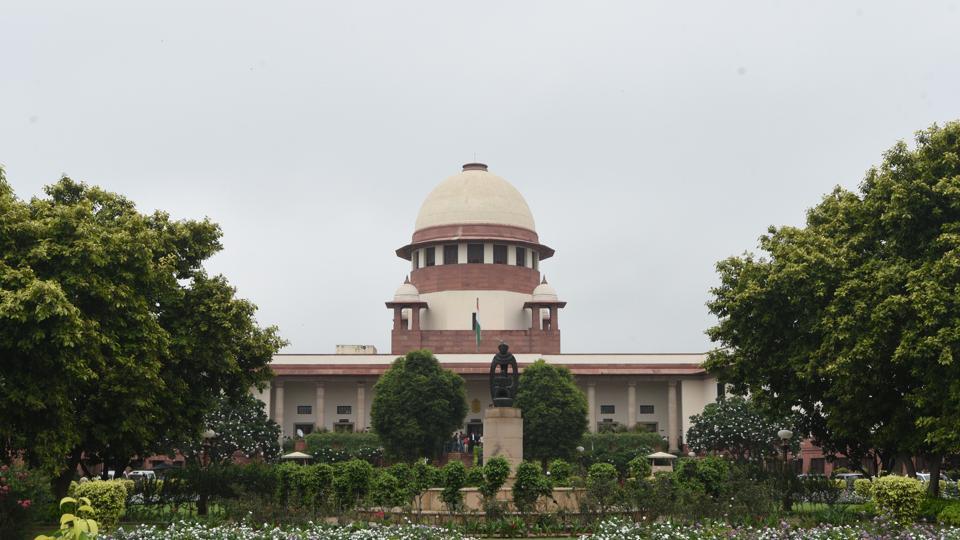
The top court order was passed while monitoring the implementation of its August 2017 order directing Odisha to take recover the full price of the unlawfully extracted ore from miners who didn’t stick to the permitted limits.
“The Union of India should consider the position (of iron ore reserves in the state) and explain to the court whether a cap on mining be necessitated in Odisha,” a bench headed by Chief Justice of India (CJI) Dhananjaya Y Chandrachud said. The bench also asked the Centre to examine putting curbs, similar to the ones imposed by the court in the past, to deal with illegal iron ore mining in Karnataka and Goa. The case will come up again after eight weeks.
The PIL petitioner Common Cause, which approached the top court to highlight the problem of illegal mining in the state, also submitted a note to the bench also comprising justices JB Pardiwala and Manoj Misra.
On July 1, the Odisha government told the court that the total iron ore reserves pertaining to the geologically explored area of the state were at 9220.728 million tonnes.
There are 58 working iron ore mining leases with a tentative reserve of 4748.52 million tonnes. The total ore that can be mined in these leases annually is 227.13 million tons.
Lawyer Prashant Bhushan, appearing for Common Cause, said: “This means that at the same rate of mining, the total reserves in the said mining leases will last only for around 20 years. This, in the petitioner’s opinion, is a cause of serious concern.”
The Odisha government represented by senior advocate Rakesh Dwivedi rebutted this apprehension and informed the court that the state was showing an “increasing trend” of iron ore reserve from year to year despite the current mining operation and production of iron ore in the existing mines.
Bhushan said that the concern of depleting ore reserves was real in view of the state’s failure to implement a five-year-old order passed by the top court to recover compensation and damages from miners who engage in illegal mining.
In its affidavit, the state said it had been able to recover only ₹343.07 crore from the 26 defaulting mining leaseholders as against an outstanding amount of ₹2,965 crore.
The bench told Odisha to take expeditious steps to recover the remaining amount and permitted them to take all necessary steps, including “attaching assets of defaulting entities.” The order further permitted the state to set such terms and conditions in tenders to ensure no bids are entertained from mining companies or group companies against whom compensation dues are outstanding.
Amicus curiae and senior advocate ADN Rao requested the court to consider having the matter referred to the court-appointed central empowered committee (CEC) to suggest a cap on mining.
In the case of Karnataka mining, the CEC in 2013 recommended a cap of 25 million metric tonnes (MMT) from all the mining leases in Bellary and a ceiling of 5 MMT from all mining leases in Chitradurga and Tumkur districts in view of the devastating effects of mining caused to environment and forests. This cap was later raised from time to time at the Centre’s request.
In Goa too, the top court in 2014 approved the recommendations of an expert committee that noted the adverse impact on the environment and suggested a cap of 20 to 27.5 million tonnes per annum for extracting iron ore in the state.
In the case of Odisha, the CEC submitted a report in January 2018 that pegged the total compensation to be paid by illegal miners towards violation of environmental clearance at ₹17,417.99 crore and further compensation for violation of forest clearance at ₹1,756.39 crore making a total of ₹19,174.38 crores from 131 mining lease holders.


