
 E-Paper



On ED’s urgent plea, SC pauses release of prisoners under default bail verdict
A bench comprising Chief Justice of India (CJI) Dhananjaya Y Chandrachud and justice JB Pardiwala agreed to take up the case on Thursday at solicitor general Tushar Mehta’s request

 Prefer HTon Google


NEW DELHI: The Supreme Court on Monday agreed to examine the validity of its April 26 judgment permitting bail in cases where probe agencies fail to file the final investigation report after the Enforcement Directorate (ED) rushed to court, citing a large number of applications filed by accused in high-profile cases to seek their release in light of the top court’s ruling.
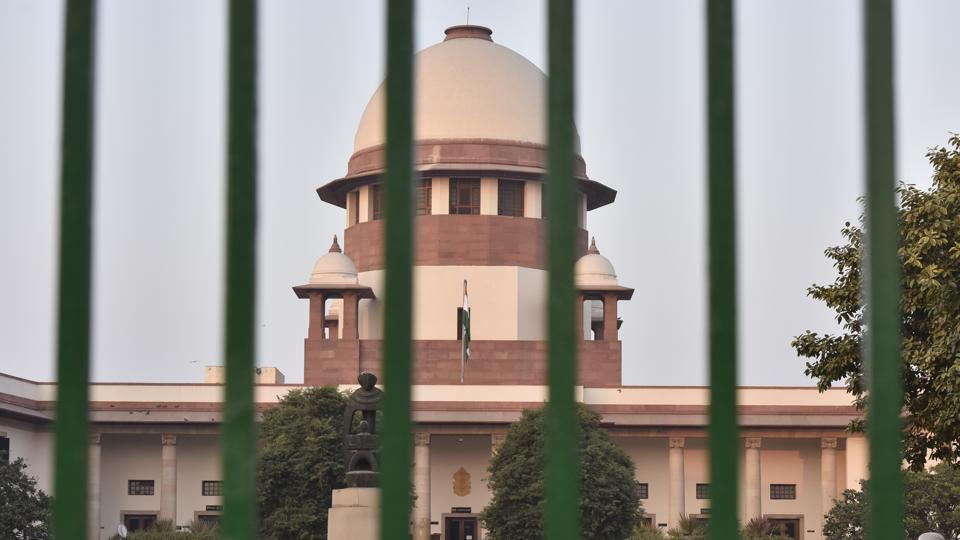
A bench comprising Chief Justice of India (CJI) Dhananjaya Y Chandrachud and justice JB Pardiwala agreed to take up the case on Thursday after solicitor general Tushar Mehta informed the court that the Centre was in the process of filing an application to recall the April 26 judgment of the top court in Ritu Chhabaria v Union of India.
The bench also directed that any bail application filed in the country citing the Ritu Chhabaria judgment shall be deferred beyond Thursday till a final pronouncement comes from the top court.
The CJI-led bench said it will form a three-judge bench on Thursday to consider the issue. It was not keen to put the decision on hold as it said, “We cannot say this judgment cannot be relied upon between today and Thursday.”
The April 26 verdict, delivered by a bench of justices Krishna Murari and CT Ravikumar, held that the fundamental right of an accused to get default bail cannot be scuttled by probe agencies by filing supplementary charge sheets in cases where a probe is yet to be completed.
Ritu Chhabaria’s husband, Sanjay, was booked in a case under the Prevention of Corruption Act in which he was not initially named. The CBI, which arrested him in April last year, named him as a suspect in supplementary charge sheets, but did not file the final charge sheet.
Ritu Chhabaria’s petition asked the top court to consider whether this practice of filing supplementary chargesheets defeats the right of accused to default bail under Section 167(2) of Code of Criminal Procedure (CrPC). This provision allows a magistrate to grant statutory bail to an accused if the probe agency failed to complete its investigation in 60 days (90 days for offences punishable with death, life term or punishment beyond 10 years).
The bench held: “Without completing the investigation of a case, a charge sheet or prosecution complaint cannot be filed by an investigating agency only to deprive an arrested accused of his right to default bail under Section 167(2) of the CrPC.” In such cases, it further held that the trial court cannot continue to remand an arrested person beyond the maximum stipulated time (of 60 days or 90 days) without offering the arrested person default bail.
Tushar Mehta insisted on a stay of the April 26 decision as it was contrary to previous verdicts of the top court including one by a three-judge bench. Mehta added that more than 15 applications seeking default bail have been filed by accused before various high courts.
One such decision passed by the Delhi high court on April 28 granting bail to one Manpreet Singh Talwar on the basis of the Ritu Chhabria decision was separately challenged by the Enforcement Directorate. Talwar was accused of laundering more than ₹700 crore to companies based in Singapore and Hong Kong. ED said it filed supplementary charge sheets as certain aspects of the probe relating to foreign transactions were pending.
In this appeal, the ED submitted that the Chhabria judgment will not apply to offences under the Prevention of Money Laundering Act (PMLA) as Explanation (ii) to Section 44 of the PMLA, provides for further investigation to be conducted to bring any further evidence against any accused person, whether named in the original complaint or not. This provision was upheld by the Supreme Court in July last year while deciding a batch of petitions challenging the validity of PMLA provisions.
Mehta said, “The view in Ritu Chhabaria (verdict) is also contrary to a 3-judge ruling in Vipul Agarwal v Gujarat (2013) where it is laid down that the right to default bail gets extinguished with the filing of charge sheet.”
According to him, the April 26 decision was “per incuriam”, literally translated as “through lack of care”, as it failed to consider the prior binding decision of the bench in Dinesh Dalmia case (2007) and Abdul Azeez case (2014), which lays down a contrary principle of law that has held the field for past 16 years.
In Abdul Azeez, a two-judge bench held, “Merely because certain facets of the matter called for further investigation, it does not deem such report anything other than a final report. In our opinion Section 167(2) CrPC stood fully complied with and as such the petitioners are not entitled to statutory bail under Section 167(2) CrPC.”
“We have filed a recall application as we could not get an opportunity to point out these judgments which cover the field when the matter (Chhabria decision) was considered,” Mehta said. Additional solicitor generals (ASG) SV Raju and KM Nataraj were also present with Tushar Mehta to point out the adverse implications of continuing with the order in question and urged that high courts be directed not to rely on this decision.


