
 E-Paper



‘Modernise, you have no choice’: Supreme Court to courts and tribunals
The Supreme Court said if some judges are uncomfortable with e-files, the answer is to provide training to them


NEW DELHI: The Supreme Court has encouraged all courts and tribunals to adopt technology by switching to e-filing of cases and ending the “old and outmoded” ways of filing cases in paper format, stressing that they do not have a choice but to modernise.
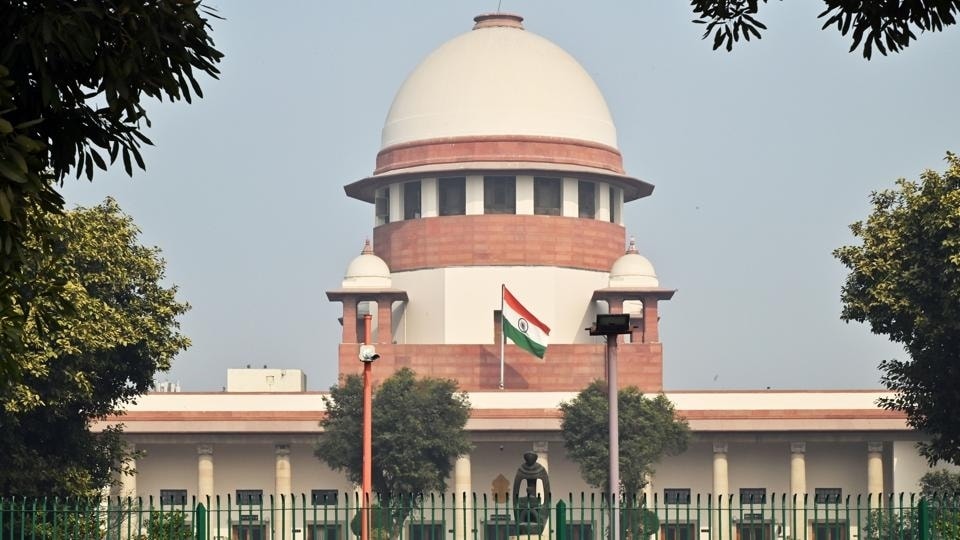
“The judiciary has to modernize and adapt to technology. The tribunals can be no exception. This can no longer be a matter of choice,” a bench of Chief Justice of India (CJI) Dhananjaya Y Chandrachud and justice JB Pardiwala said in an order on May 1.
The top court, which was hearing a case relating to the National Company Law Appellate Tribunal (NCLAT) where filing physical documents was insisted upon despite e-filing, felt that this acted as a “disincentive”. The bench also issued common directions to the Centre and administrative heads of tribunals to ensure a “seamless transition” to working in the electronic mode.
“With technological advances, the country’s judiciary and tribunals must move towards e-filing. This process has already commenced and is irreversible.” The court directed the Centre to take a fresh look at the rules to encourage e-filing across tribunals and even constitute a working group to make a comprehensive assessment of the position across tribunals and suggest regulatory changes.
Since the matter under consideration is related to NCLAT which deals with cases under the Insolvency and Bankruptcy Code (IBC), the bench said, “The IBC is a significant prong in economic reforms. The manner in which the law is administered will have to keep pace with technology.”
The court order came on an appeal filed by one Sanket Agarwal who initiated the process for corporate insolvency of a company, APG Logistics Private Limited, before the National Company Law Tribunal. This was dismissed in August last year against which Agarwal filed an appeal before the NCLAT. Since the order of NCLT was only made available by September 15, Agarwal e-filed the appeal on October 10 and followed it up with physical filing on October 31. The NCLAT in its order passed in January dismissed the appeal on the ground of limitation as it was held to be filed beyond the 45 days prescribed for filing of appeal.
The court noticed the “flip flop” in the NCLAT rules with regard to the limitation period being triggered at the time of e-filing or physical submission of documents at the counter. The bench restored the appeal to the NCLAT.
“It is utterly incomprehensible why NCLAT should insist on physical filing in addition to e-filing. This unnecessarily burdens litigants and the Bar and is a disincentive for e-filing,” the court said, noting that the duplication was time-consuming and added to the cost of litigation and left behind a carbon footprint which is difficult to efface.
“The judicial process has traditionally been guzzling paper. This model is not environmentally sustainable. If some judges are uncomfortable with e-files, the answer is to provide training to them and not to continue with old and outmoded ways of working,” the court said.
The bench said a copy of its verdict should be sent to NCLAT chairperson and secretaries of the Government of India working with ministries of finance, corporate affairs, and law and justice for ensuring compliance and undertaking remedial steps.
The court also noticed that Rule 103 of NCLAT Rules provides for e-filing. In January 2021, NCLAT issued a revised standard operating procedure (SOP) which encouraged everyone to avail of the e-filing facility available at its portal. Later in December 2022, another order was issued to clarify that the limitation period (for filing of appeal) shall be computed with reference to the date of e-filing while the physical copy would have to be filed within seven days of e-filing.
The top court noted that in the present case, the appellant (Agarwal) exercised due diligence and applied for a certified copy upon pronouncement of the order that was made available to him on September 15. The Court held that the period of 10 days from September 5 (the date of applying for certified copy of judgment) to September 15 would stand excluded in determining the period of limitation under the IBC and in these terms, allowed the appeal.


