E-Paper



Sweden calls for lifting of restrictions in Kashmir, nudges India for talks with Pakistan
India has bristled at such criticism of the situation in Kashmir, saying the reorganisation of the state and other actions are a purely internal matter.

 Prefer HTon Google


Sweden has joined the list of European countries that have expressed concern about the security lockdown and communications blackout in Kashmir, with foreign minister Ann Linde saying India should lift the remaining restrictions in the region.
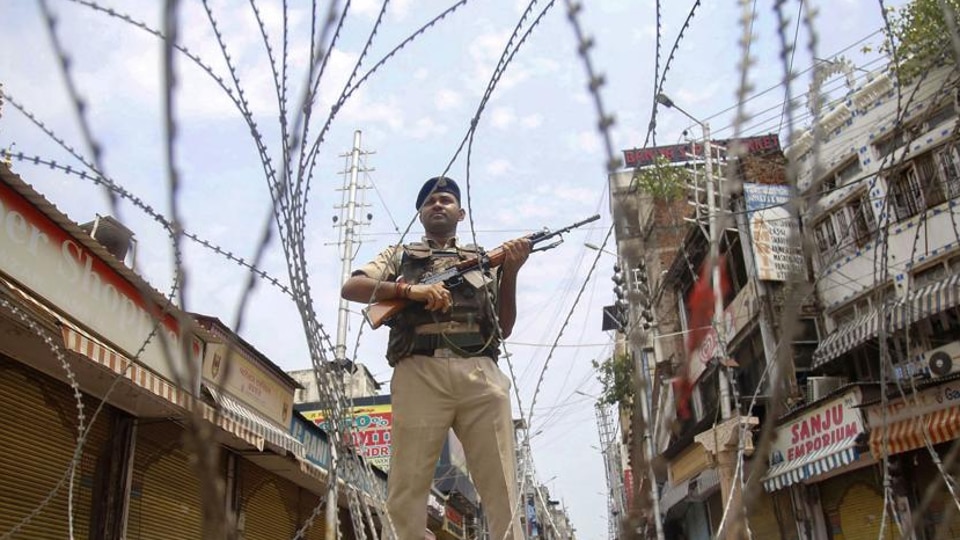
Linde told the Swedish Parliament on Wednesday that the country doesn’t want any escalation of the situation in Kashmir, and that any long-term political solution “must involve Kashmiri inhabitants”. Linde will be part of the delegation accompanying King Carl XVI Gustaf and Queen Silvia of Sweden on a state visit to India during December 1-6.
Earlier this month, German Chancellor Angela Merkel and Finland foreign minister Pekka Haavisto said during their visits to New Delhi the situation in Kashmir is “not sustainable”. They too called for lifting of restrictions imposed after the Indian government revoked Jammu and Kashmir’s special status on August 5.
There was no response to Linde’s remarks from Indian officials.
Answering a question in the Riksdag or Parliament, Linde described the situation in Kashmir as “worrying” and said Sweden and the European Union (EU) support a “bilateral political solution through contacts between India and Pakistan”.
She said: “We emphasise the importance of respect for human rights, that an escalation of the situation in Kashmir is avoided and that a long-term political solution to the situation must involve Kashmir’s inhabitants. Dialogue between India and Pakistan is crucial.”
Sweden and the EU also urge the Indian government to “lift the remaining restrictions” in Kashmir as it is crucial to restore “free movement and communication opportunities”, she said.
Swedish ambassador Klas Molin said in an interview his country and the EU have a “principled” view on Kashmir. “We know it’s long-standing, it goes back decades and I think we also have said consistently that because it is historically bilateral in nature, it can only be solved reasonably through negotiations and discussions between the two concerned parties, India and Pakistan.”
Acknowledging India’s “legitimate security concerns”, he said: “But we and the EU also recognise the importance of Kashmiris to have a say in their own future.”
Molin added: “We also see that the system is working in the sense that the Supreme Court in India is now hearing grievances or appeals. That’s as it should be.”
However, he noted that concern had been expressed “by many organisations and by some in Europe and elsewhere (about) the lockdown and restriction of information”. Sweden, he said, would welcome the early lifting of all restrictions.
Molin also said diplomats should be allowed to visit Kashmir to assess the situation for themselves. “I think it’s in the nature of the beast that is the curious diplomat to travel in the country of assignment. So I would personally love to visit Kashmir for all kinds of reasons and engage as we do in other parts of India with the population, with politicians and civil society,” he said.
India has bristled at such criticism of the situation in Kashmir, saying the reorganisation of the state and other actions are a purely internal matter. Except for a controversial visit by a group of members of the European Parliament, diplomats have so far not been allowed to travel to Kashmir.