
 E-Paper



Tackling backlog top priority: Justice Kant
Justice Kant said thousands of cases remain stuck because related issues are pending before the Supreme Court, preventing high courts and lower courts from taking them up

 Prefer HTon Google


Ahead of taking charge as the country’s 53rd Chief Justice, justice Surya Kant identified tackling the Supreme Court’s backlog of nearly 90,000 pending cases and promoting mediation as his key priorities when he assumes office on Monday.
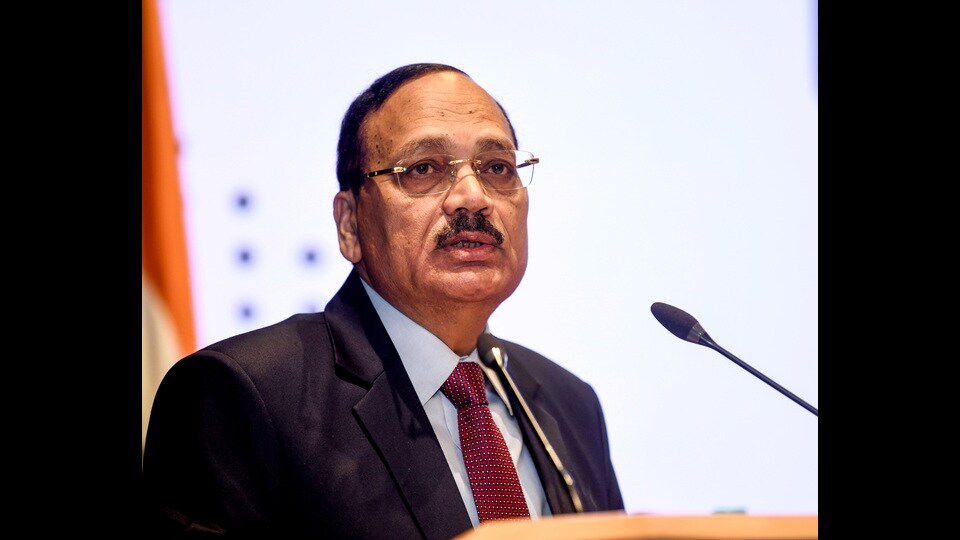
“One of my foremost challenges is the arrears in the Supreme Court. Today’s scoreboard shows nearly 90,000 cases pending,” the CJI-designate said in an interview to HT. “My goal is optimum utilisation of force. As CJI, I have to take care of arrears on a pan-India basis.”
Justice Kant said thousands of cases remain stuck because related issues are pending before the Supreme Court, preventing high courts and lower courts from taking them up. “I will find those matters, ensure benches are constituted, and have them decided. I will also try to see the oldest matters,” he said, adding that healthy practices of approaching lower courts first need to be revived.
On mediation, he said: “We must identify a solution, and one of the easiest solutions, which can be a game changer, is mediation. We will have to persuade government agencies to come forward and pursue mediation.”
Justice Kant, who will be sworn in on November 24, underlined that courts “are not merely individual judges but collective bodies whose credibility depends on consistency, discipline and efficiency”, adding that reform “is a continuous process” he intends to carry forward.
His journey from tilling fields in Petwar village in Hisar to the Supreme Court bench has shaped his judicial philosophy. “Justice, like a harvest, cannot be forced; it must be cultivated with diligence and respect for the natural rhythm of due process,” he said, emphasising that each case must be approached methodically.
While the law furnishes the framework, justice Kant stressed that “the human side of judging is both inevitable and essential”. Judges need not turn into social reformers, he said, but can “indirectly influence progress” by interpreting the law in ways aligned with constitutional values and human welfare.
Born on February 10, 1962, in Petwar, justice Kant studied at local village schools and completed his LLB from Maharshi Dayanand University, Rohtak, in 1984. He later secured an LLM from Kurukshetra University in 2011 whilst serving as a high court judge, earning first class first.
Justice Kant began his legal practice at the Hisar district court in 1984 before shifting to Chandigarh, where he built a flourishing practice before the Punjab and Haryana High Court, specialising in constitutional, service and civil law.
In July 2000, at 38, he was appointed advocate general of Haryana, becoming the youngest person to hold the state’s top law office. He was designated a senior advocate the following year and elevated as a judge of the Punjab and Haryana High Court in January 2004.
In October 2018, he was appointed chief justice of the Himachal Pradesh High Court before his elevation to the Supreme Court in May 2019. Over six years, he has authored over 300 judgments across constitutional, criminal and administrative law.
He has served on several landmark benches, including the Article 370 abrogation case, the Section 6A Citizenship Act verdict, and the bench that granted bail to former Delhi chief minister Arvind Kejriwal whilst upholding the legality of his arrest.
Justice Kant currently serves as executive chairman of the National Legal Services Authority (NALSA). In July, he launched the Veer Parivar Sahayata Yojana 2025, aimed at providing free legal assistance to soldiers, veterans and their families.



