
 E-Paper



Imran Khan’s posturing aside, terror training camps still active in Pakistan
South Block confirms that terror training camps of LeT, JeM and Hizbul Mujahideen are still active in Pakistan despite the public posturing of Imran Khan government.

 Prefer HTon Google


External affairs minister S Jaishankar’s statement this week that Pakistan has developed a terrorist industry comes in the backdrop of reports that trained Lashkar-e-Taiba (LeT) suicide attackers have infiltrated Jammu and Kashmir in October and that the Jaish-e-Mohammed (JeM) leadership is in constant touch with their handlers in Rawalpindi GHQ.
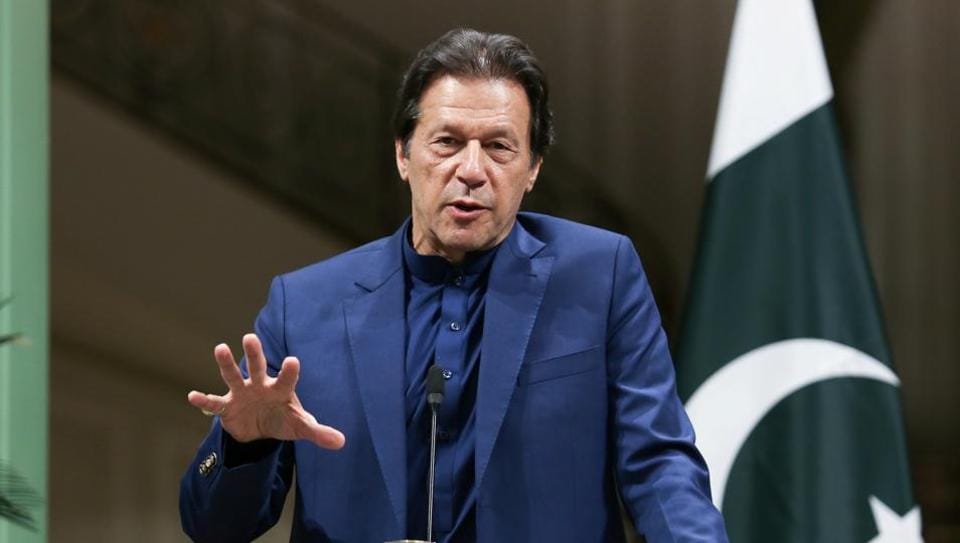
In an interview with French newspaper Le Monde, Jaishankar said the eradication of anti-India terrorist groups is a pre-condition for dialogue with Pakistan.
South Block confirms that terror training camps of LeT, JeM and Hizbul Mujahideen are still active in Pakistan despite the public posturing of Imran Khan government. India sent a specific list of locations, including Google map co-ordinates of 24 prominent terror training camps in Pakistan to the country after the Pulwama attack but none of these camps has been shut down to date.
The names of camps include Abdulla bin Mashood (LeT); Balakot (JeM); Barali/Fagosh 1 & 2 (LeT); Barnala (HM); Bhawalpur (JeM); Batarsi camp 1 & 2 (LeT & JeM); Chelabandi (LeT/JeM/ HM) and Daura-e-Azeemat (HM). Many of these camps are located in Occupied Kashmir, Manshera, Peshawar, Bhawalpur and Lahore.
According to security agencies, JeM’s operational commander Mufti Abdul Rauf Asghar along with his brother Maulana Ammar met their handlers in Rawalpindi GHQ on November 10 seeking financial help, removal of restrictions on the terror group and instructions for future action.
Indian intelligence inputs also say that two LeT suicide attackers, Osama and Abdullah infiltrated the newly created UT in early October after undergoing a so-called purification course and with the approval of senior LeT leadership.
While the hunt is on in J&K for these two, the state police has killed no less than 150 terrorists this year including 70 Pakistani nationals.
When EAM Jaishankar talked about terrorist factory, he was also talking about Pakistan’s other options in targeting India. As recently as September 23, Pakistan based Ranjeet Singh Neeta’s Khalistan Zindabad Force tried unsuccessfully to send a cache of AK-47 rifles, pistols, satellite phones and ammunition across the international border.
Pro-Khalistan terrorists currently being given shelter by Pakistan include Harmeet Singh and Lakhbir Singh of International Sikh Youth Federation (ISYF); Paramjit Singh Panjwar of Khalistan Commando Force (KCF); Gajinder Singh of Dal Khalsa and Wadhawa Singh Babbar of Babbar Khalsa International (BKI).
Members of Indian Mujahideen group, who planned and executed blasts in India between 2005 to 2013, are also now freely operating in Pakistan. These include Iqbal and Riyaz Bhatkal, Mohasin Choudhary, Afiff Hassan Siddibappa and Mohammed Rashid.
The fugitives taking shelter even today in Pakistan are all the principals accused in 1993 Mumbai bomb blast cases, engineered by global terrorist Dawood Ibrahim. His associates including Anees Ibrahim, Tiger Memon, Chhota Shakeel, Mohammed Dosa and Fahim Machmach also operate freely in Pakistan.


