
 E-Paper



Test of popularity for chief minister Raman Singh in Chhattisgarh
Eighteen assembly seats in Maoist-affected districts of Chhattisgarh will go to polls on November 12. In the second phase, electorate in 72 seats will vote on November 20.


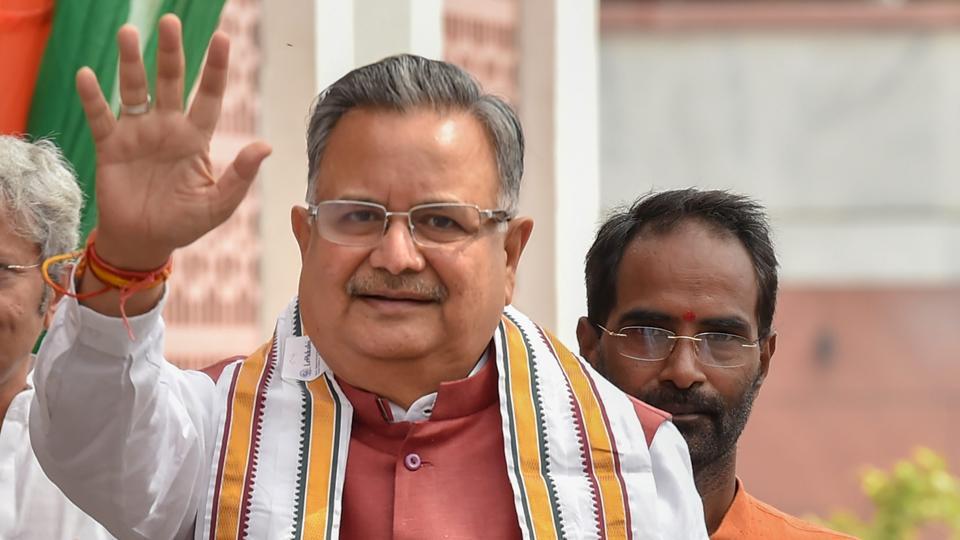
Assembly elections in Chhattisgarh this year will be a test of popularity for chief minister Raman Singh, who has been ruling the state for 15 years.
The Congress, led by its president Rahul Gandhi, is eyeing to wrest power in the state where the difference of votes secured by it and the Bharatiya Janata Party was less than one percentage point five years ago.
Hoping to make this year’s elections a three-way contest, former Congress chief minister Ajit Jogi’s Janta Congress Chhattisgarh has joined forces with Mayawati’s Bahujan Samaj Party (BSP), which got five per cent of the votes polled in 2013. Both Jogi and Mayawati have a support base among Dalits, and their front might hurt the chances of the Congress, whose talks on seat-sharing with the BSP have collapsed. But the Congress believes that Jogi’s exit — he quit in 2016 — will help the party win back the support of upper castes, who are traditional voters of the BJP. “The Ajit Jogi-Mayawati alliance will have no impact in Chhattisgarh,” said Congress strategist Vinod Verma.
Ashok Tomar, a political commentator in Raipur, said, “It will be a close fight between Congress and BJP. The impact of Ajit Jogi’s Janta Congress and BSP will not be on more than a dozen of seats in north Chhattisgarh. I also believe that the voting pattern this time will not be on expected lines and whosoever is the winner will secure a handsome margin and vote share.”
Elections in the state will be held in two phases. Eighteen assembly seats in Maoist-affected districts will go to polls on November 12. In the second phase, electorate in 72 seats will vote on November 20.
The Congress is raising the issue of jobs, saying that there about five million unemployed people in the state. The BJP says it has worked towards generating jobs.
CM Raman Singh has been speaking about the roads and bridges his government has constructed, and says nothing was done in the Congress’s rule. He is also stressing reforms in the public distribution system. The CM has begun the distribution of five million mobile phones to people.
After 15 years in power, CM Singh is a trusted face among many sections. He launched various schemes a few months before the elections to woo tribals, youngsters and women. The most important is the SKY scheme, which aims to distribute 5 million smartphones.
State Congress chief, Bupesh Baghel is the party’s OBC face, where the community accounts for 47% of the population. The party has been counting on him to galvanise Congress workers ahead of the polls.
An alliance with the BSP is likely to bolster Ajit Jogi . His son Amit Jogi is spearheading the campaign.
-kW0H-U20214218012MgB-250x250%40HT-Web.jpg)


