
 E-Paper



The climate crisis is upending India’s food economy
The recent zoom in the cost of cumin is more than a price hike problem. It's an indication of impending uncertainty


In 2009, when India faced its worst drought in three decades, the country managed to produce a million more tonnes of foodgrains than it did in 2007, a normal-monsoon year, pointing to the country’s leaps in farm productivity.
Foodgrain output has risen sharply from about 50 million tonnes in 1950-51 to 323.5 million tonnes during 2022-23. The gains helped India to transition from being a net cereal importer, often reliant solely on conditional food aid from the United States, to being a cereal-surplus country.
Yet, climate change is altering how food is grown, sold and priced, and threatens to upend the country’s food economy.
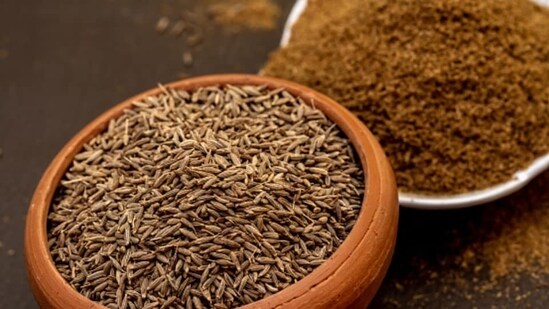
In the past 24 months, consumer food price inflation has overshot the Reserve Bank of India’s upper limit of 6% during 18 months, keeping overall prices high amid successive rate hikes by the RBI to control inflation. One recent example is that of cumin or jeera, a widely consumed condiment. Initial projections pointed to a glut. Then a long spell of untimely rains spoilt the crop, resulting in deficient output. This sent cumin prices to a record high at ₹560 a kilo at the retail level mid-April.
These have led to increasing uncertainties. For instance, output forecasts or estimates made at the beginning of a crop cycle become irrelevant towards harvesting, throwing demand-and-supply projections off balance. Such swings cause prices to either jump or fall, depending on the change in the numbers.
In India’s ‘mandis’ or wholesale farm-produce market yards, demand and supply, traditional forces that dictate prices of any good, are getting notoriously difficult to predict. “Traders and farmers generally have a good idea of the trade they are in for generations. Now the government forecasts one thing and farmers’ actual output is something else. So, how do you have price stability?” asks CP Gupta of Cheshta Enterprises, Kota, Rajasthan. His firm aggregates cereals and mustard from three states.
The June-September monsoon, the rain-bearing system that waters nearly 60% of the country’s net-sown area, is increasingly faltering. The summer rains have been normal in the last four years in the country as a whole. Yet it left large states, such as Bihar and Uttar Pradesh, dry in 2022. The rains need to be timely and well distributed for robust harvests.
Rainfall has been geographically and temporally skewed, according to the state-run IMD’s data. This means some areas have received normal rainfall, while others have received most of its rainfall within a very short spell, and still others got very little.
“It is now widely agreed by scientists that the number of rainy days will decrease due to the impacts of climate change but the total quantum of rainfall will remain the same,” said KJ Ramesh, a former chief of the IMD.
Farmers depend on the monsoon to plant a variety of crops, such as rice, cotton, sugarcane, soybeans, corn and peanuts, among other crops with the start of the rainy season from June 1.
This year, official forecasters have predicted a normal monsoon but with caveats that it will be on the lower side of the normal range of between 96-104%. A monsoon-disrupting El Nino weather pattern marked by warming Pacific ocean temperatures is certain to take hold, global weather models show. The spectre of a drought looms.
Last year, despite a normal monsoon overall, rains were patchy in rice-growing states, leading to a 4% deficit in rice sowing. As cereal prices soared, the government put restrictions on overseas shipments to improve domestic availability.
Such sudden curbs on exports deprive farmers and traders, both linchpins of the food economy, of lucrative markets and the country of precious foreign exchange.
Heatwaves are increasing, which has been conclusively linked to global warming by the Indian Institute of Tropical Meteorology. Last year, India witnessed the hottest March and early spring on record, which shaved off 3 million tonnes of wheat output, stoking shortages and cereal inflation of nearly 20%. That prompted India to ban export of the grain, exacerbating a global food shortage caused by the Ukraine conflict. This also continued to famines in impoverished sub-SaharanAfrican countries, which were looking to India to fill the gap in wheat supplies due to Russia's blockade of Ukraine's exportable wheat.
“These kinds of shocks will get more frequent,” said Bhagirath Choudhary, a crop scientist and head of the South Asia Biotechnology Centre, Jodhpur. The shortage of cumin this year that has made it the costliest food item currently is a result of a weather shock, Choudhary said. “Winter months are getting shorter in western Rajasthan and a strange warm wind starts blowing in from Pakistan in February, which is a relatively new phenomenon, affecting cumin germination,” he said.
Rajasthan is thought to be a barren desert state, but it is a farm powerhouse; the largest grower of spices, a substantial produce of wheat and onion.
Several studies have now predicted that stronger and early-onset heatwaves, along with large variations in rainfall patterns, could jeopardise the country’s output of rice and wheat, leading to shortages.
India’s finance-ministry led Economic Survey 2018 analysed weather patterns over the past six decades, and found a long-term trend of “rising temperatures” and “declining average precipitation”.
Of the 30 million hectares under wheat, about nine million hectares have been categorised as being prone to sudden heat stress, according to the Indian Council of Agricultural Research.
Farmers in India are changing sowing and harvesting timing, cultivating short duration varieties, changing cropping patterns as “passive responses or autonomous adaptation” to climate change, the Intergovernmental Panel on Climate Change has said in one of its reports.
Although there are several ongoing mitigation programmes, including the flagship National Innovations on Climate Resilient Agriculture, these are scattered. Experts say India needs to devote much higher public funding into agricultural research. The Indian Agricultural Research Institute’s budget is ₹500 crore annually, but only a fifth of it goes into research, especially on climate resilient crops.
According to a Union government proposal from December 2022, in each of India’s 151 climatically-vulnerable districts, one representative village will be chosen where “location-specific climate resistant crop technologies” will be deployed.
“A lot of people debate climate change. Even if we don’t use these two words, there is sufficient evidence on the impacts of changes in rainfall and temperature in India,” said Pramod Aggarwal, one of India’s top climatologists and a former national professor at the Indian Agricultural Research Institute.
Aggarwal was the coordinating lead author for the chapter on food in the 4th assessment report of the Intergovernmental Panel on Climate Change (IPCC). He was also the review editor of the IPCC’s landmark 5th assessment report. “We need firm political will. We can’t wait,” he said.
 ABOUT THE AUTHORZia Haq
Zia Haq reports on public policy, economy and agriculture. Particularly interested in development economics and growth theories.


