
 E-Paper



From HT archives: The Dalai Lama’s escape to Assam etched in history
Trouble had been brewing in Tibet for years, especially after China poured in thousands of troops to take control of the region in 1951.


When the Dalai Lama disappeared from the Potala Palace in Lhasa in mid-March 1959 only to surface in the Indian state of Assam weeks later, it was considered one of the most fantastic escapes in history.
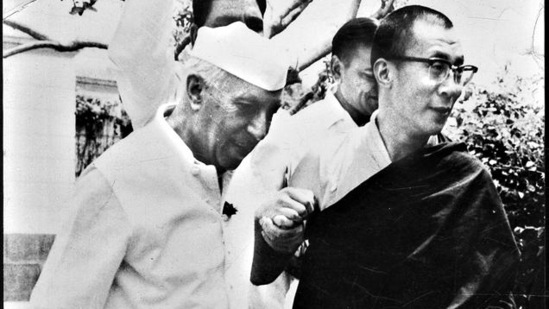
Trouble had been brewing in Tibet for years, especially after China poured in thousands of troops to take control of the region in 1951. Concerns about the safety of the Dalai Lama, Tibet’s ruler and spiritual leader, spiked when Chinese officials asked him to attend an event on March 10 without an escort or bodyguards.
Fearing that the Chinese intended to take him hostage or arrest him, thousands of Tibetans gathered outside his palace to protect him. These protests turned into an uprising, prompting the Chinese to send in more troops. After artillery shells were fired at the palace on March 17, the then 23-year-old Dalai Lama slipped out of Lhasa, disguised as a soldier and accompanied by a small group that included his mother, two sisters, a younger brother and top officials.
The group travelled on foot and horseback for days and nights, crossing the nearly 500-metre-wide Brahmaputra River in a single boat made of yak skin. The Dalai Lama crossed into the Assam on March 31 – a trek that would be impossible to carry out undetected in this era of advanced communications and surveillance satellites.
The Dalai Lama’s presence in India was announced by then Prime Minister Jawaharlal Nehru in Parliament on April 3. “The announcement was greeted with thunderous applause by all except the Communists, who looked glum,” Hindustan Times reported in its edition dated April 4, 1959.
The Indian government’s decision to grant political asylum to the Dalai Lama was conveyed to the Chinese envoy on April 3, setting in motion events that continue to be a source of differences between New Delhi and Beijing to this day. The report in Hindustan Times added that “it can be taken for granted that the Government of India will in no case surrender him in response to any request from Peking”.
The Dalai Lama was granted permission by the Indian side to establish a government-in-exile in the hill station of Dharamsala, from where he continues his campaign for greater autonomy for Tibet to this day though he gave up his political role in 2011.
Talks between the Dalai Lama’s aides and the Chinese side on the issue of Tibet broke down several years ago. China continues to rule out any autonomy for Tibet, where it has been accused of running a repressive regime, and describes the Dalai Lama as a “splittist” or separatist. Beijing has also set in motion plans to unilaterally appoint the next Dalai Lama.
In 2017, the Dalai Lama became emotional when he visited Tawang in Arunachal Pradesh, where he had rested after the long and arduous journey from Tibet in 1959. “I see a place where I had enjoyed freedom for the first time,” he said.


