
 E-Paper



The Merry League of Kannada Bardolators
Amidst ongoing conflicts, Hollywood's elite will gather for the Oscars, with "Hamnet," a film about Shakespeare's grief, leading nominations.

 Prefer HTon Google


Next Sunday, March 15, even while war, unleashed this time around by Trump’s America, rages across the Middle East, some of the world’s most recognised American faces will gather at the Dolby Theatre in Los Angeles for the 98th Academy Awards. One of the films with the most nominations this year (eight!) is the period drama Hamnet, based on the private life of a towering literary figure from 16th century England, who, according to fellow playwright Ben Jonson, “was not of an age, but for all time” – William Shakespeare. The film revolves around the devastating loss of Shakespeare’s 11-year-old son, Hamnet, which the stricken father partly dealt with, so the film speculates, by pouring his grief into the writing of what is considered his greatest work, Hamlet.
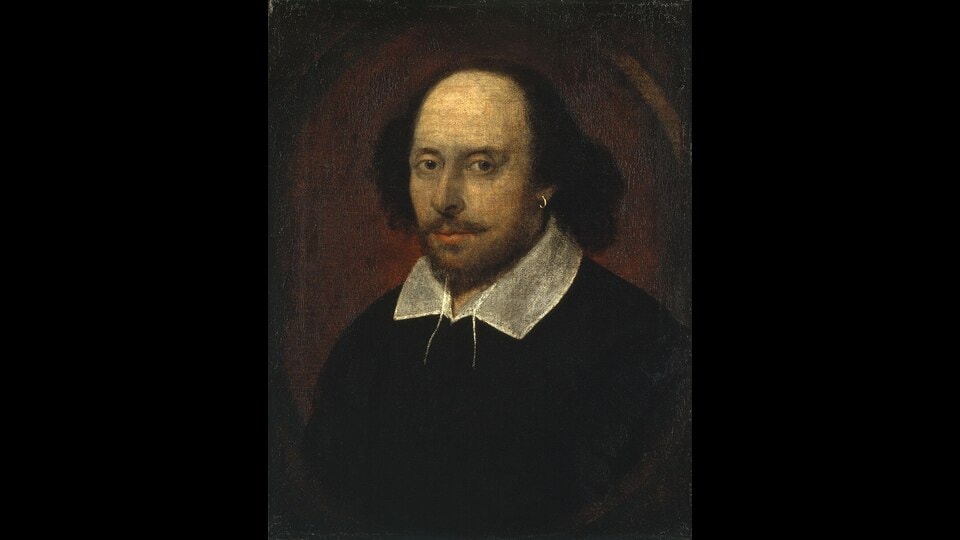
In his own time, Shakespeare (1564-1616), a grammar school boy from the sticks (Stratford-upon-Avon) whose work began to be noticed and staged in 1590s London, was considered “an upstart crow” by the University Wits, a snobby group of accomplished Oxbridge-educated writers of the time. But Shakespeare’s 39 plays – historicals, comedies and tragedies, all shot through with the universal themes of love, jealousy, grief, ambition, and betrayal, and written with verve, wit, wisdom and a masterful command of the language – which featured complex, relatable characters, became immensely popular across the world, not only when they were first staged but well into the 21st century.
What helped create the global phenomenon of “Bardolatry” – the idolising of the Bard of Avon – was the vast footprint of the British Empire, which introduced Shakespeare into the school curricula of North America, Australia and, of course, India. But it was the work itself, whether the playwright’s refusal to paint his characters black or white, or his compassion for human frailty, both integral to Indian storytelling, that have ensured that Shakespeare’s plays have been adapted repeatedly over the centuries, in a variety of Indian languages, in literature, theatre and cinema.
Given that Mysore and Bangalore were ruled directly or indirectly by the British since Tipu Sultan’s death in 1799, it was no surprise that Kannada litterateurs came under the Bard’s influence. One of the earliest adaptations for the Kannada stage happened as early as 1871 – Nagadavarannu Nagisuva Kathe (A story to make those who don’t laugh, laugh) was the playwright Channabasappa’s take on The Comedy of Errors, Shakespeare’s shortest and most farcical comedy. In 1889, A Anandarao’s Ramavarma Leelavathi Charitre, a mythological after the fashion of the time, had the two star-crossed lovers being resurrected by Lord Vishnu himself. Few of the enthralled watchers realised that it was an adaptation of Romeo and Juliet, suitably tweaked for Indian audiences who appreciated happy endings, particularly divinely enabled ones.
20th century stalwarts of Kannada literature continued to engage deeply with Shakespeare. Kuvempu’s feminist 1930 adaptation of Hamlet, Raktakshi, focused on the story of a strong Ophelia (Rudrambe). DV Gundappa’s translation of Macbeth, which he undertook while nursing his bedridden father in 1936, was the first faithful translation, as opposed to adaptation, of a Shakespearean play into Kannada. Poet KS Nisar Ahmed spoke of the thrill he felt when he recognized the Rude Mechanicals of A Midsummer Night’s Dream in the Kannada ethos, and knew instantly how they would speak in his translation. In 2013, Jnanpith awardee and folklorist, Chandrashekhara Kambara, wrote Maari Kadu, an environment-focused adaptation of Macbeth that he called his ‘namaskara to Shakespeare’, in which Birnam wood, as Maari Kadu, becomes the narrator. Even more recently, KV Akshara of Ninasam brought in the effects of globalisation and the impact of big corporations into Venissina Vyapara (The Venetian Trade), his translation of The Merchant of Venice.
Kannada cinema has been similarly enamoured of the Bard, particularly with The Taming of the Shrew. Best known among the many adaptations are Bahaddur Gandu (1976), starring Dr Rajkumar as a peasant and Jayanti as the ‘Let them eat cake!’ princess of the kingdom, and the superhit film Nanjundi Kalyana (1989), starring debutants Raghavendra Rajkumar and Malashree.
Forsooth, the versatile Bard still lives and thrives in Kasturi Kannada.
(Roopa Pai is a writer who has carried on a longtime love affair with her hometown Bengaluru)


