
 E-Paper



Thirupparankundram lamp lighting row: Madras high court upholds order directing lighting of lamp on 'Deepathoon'
Madras HC's Madurai Bench upholds single judge's ruling allowing lighting of lamp on 'Deepathoon.

 Prefer HTon Google


The Madras High Court’s Madurai Bench on Tuesday upheld a single judge’s ruling permitting the lighting of a ceremonial lamp at the Thirupparankundram hill shrine on the occasion of Deepathoon.
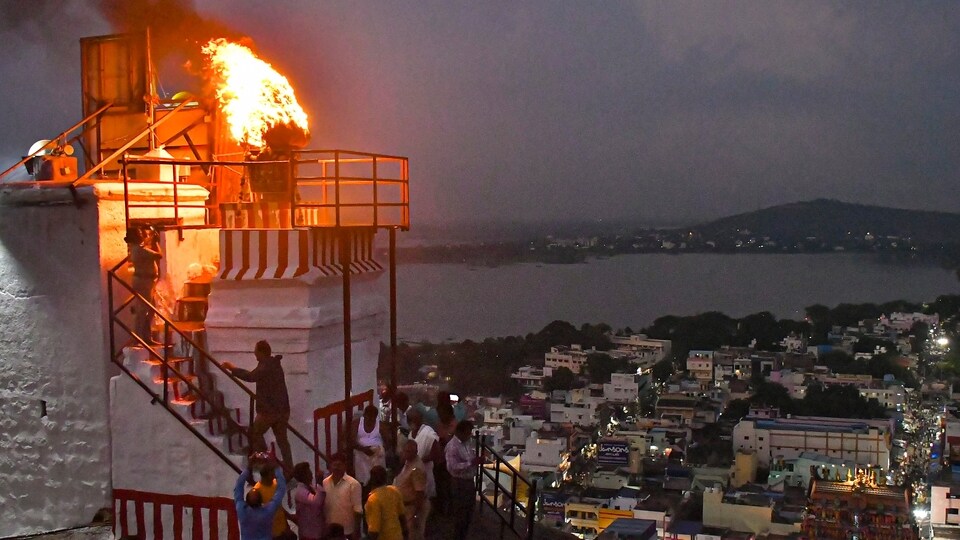
The court observed that the district administration should have treated the matter as an opportunity for mediation. It further noted that as the hill is a protected monument, any activity carried out there must strictly follow the provisions of the Act. The bench clarified that the lamp may be lit, and the number of persons permitted can be fixed, in consultation with the Archaeological Survey of India (ASI), news agency ANI reported.
What is the row about?
For many years, the Thiruparankundram hill has been seen as a place where different faiths have lived in peace. The hill is home to the historic Subramaniya Swamy Temple, the Kasi Viswanathar Temple and the Sikkander Badusha Dargah, built long after the temples were established.
Also read| Row over lighting of lamp at Madurai temple in Tamil Nadu explained
Earlier, after a petition was filed by an activist, Justice G R Swaminathan directed state officials to make sure that the sacred lamp was lit at the top of the hill. The Madurai Bench of the Madras High Court had instructed that the petitioner and ten others be allowed to reach the Deepam pillar at the top of Thirupparankundram hill to light the Karthigai Deepam.
Government officials believed this went against the long-followed practice of lighting the lamp at the nearby Deepa Mandapam, a ritual carried out for several years. The state government chose to challenge the court order, raising concerns over law and order, as mentioned in an earlier HT report.
Also read| Tamil Nadu govt defies Madras HC order, stops lighting of Madurai hill lamp
Tensions at the location also rose in February last year after protests by Hindu organisations when a member of parliament was accused of eating meat on the hill. The Bharatiya Janata Party (BJP) recently described Thiruparankundram as the “Ayodhya of the South”.
The Subramaniya Swamy Temple claims ownership over almost the entire hill based on a 1920 court ruling, while the dargah has recognised rights over the mosque and other related structures.
(With inputs from agencies)


