
 E-Paper



To defang desi dengue mosquitoes, India inks pact for Australian tech
India is collaborating with Australia for a project that will use bacteria to kill the disease transmitting ability of a mosquito species which afflicts thousands of people with dengue every year.


India is collaborating with Australia for a project that will use bacteria to kill the disease transmitting ability of a mosquito species which afflicts thousands of people with dengue every year, officials said on Tuesday.
Lab trials will start shortly to test the efficacy of the technology on the virus strains that are virulent in India. The method has been successful in five countries including Australia.
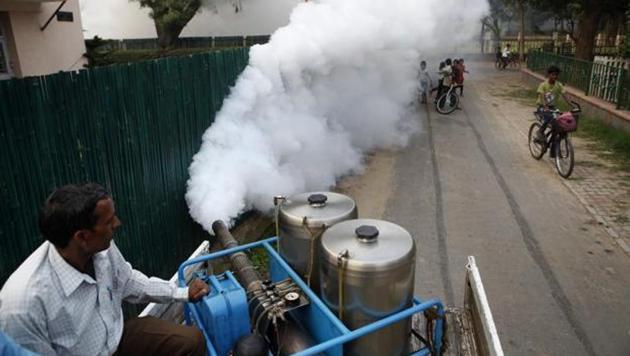
Caused by the day-biting female aedes egypti mosquito, dengue is one of the biggest challenges for the government in the country’s healthcare front.
An estimated 227 people died of dengue across the country last year, shows data from the National Vector Borne Control Disease Programme, the nodal agency that tracks dengue infection.
More than 1.1 lakh people were afflicted by the disease country-wide with Delhi identified as one of the worst affected states.
“The technology results in the complete collapse of dengue transmission. Not just dengue, it has been proven effective in cutting transmission of all diseases that are spread due to aedes egypti and aedes albopictus, including chikungunya,” said Scott O’Neill, director, Institute of Vector-Borne Disease, Monash University, Melbourne.
The Vector Control Research Institute will conduct the laboratory-based trials. The Indian Council of Medical Research (ICMR) has formed a task force to implement the technological breakthrough provided by Australian experts to manipulate mosquitoes. The methodology uses ‘wolbachia’, a bacterium that kills the aedes aegypti’s ability to spread the disease.
“Initially, we relied heavily on insecticide but realised mosquitoes were quick to adapt. Therefore, we had to look for alternative tools to go with existing vector control measures, and this technology seems to suit us the best,” said P Jambulingam, director of the Vector Control Research Centre.
“We have to see exactly how it works in the Indian context. We will begin with lab tests wherein eggs of disease-causing mosquitoes, infected with wolbachia bacterium, will be hatched to create mosquitoes that can’t transmit infection.”
He said the lab tests will follow “community based trials” when the infected mosquitoes will be released in dengue-prone areas to mate with wild mosquitoes.
Indian researchers have been working on several ideas to control the spread of mosquito-borne diseases for long and last year’s chikungunya outbreak in Delhi expedited the process.


