
 E-Paper



Top court asks Hindu women to execute wills to avoid property disputes
The Supreme Court on Wednesday urged all Hindu women to execute wills to ensure their self-acquired and other properties devolve according to their wishes

 Prefer HTon Google


The Supreme Court on Wednesday urged all Hindu women to execute wills to ensure their self-acquired and other properties devolve according to their wishes, even as it refused to decide a challenge to Section 15(1)(b) of the Hindu Succession Act, 1956 --- the provision that prioritises a woman’s husband’s heirs over her parents if she dies intestate without children or a spouse.
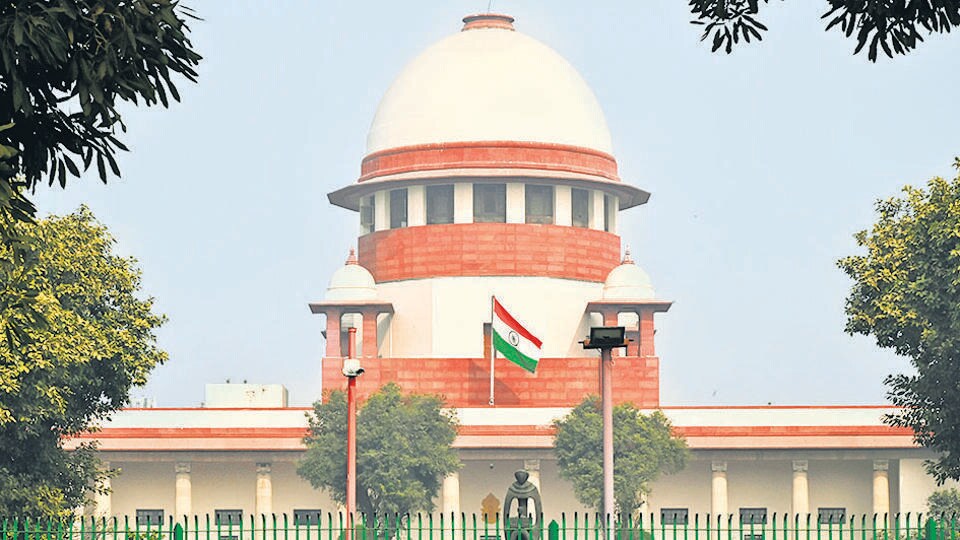
A bench of justices BV Nagarathna and R Mahadevan said the recurring succession disputes reaching courts and the “heartburn” caused when a woman’s self-acquired property bypasses her parents made it imperative for women to proactively safeguard their interests through wills.
“We appeal to all women and particularly all Hindu women, including those who may fall within Section 15(1) of the Act, to take immediate steps to make a testament or will. This is to avoid further litigation and to ensure their properties, including self-acquired ones, devolve according to their wishes,” the bench said.
At the same time, the bench declined to adjudicate a PIL filed by a lawyer seeking to strike down Section 15(1)(b) as unconstitutional for discriminating against a woman’s natal family. The petition argued that in modern society, many women possess substantial self-acquired assets, and it was arbitrary for the husband’s heirs to inherit ahead of her own parents.
The court, however, held that the challenge ought to be raised by affected parties and not at the instance of a practising advocate. It therefore left the question of constitutional validity open.
Additional Solicitor General KM Nataraj, appearing for the Centre, defended the statutory scheme as the product of a “scientific” legislative design and emphasised that Parliament in 1956 may not have envisaged that women would own significant self-acquired property, but had nonetheless provided, under Section 30, the mechanism for women to freely bequeath their property by will.
While refusing to strike down the provision, the court directed that whenever parents --- or their heirs --- of a Hindu woman dying intestate make a claim under the relevant provisions of the Act, the parties must first undergo pre-litigation mediation before instituting any suit.
Any settlement reached in mediation, it added, shall be treated as a decree of court. Directors of mediation centres and legal services authorities at the State, district and taluka levels were instructed to facilitate such applications.
The bench noted that though Parliament may have assumed in 1956 that women were unlikely to own substantial self-acquired property, constitutional advances had radically altered women’s economic standing.
“Education, employment and entrepreneurship have empowered women, including Hindu women, to own self-acquired property. If such property devolves only on the husband’s heirs when she dies without children or a spouse, it may understandably cause heartburn to her maternal family,” Justice Nagarathna remarked, while choosing not to comment on the constitutional question.
Wednesday’s hearing comes two months after the same bench, on September 24, cautioned that challenges to Sections 15 and 16 of the Act must be approached with restraint, stressing that courts should avoid dismantling long-standing Hindu social arrangements merely because of difficult fact situations.
At that time, the bench had said: “Do not demean the structure of Hindu society that we already have… We do not want by our judgment to break something which has been there for thousands of years.”
It emphasised the delicate balance between protecting women’s rights and maintaining the coherence of the Hindu family system, referring to how marriage changes a woman’s gotra, the in-law family’s duty to maintain her, and the social logic historically built into succession rules.
The bench had also observed that earlier amendments, including the 2005 reform granting daughters coparcenary rights, had “created rifts in families”, underscoring its concern that inheritance law reform must proceed with sensitivity.
During the Wednesday hearing, a bunch of senior advocates argued that the impugned provision was discriminatory because it elevated the husband’s heirs above the woman’s parents even with respect to her self-acquired assets. It was argued that if Parliament intended to segregate sources of a woman’s property, as reflected in Section 15(2) which treats property inherited from parents differently than that received from in-laws, there was no reason why self-acquired property should not revert to her parental family.
While acknowledging the lived grievances of parents and siblings who lose access to the woman’s self-acquired estate after her demise, the bench reiterated its concern, expressed strongly in September, that constitutional courts must avoid making “bad law” prompted solely by “hard facts”.



