
 E-Paper



Tougher to get 4-year-old admitted in private nursery schools in Delhi than IIT: Ashneer Grover
Grover further said that the demand for Nursery schools in Delhi-NCR surpassed the supply.

 Prefer HTon Google


BharatPe co-founder Ashneer Grover on Monday said that getting children admitted in nursery schools in Delhi and other cities of National Capital Region (NCR) was tougher than getting into the Indian Institutes of Technology (IITs).
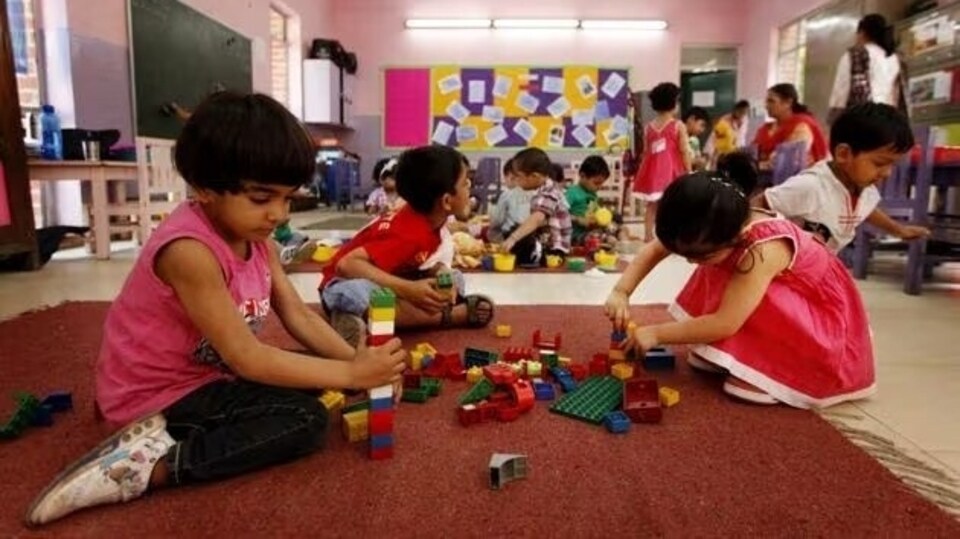
Taking to X, formerly known as Twitter, Grover said, “It’s tougher to get your 4 year old kid admission in Nursery in your preferred private school, than it is to enter IITs. At least in Delhi NCR.”
Grover further said that the demand for nursery schools in Delhi-NCR surpassed the supply.
He said, “Ask any parent who has gone through the process in last 10 years. Demand for coveted schools far outstrips supply.”
Grover further compared the nursery schools' admission seats with Indian Premier League (IPL) auction. “If nursery school seats were auctioned in Delhi NCR, IPL would be the 2nd highest auction in the country. ;)”
The post garnered nearly 1,500 likes and over 100 people had reposted it on X.
One of the users commenting on Grover's post said, “Very true. Imagine paying 20-25 L for getting a kid into Nursery, that's how my two of my nieces got into a school. It's better to get schooling done somewhere else than NCR. It's a messed up area, high crime, reckless traffic, broken culture, etc.”
Another user wrote, “The competition for nursery school seats in Delhi NCR can be intense. It's amazing how high demand creates such a unique dynamic in the education system. 😄”
Another user said, “It’s very tough !! Even Mumbai is not far .. school admission these days has become a night mare 😅.. one of the most dreaded 😅”
Gruelling selection process is one of the most significant reasons parents face difficulty while sending their children to Delhi's private schools.
Every year, several merit lists are released where several distinguished schools participate in the admission process. Over 1,800 schools in the national capital participated in the admission process for entry level classes this year.
For nursery admissions, the lower age limit is 4 years. For KG, it is five years and for Class 1, it is 6 years. All private schools are also required to reserve 25 per cent of seats for economically weaker sections (EWS) and disadvantaged group (DG) students and children with disabilities.


