
 E-Paper



Two states: A disputed border area that enjoys benefits of none
In October 2014, the Karnataka cabinet, then helmed by Congress chief minister Siddaramaiah, renamed the district of Belgaum, with its over 1,200 villages on the Karnataka-Maharashtra border, to Belagavi.

 Prefer HTon Google


“How did ‘gaum’ become ‘gavi’?” Fifty-five-year-old Lakshman Shindolkar asks, posing the question at the centre of a seven-decade-long border row between two of India’s richest states, Maharashtra and Karnataka. Sitting on a sofa in his two-room house in a quiet Belagavi neighbourhood, the usually sanguine Shindolkar is animated, and angry. The question, after all, defines Belagavi’s politics, and his life.
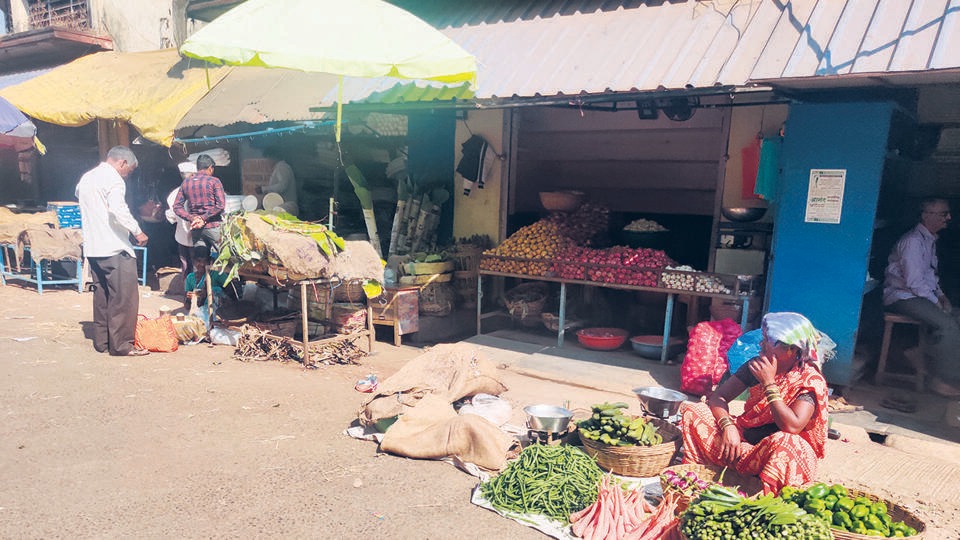
In October 2014, the Karnataka cabinet, then helmed by Congress chief minister Siddaramaiah, renamed the district of Belgaum, with its over 1,200 villages on the Karnataka-Maharashtra border, to Belagavi. “I can’t get myself to say Belagavi. It is just another way to undermine Marathi in the district,” Shindolkar said.
Now, eight years after that decision, and on the cusp of crucial assembly elections in Karnataka, the border dispute between the two states is on the boil.
On December 27, the Maharashtra assembly passed a unanimous resolution in an otherwise fractious assembly to “legally pursue” the inclusion of 865 Marathi-speaking villages from Karnataka in Maharashtra. This came five days after a similar resolution from the Karnataka assembly on December 27 vowing “not to cede an inch” of its land to Maharashtra.
For some, such as Shindolkar, the debate is more visceral than just a question of demography, or language.
On a wall right across where Shindolkar sits and talks, there is a photograph of a young girl, with a garland across it. In June 1986, Shindolkar, then 26, lived with his parents, and two younger siblings (a brother and a sister), in the same house in the Vadgaon area. All around them, there were widespread violent protests prompted by Karnataka’s decision to make Kannada a compulsory language in schools. The protests roiled the town for two days — from the Hindalga martyr’s memorial to Kittu Rani Chennama chowk. There were lathi charges (even NCP chief Sharad Pawar was lathi-charged), and police firing. Seven people lost their lives. One of those was the girl in the photograph, 12-year-old Vidya Shindolkar, Lakshman’s sister.
Shindolkar remembers those two days as “chaotic and scary”. Anybody seen in the streets was badly beaten up, he says. Vidya was at a friend’s home, and attacked in the melee several times before she got home. “She was beaten up so badly that she vomited blood. She died the same day. We lost a family member over the dispute. But no political party has ever made a genuine effort to find a solution to it.”
Not everyone, however, feels strongly about the issue.
Next to Lakshman, is his niece Vaishnavi Shindolkar, a third-year undergraduate student in Computer Applications. “It is a topic for grown-ups,” she said. “Sure, I would like to be part of Maharashtra but it is not something I actively think about. I have friends who speak both the languages and this is hardly a discussion among us. I don’t have time to participate in agitations. That would make it difficult to get a job. I need to think of my future.”
Somewhere in the middle, between Lakshman’s anger and Vaishnavi’s indifference is the story of a border dispute between two states; once raging, relegated to bubbling under the surface for the most part, but now rearing its head again in election season.
The dispute
When India gained independence in August 1947, the contested border area of what is now Belagavi, spanning 7,000 sq km, became part of the expansive state of Bombay, which included territories of present-day Karnataka and Maharashtra. Nine years later, when Indian states were reorganised on linguistic lines in 1956, hundreds of Marathi-speaking villages, became part of the Mysore state, which in turn became Karnataka in 1973. Disagreements have raged since, with Maharashtra claiming that they should have jurisdiction over villages with a Marathi-speaking population.
For seven decades now, Maharashtra and Karnataka have maintained diametrically different stances. In 1966, at Maharashtra’s insistence, the Union government set up a commission headed by Justice Mahajan, a former chief justice of India. The following year, the commission submitted its report recommending that Belagavi should remain with Karnataka, and was rejected by Maharashtra. To this day, the report has never come up for discussion in Parliament.
In 2004, Maharashtra approached the Supreme Court demanding that 865 villages and towns from five Karnataka districts, Belagavi, Karwar, Vijayapura, Kalaburagi and Bidar, be merged into Maharashtra. The case is still under adjudication, with Karnataka arguing that only Parliament, and not the Supreme Court, has the jurisdiction to decide the borders of state. Maharashtra has taken the position that under Article 131 of the Constitution, the apex court has jurisdiction in cases related to disputes between the Union government and states.
Lives caught in the middle of politics
Outside of this legalese, the Maharashtra Ekikaran Samiti (MES), or the Maharashtra Integration Committee, a sociopolitical outfit launched in 1946 in Belagavi, has been the traditional flag-bearer of those who want the villages to be integrated into Maharashtra. For instance, senior Marathi writers organise 15 literary festivals at different locations every year in an attempt to keep Marathi alive. Meanwhile, the Karnataka Rakshana Vedike has belligerently fought for status quo.
On ground in Belagavi, there is a growing sense of fatigue with an issue that seems no closer to resolution. Satyajeet Patil, 31, runs a hydraulic workshop in the city, and says times have changed. He says the immediate concern for those in his circle is academics and a possible move to cities such as Mumbai and Bengaluru. “Life is complicated and stressful by itself. We need to look out for ourselves.”
Prasad Prabhu, a senior journalist based in Belagavi, says there is evidence of this waning interest even politically, with the MES losing steam. “The MES used to be a force here with motivated young people as part of its team. But the current generation is moving away and joining mainstream political parties.”
In the 1978 assembly elections, MES won five seats, four from Belagavi. In the district corporation, the outfit would often win 30-35 seats of the available 58. Today, it has no MLAs and was reduced to four seats in the corporation elections of September 2021.
Ashok Chandragi, 63, president of Belagavi district’s Kannada Organisation Action Committee, said: “Even the Marathi people are sending a message to them. They want to be in Karnataka. They want to join the mainstream to get ahead. And you can’t get ahead if you don’t know the local language.”
In the Government Marathi Model School , a Marathi-medium school in Yellur village, one of Belagavi’s biggest, principal SR Nilajkar says that the number of students applying has halved over the past three decades, from over a thousand in the early nineties to 435 in 2022. “I have seen Marathi-speaking parents enrol their kids in Kannada- or English-medium schools. Even in Marathi-medium schools, Kannada is a now a compulsory subject. Parents ask us to pay attention to their child’s Kannada speaking skills. They seem to have realised there is no getting around Kannada.”
Senior members of MES claim the movement has been quelled by state action. “People are afraid of having false cases against them so they have no option but to shut up and toe the line,” MES leader Maloji Astekar said.
Sharad Patil, media in-charge for the BJP based in Belagavi, said that the party’s stance is to wait for the Supreme Court verdict. “Our MLAs won’t say anything untoward about the issue. But the issue is politically important because there are significant Marathi votes in the contested region,” he said.
On November 25, the Congress’s Karnataka president, DK Shivakumar, reacted strongly and said that the issue was flaring again because of “match fixing” between BJP leaders of both states. “All Marathis living in Karnataka are our people. They are all Kannadigas,” he said.
Crucially, there are 18 assembly seats in Belagavi district, with four in Marathi-speaking areas. Polls are scheduled for the middle of the year. “The border dispute is one of the issues in the contested region but it doesn’t have an impact on voting in rest of the state. There are local issues like water and electricity supply which are inconsistent in the area. Hindutva, of course, is a major campaign issue, as it is elsewhere in the country,” said Gopal Gowda, a journalist and political analyst.
A district held back
While the disagreements on the contours of the border and their ferocity continue to fluctuate, there is agreement on one issue — the dispute has held Belagavi back economically. A far cry from the glass edifices of Bengaluru, Belagavi is a run-down town with rickety roads. Around 500 kilometres to the north of the state’s capital, the town is covered by green, but that green is often covered by layers of dust that comes from infrastructural neglect. There is little industry, and most young people move as soon as they can to cities such as Mumbai, Bengaluru, or even Hubbali in search for work.
Belagavi is among the 10 poorest districts in Karnataka, with 9% of the district’s population among the top 20% of the poorest people in India, according to data from the National Family Health Survey (NFHS) 2019-21. This is higher than the state average of 7.3%.
Chandragi says that the incessant undercurrent of anger has led to Belgavi being labelled a “troubled district.” “There are no new industries, and therefore no jobs.”
Bhupendra Patel, 57, member of the Belgavi Chamber of Commerce, owns a grocery store and deals in different kinds of tea. “I have businesses in Maharashtra and Gujarat as well. But the one in Belgavi gives me the most problems. Every time there is a flare up, we lose 25-30% of the business. Who would want to invest in a place like this?” he asked.
Patel was referring to the first week of December, when there was a fresh flashpoint after two Maharashtra ministers, Shambhuraj Desai and Chandrakant Patil, in-charge of the legal coordination of the border dispute, announced that they would visit Belagavi. In reaction, members of the Kannada Rakshan Vedike, a pro-Kannada group, allegedly pelted stones on buses and lorries from Maharashtra. It led to the ministers cancelling their trip.
What that meant, Patel says, is that Belagavi’s market was deserted for eight to 10 days in the aftermath.
Gunwant Patil, a senior Marathi writer based in Belgavi, says the market in the city has huge potential. “The area is known for its gold and silver jewellery and for its vegetables. People from other villages, even from Goa and western Maharashtra, all come in on weekends to do their shopping. But they tend to stay away when tensions rise. This is why this area has been held back from becoming an economic hub.”
Nagaraj Gadadare, 32, a young businessman who speaks fluent Kannada is exhausted by the constant politicking. “We have a huge retail market here but we have not been able to graduate to having a wholesale market. Instead retailers go to Hubbali or Kolhapur where this tension doesn’t exist. The dispute is being used for political gains,” he said.
“The matter is in the Supreme Court. I just want people from both sides to stop provoking common citizens. Whatever the Supreme Court says, accept it, and move on.”


