E-Paper



UAE to make new climate pledges ahead of COP29
COP28 president, Sultan Al Jaber called on all other countries to be “early movers” and provide “concrete signals” on their own NDCs by or before the Baku meet


New Delhi: The United Arab Emirates (UAE), which hosted list year’s climate conference COP28, will release updated commitments to reduce emissions ahead of this year’s UN-led meeting in Azerbaijan in November, a top official said, announcing that the reductions will cover “all greenhouse gases” and “every sector of the economy, including economy”. The country’s plans to submit what is known as nationally determined contributions, or NDCs, will be months ahead of the February deadline.
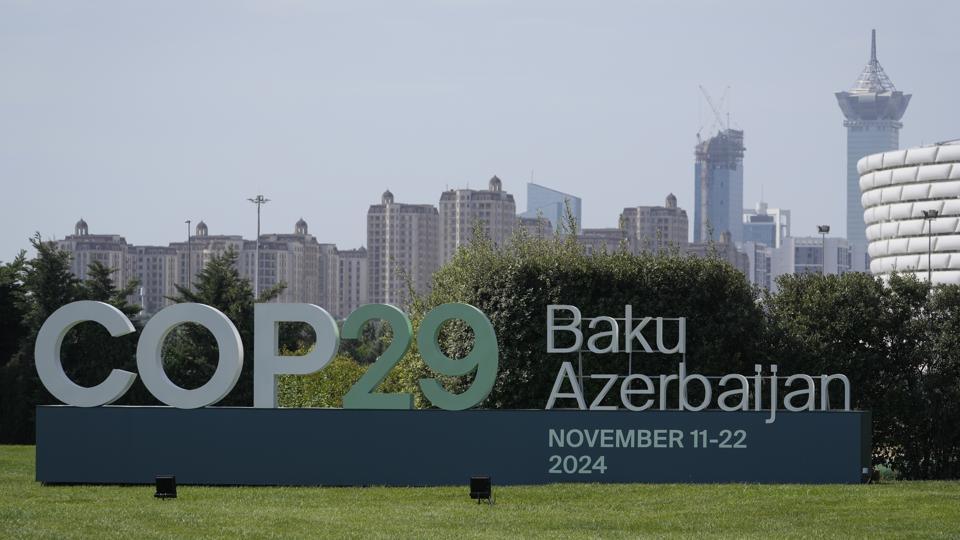
COP28 president, Sultan Al Jaber called on all other countries to be “early movers” and provide “concrete signals” on their own NDCs by or before the Baku conference.
Al Jaber urged them to submit “transformational NDCs backed by serious investment.” He was speaking at a high-level COP Presidencies Troika event on the sidelines of the UN General Assembly in New York. COP Troika is a group of COP28 with the next two COP Presidencies —Azerbaijan and Brazil working together to drive ambitious collective climate action.
“NDCs represent an opportunity to leverage the three megatrends of the energy transition, the rise of AI and the expansion of emerging markets and the Global South,” he said.
The UAE’s NDC will “cover all greenhouse gases and every sector of the economy, including energy, industry, transportation and waste,” he said. “It will leverage the latest technologies, including AI, to drive decarbonization and enhance adaptive resilience by transforming food, health and early warning systems. And it will back all efforts with a robust legal framework that holds every sector accountable to specific, timebound goals.”
The COP28 president emphasised the importance of finding consensus on a New Collective Quantified Goal (NCQG) on finance at COP29 to ensure that finance goes to where it is needed the most. Financing is a critical enabler to delivering ambitious 1.5°C-aligned NDCs and to ensuring that adequate climate finance is available for adaptation and mitigation.
UAE is among a handful of countries that have announced an updated NDC or have already submitted one. The world is headed for 2.7 degrees C warming (over pre-industrial levels) and the road to keep it to 1.5°C is extremely steep, UN Climate head Simon Stiell had warned in his opening remark at the Bonn Climate Change Conference in Germany in June.
Stiell had called for a new round of plans that are 1.5°C compatible. “This new round of national climate plans – NDCs 3.0 – will be among the most important policy documents produced so far this century. NDCs are not just about averting disaster through reducing emissions. Done well, they can serve as powerful blueprints, to propel each of your economies and societies forward, and drive more resilience, more opportunity, better human health and higher living standards,” he added.
Whether developing and developed countries raise their ambitions will also depend on how the talks on climate finance turn out at Baku.
A draft document on the new climate finance goal, to be negotiated at the UN Climate Conference COP29 in November, indicates developing countries expect contributions in the trillions from developed nations for climate change mitigation efforts.
HT reported on September 18 that there is no consensus on the most critical COP29 negotiated agenda — a fair and ambitious New Collective Quantified Goal on climate finance (NCQG) — people familiar with the matter said.
The new financial goal is to be set from the floor of $100 billion for the post-2025 period. The people added that the two major outstanding issues on NCQG are the quantum of the fund and the list of “contributors”.
Developed countries are pushing to expand the contributor base by inducting emerging economies (not necessarily historical polluters) in the list of contributors. “They are not ready to budge,” one person said.
Developing countries are clear that they will stick to the provisions of the Paris Agreement and the United Nations Framework Convention on Climate Change (UNFCCC) which state that finance must flow from developed to developing countries.
History was made in Dubai last December when 196 countries agreed to transition away from fossil fuels, in a just, orderly and equitable manner, accelerating action in this critical decade, so as to achieve net zero emissions by 2050, although experts said it did not do enough on almost all fronts — climate targets, funding, phasing out fossil fuels, and holding historical polluters accountable.
The deal did not mention “oil” and “gas” but said countries would focus on accelerating zero- and low-emission technologies, including renewables, nuclear, abatement and removal technologies such as carbon capture and utilisation and storage, particularly in hard-to-abate sectors, and low-carbon hydrogen production.
Around 20 leading civil society organisations that represent scientists, business leaders, think tanks, cities, youth, health experts etc sent out a letter to all country focal points of UNFCCC, including officials representing India. The letter details the 10 key elements experts are looking for in new national climate plans (NDCs) that will be 1.5°C compliant.
The new set of national climate plans due by February 2025 must include an explicit commitment to end fossil fuel expansion, economy-wide and sector-specific targets, and plans to triple renewable energy capacity, governments are told. Key signatories include 350.org, the International Institute for Sustainable Development (IISD), E3G, Global Citizen, C40, We Mean Business Coalition, the Union of Concerned Scientists, and Oil Change International. The full list of signers can be found in the letter.
The letter was sent to governments on Thursday just after Brazilian President Lula da Silva committed to delivering a 1.5°C-aligned NDC. Azerbaijan and the UAE are also expected to make announcements related to their NDCs this week as leaders are gathered in New York City at the UN General Assembly.
“Ambitious, credible NDCs are an essential blueprint to reduce greenhouse emissions and keep the 1.5°C mission alive, while driving economic growth and job creation. If done well, they can address and tackle core challenges of poverty and economic insecurity. However, for these opportunities to materialise, progressive governments must demonstrate bold leadership now. This means fostering ambitious commitments on NDCs and pushing for ambition from others, not as a nice to have but as a must have, in order to unlock the highest level of opportunity both domestically and globally,” said Kaysie Brown, Associate Director on Climate Diplomacy and Geopolitics at E3G in a statement.