
 E-Paper



UK court rejects Bhandari torture argument in its extradition order
The court praised the Indian judicial system terming it as “independent” and “impartial” while rejecting Sanjay Bhandari’s assertions that there is a culture of violence and extortion by staff against prisoners in Tihar jail, where he would likely be lodged if sent back to India.

 Prefer HTon Google


The Westminster’s Court in London, while ordering the extradition of fugitive arms dealer Sanjay Bhandari on Monday, relied on the affidavits filed by Indian agencies based on information received from the UK, the UAE and Panama about his foreign income and assets, witness statements, Bhandari’s own statement before the authorities as well as assurances given by the Indian government that he will not be ill-treated.
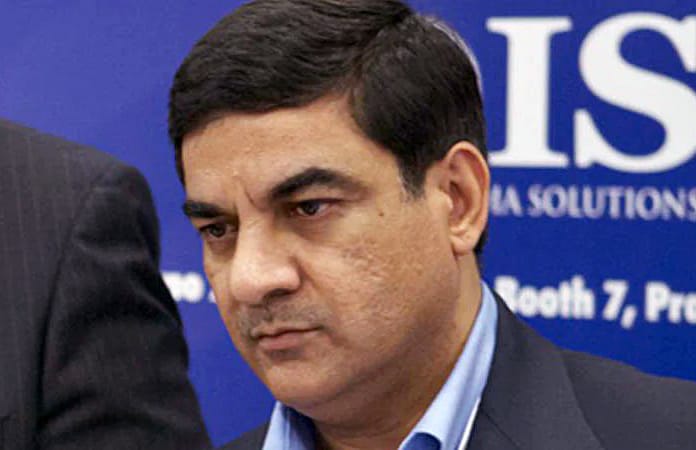
The court praised the Indian judicial system terming it as “independent” and “impartial” while rejecting Bhandari’s assertions that there is a culture of violence and extortion by staff against prisoners in Tihar jail, where he would likely be lodged if sent back to India.
Citing the Indian government’s affidavit, district judge Michael Snow said: “…as an Indian citizen, Bhandari was liable to be taxed on his global income. He didn’t disclose that income (or his assets) with the intent to avoid paying tax on that undisclosed income. He used his undisclosed foreign income to acquire foreign assets.”
According to the documentary evidence shared by the Enforcement Directorate (ED) and the Income Tax department during the extradition proceedings, Bhandari (60) had undisclosed foreign income worth £64,857,062 (around ₹606 crore) on which he evaded tax worth £19,558,295 (around ₹183 crore).
He deposited huge sums of money in bank accounts of overseas shell companies and invested in properties in the UAE and the UK (between 2009 and 2016). The funds were disguised in properties held through various offshore entities based in the British Virgin Islands (‘BVI’) and Panama.
Some of the properties and companies owned by Bhandari, listed in the judgement, are : Flat 6, Grosvenor Hill Court, Bourdon Street, London (bought in 2013; owned by the corporation Shamlan Gros-1 Inc, incorporated in Panama), Flat C-303, Maurya Grandeur Residences, Palm Jumerirah, Dubai (2014), Santech International FZC, Offset India Solutions FZC and Petro Global Technologies Limited in UAE (created over a period of time), Shamlan Gros-1 INC, a company incorporated in Panama; and Flat 2414 at Burj Khalifa, Dubai (purchased in November 2014).
The central agencies received documents regarding these properties and companies from the UAE, the UK and Panama.
Bhandari is under investigation by multiple agencies, including the Enforcement Directorate, Central Bureau of Investigation (CBI), Income Tax department and Delhi Police for money laundering, violation of the foreign exchange act, the black money act, and the official secrets act for having access to sensitive defence documents.
He fled to the UK via Nepal in December 2016.
The Indian government sent two extradition requests against the fugitive businessman which were certified by the then UK home secretary Priti Patel in June 2020, after which British authorities arrested him on July 15, 2020. He is out on bail.
The arms dealer is also under investigation since 2019 by the CBI on charges of corruption in a ₹2,985-crore deal in 2009 to procure 75 PC-7 trainer aircraft from Swiss plane maker Pilatus Aircraft.
He is also under the scanner for allegedly laundering money related to property transactions allegedly linked to former Congress president Sonia Gandhi’s son-in-law Robert Vadra in London, in which a NRI businessman C C Thampi was arrested by the ED in January 2020.
Dismissing Bhandari’s argument of torture, if extradited, the judge said the Indian judiciary is robust, with courts determining cases on merit. “India has a robust and independent judiciary. Individuals have access to the courts which respect the rule of law. The courts determine cases on their merits and do not always rule in favour of the Government. The government must comply with the rulings of the Supreme Court. I am quite satisfied that India is governed by the rule of law.”
On the assurance given by the Indian government on September 16, 2021, that Bhandari will be kept in a single cell of ward number 4 of Tihar jail, the judge noted on Monday: “I am satisfied that the Government of India would not have given this assurance if there was a real risk that it would not be honoured. I have already rejected the assertion that there is a culture of violence and extortion by staff against prisoners in Tihar.”
A further assurance was given by Indian government on September 28 this year regarding prison conditions. Subsequently, to fortify its assurances by confirming that Bhandari will not be removed from prison for any purpose other than to attend court, Snow sent an email to lawyers representing Indian side “urgently” asking to provide supplemental information. Indian government on October 31 sent a further assurance signed by an under-secretary rank officer.
“India is a friendly country governed by the rule of law. I have not been made aware of any assurance that has not been honoured. He will have access to his advocate when required. There is an exclusive grievance redress mechanism (in India). Prisons are regularly visited by inspecting judges. There are also visits by notified NGO’s, NHRC officials, official visitors/non-official visit by the Delhi government and others. Assurances from India have been accepted by the High Court in this country,” Snow added.
The judge also rejected Bhandari’s claim that his human rights would be violated (under Article 3 of the European Convention of Human Rights in light of prison conditions in India), if extradited to India.
On Bhandari’s claims that his extradition will abuse the process of law if a court prevents his prosecution, Snow said: “The prosecution of the defendant remains on-going in India. India has longstanding extradition arrangements with the UK, it benefits from the presumption of good faith.”


